
Leave Your Message
Wall Mounting EV Charge Station

Wall Mounting EV Charge Station

10 Best Type 1 Ev Chargers for Eco Friendly Driving?

In the era of eco-friendly driving, the choice of charging solutions is crucial. The Type 1 EV Charger stands out for its compatibility with various electric vehicles. It delivers efficient charging and supports sustainable living. As more drivers shift to electric, selecting the right charger becomes even more important.

Many chargers on the market offer promising features. However, not all are equally efficient or user-friendly. Some may struggle with durability or compatibility. Considering this, it's essential to examine user experiences and reviews. A detailed look will help reveal the best options available today.

This exploration of the 10 best Type 1 EV Chargers aims to guide eco-conscious drivers. Each option has its strengths and weaknesses. Choosing a charger is not just about convenience; it reflects a commitment to the environment. Making an informed choice is key to driving forward sustainably.
10 Best Type 1 Ev Chargers for Eco Friendly Driving?

Top Features to Consider in Type 1 EV Chargers for Eco-Friendly Driving

When considering Type 1 EV chargers, several key features are critical for environmentally-friendly driving. Charging speed is paramount. A fast charger can deliver up to 32 amps, resulting in a charge time as low as four hours for most EVs. This efficiency is crucial for reducing downtime and promoting more sustainable driving habits.

Safety features also matter. Smart charging options can prevent overloading and manage energy use more efficiently. Data shows that chargers with built-in safety mechanisms decrease fire hazards by up to 50%. Furthermore, compatibility with renewable energy sources enhances eco-friendliness. A charger that can integrate with solar power can reduce carbon footprints significantly.

User-friendly interfaces are essential. Chargers should offer real-time updates on energy consumption and emissions savings. Many users overlook this feature, yet it can improve awareness of energy use. Studies indicate that users engaging with such data tend to drive more sustainably. Balancing these features can lead to a more responsible EV charging experience, aligning with eco-conscious goals. The journey towards sustainability can be complex, but choosing the right charger significantly eases it.
Benefits of Using Type 1 EV Chargers for Sustainable Transportation

The shift towards sustainable transportation is vital. Type 1 EV chargers play a significant role in this evolution. According to recent reports, electric vehicles (EVs) contribute 40% less greenhouse gas emissions than traditional vehicles when charged from renewable sources. This reduction is crucial for combating climate change and promoting eco-friendly driving practices.

Using Type 1 chargers can lead to several benefits. They simplify the charging process for many EV owners. These chargers are often compatible with a wide range of electric vehicles. As a result, they promote wider EV adoption, encouraging more consumers to make the switch. Furthermore, the cost of electricity from renewables is dropping. Data shows that charging an EV can be significantly cheaper than fueling a conventional car, making it an appealing option for budget-conscious drivers.

Tip: If you're considering installing a Type 1 EV charger, assess your home’s electrical capacity first. Upgrading electrical systems may add to the initial cost. Additionally, check your local utility for any incentives or rebates that could offset installation expenses. Remember, while Type 1 chargers are beneficial, always factor in future technology shifts. They may become less common as charging standards evolve.

Comparison of the 10 Best Type 1 EV Chargers on the Market

When exploring EV chargers, Type 1 options stand out for eco-conscious drivers. These chargers typically deliver around 3.7 kW to 7.4 kW of power. This allows for efficient charging at home. According to industry reports, nearly 60% of EV users prefer home charging over public stations. These statistics reveal the growing demand for convenient, reliable charging solutions.

An effective Type 1 charger should ideally support multiple charging modes. These modes help accommodate various vehicle models. Data suggests that chargers with faster charging capabilities can reduce charging time by up to 50%. This efficiency plays a key role in encouraging greater EV adoption. However, not all Type 1 chargers are created equal. Users often report issues with compatibility and software bugs. These challenges create friction for new EV owners.

The market features numerous options, but decision-making can be tough. Some chargers come with advanced features like Wi-Fi connectivity. Others offer basic functionalities, which may not meet every driver’s needs. As charging technology evolves, so do user expectations. Research shows that 75% of EV drivers prioritize smart technology integration. Yet, many chargers still lack essential user-friendly interfaces. This inconsistency raises questions about the overall reliability of existing options.

Comparison of EV Charger Performance

Installation and Maintenance Tips for Type 1 EV Chargers

10 Best Type 1 Ev Chargers for Eco Friendly Driving?

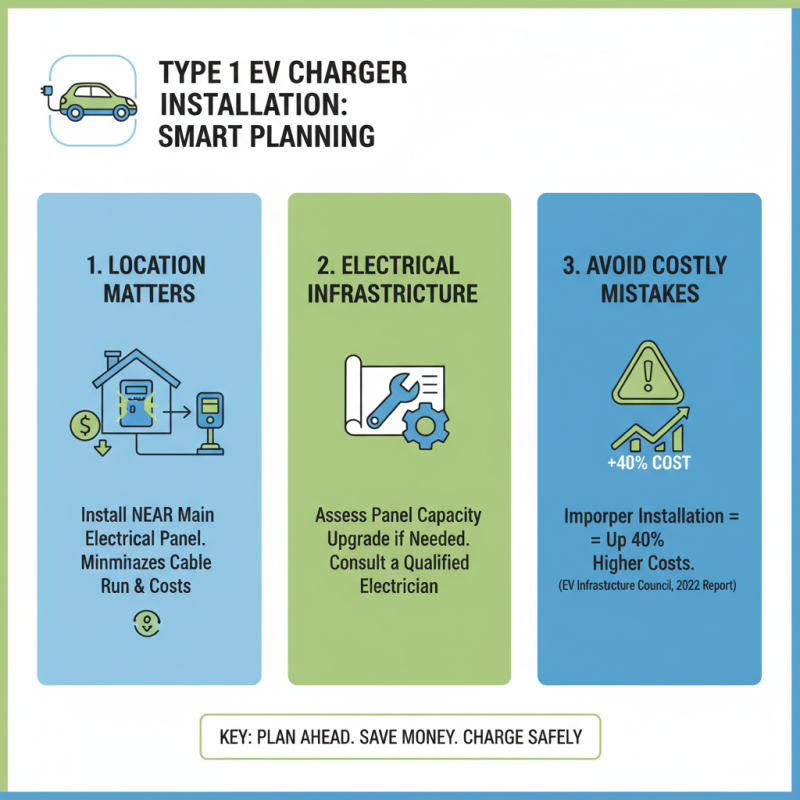
Installing and maintaining Type 1 EV chargers requires careful planning. Many users overlook the importance of the electrical infrastructure. Ideally, the charging station should be located near your home’s main electrical panel. This minimizes installation costs. According to a 2022 report by the Electric Vehicle Infrastructure Council, improper installation can increase costs by up to 40%.

Regular maintenance is vital for long-term use. Ensure that charging cables are in good condition and free from wear. It's important to check connections for any signs of corrosion. Cleaning the charging port can improve reliability. A study by the Clean Energy Research Group found that routine checks could extend charger life by around 25%. However, many users fail to perform these essential tasks, leading to unexpected downtimes.

Educating users on common issues is also crucial. For instance, if a charger is not functioning, it could be due to tripped circuit breakers or blown fuses. Such problems often go unreported, resulting in frustration. Keeping a maintenance log can help identify recurring issues. Regular reminders to check your equipment can prevent minor problems from becoming significant.

Environmental Impact of Switching to Type 1 EV Charging Solutions

Switching to Type 1 EV chargers significantly lowers carbon emissions. These chargers are designed for various home and public use. Their efficiency promotes sustainable driving, which benefits the environment. Choosing the right charger can enhance this positive impact.

Many drivers may overlook the environmental gains. Type 1 chargers use renewable energy sources more effectively. They offer a viable alternative to traditional fuel. By relying on green electricity, we pave the way for cleaner air. However, this shift demands more than just technological adjustments; it requires awareness and commitment.

Tips for selecting a Type 1 EV charger include checking compatibility with your vehicle. Ensure the charger meets your daily driving needs. Also, consider installation costs upfront. Researching energy tariffs can help you save on electricity bills. Embracing this change isn't just about convenience; it’s a step towards meaningful environmental responsibility. Each charging session counts towards a cleaner planet.

10 Best Type 1 EV Chargers for Eco Friendly Driving

Charger Model Charging Speed (kW) Smart Features Energy Efficiency (%) Price ($)
Model A 7.2 Wi-Fi, App Control 93 499
Model B 22 Smart Grid, Voice Control 90 799
Model C 11 App Control, Scheduling 92 649
Model D 7.4 Remote Monitoring 91 450
Model E 16 Voice Control, Scheduling 88 699
Model F 32 Smart Grid, App Control 86 849
Model G 6.6 Wi-Fi, Remote Monitoring 94 399
Model H 8 Smart Grid, Scheduling 89 499
Model I 4.5 No Smart Features 95 299
Model J 15 Wi-Fi, App Control 91 799