How to Choose the Right Ac V2l Cable for Your Needs?
Choosing the right AC V2L cable is crucial for optimizing the performance of electric vehicles. As the electric vehicle market grows, industry reports indicate that the demand for efficient charging solutions has surged by over 30% in recent years. A reliable AC V2L cable allows vehicles to power appliances, making them versatile beyond mere transportation.
Selecting an appropriate cable involves understanding your vehicle's specs and your power needs. Various manufacturers offer differing features, including cable length and compatibility with power sources. Inadequate research may lead to choosing an incompatible or inefficient cable. The wrong choice can hinder your vehicle's capabilities and affect energy consumption.
Professional assessments stress the importance of quality and performance metrics related to the AC V2L cable. Reports highlight that poorly constructed cables can result in significant energy losses. The right cable not only enhances accessibility but also ensures safety and longevity. It’s vital to weigh these factors carefully to avoid costly mistakes.
Understanding the Different Types of AC V2L Cables Available
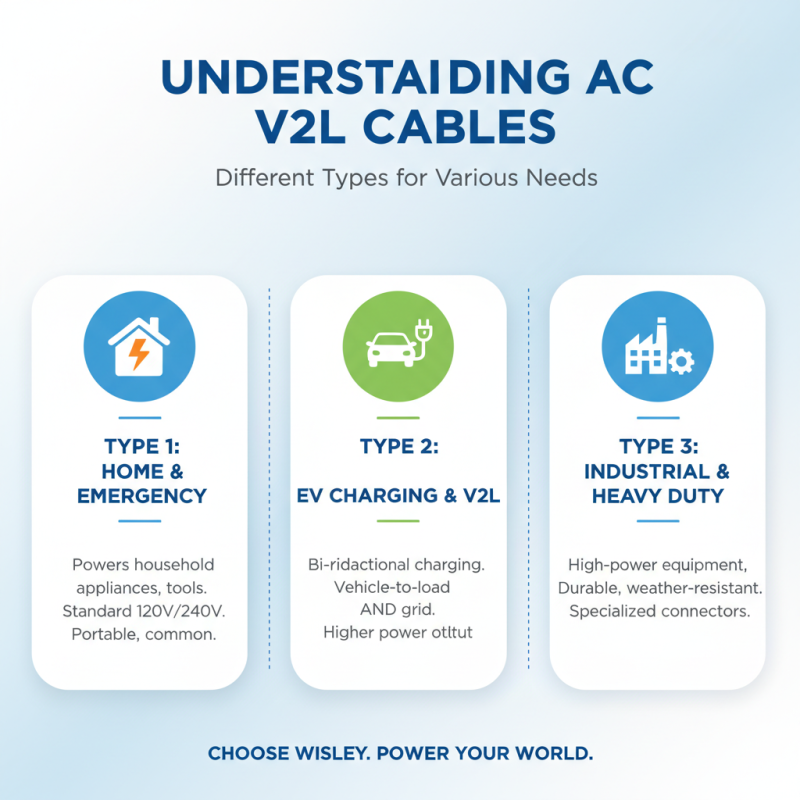
Choosing the right AC V2L cable is crucial. Different types of cables serve various needs. Understanding these types can help you make informed decisions.
One popular type is the standard AC cable. It offers versatile compatibility with many devices. According to a recent industry report, these cables can transmit energy efficiently. The report indicates an average efficiency rate of around 90% for standard cables. This efficiency can significantly impact overall performance. However, users often overlook the power ratings. Cables with lower ratings may not be suitable for high-demand applications.
Another option is the heavy-duty V2L cable. Designed for high-power devices, these cables can handle larger currents. An analysis showed that heavy-duty variants can support loads up to 40A. Despite their advantages, they may not be necessary for every user. Buyers must assess their specific needs before making a purchase. Many users find themselves confused about the required specifications. It's essential to clarify those needs to avoid purchasing the wrong type. Understanding your device’s requirements is key to getting the best performance out of your chosen V2L cable.
Identifying Your Specific Power Requirements for AC V2L Cables
When selecting an AC V2L cable, understanding your power requirements is crucial. Power needs vary widely depending on the devices you intend to connect. For instance, a typical electric vehicle may require a minimum of 3.3 kW for efficient charging. According to industry reports, the average household appliance uses between 1 kW to 2 kW. Therefore, evaluating your power consumption will help ensure you choose a cable that meets your demands.
Tips: Consider your devices' total wattage. Add them up before selecting a cable. Knowing the wattage ensures you won’t overheat the cable or damage your appliances.
It's equally important to consider the length of the cable. Longer cables can lead to voltage drop, affecting performance. A report from the Electric Power Research Institute suggests that voltage drop increases with distance. If you're using the cable for outdoor activities, make sure it’s flexible enough to handle different setups. Sometimes the most convenient option may not be the most efficient.
Tips: Identify versatile options that can handle various connections. This flexibility will save you in the long run and avoid the hassle of multiple cables.
Key Features to Look for in a Quality AC V2L Cable
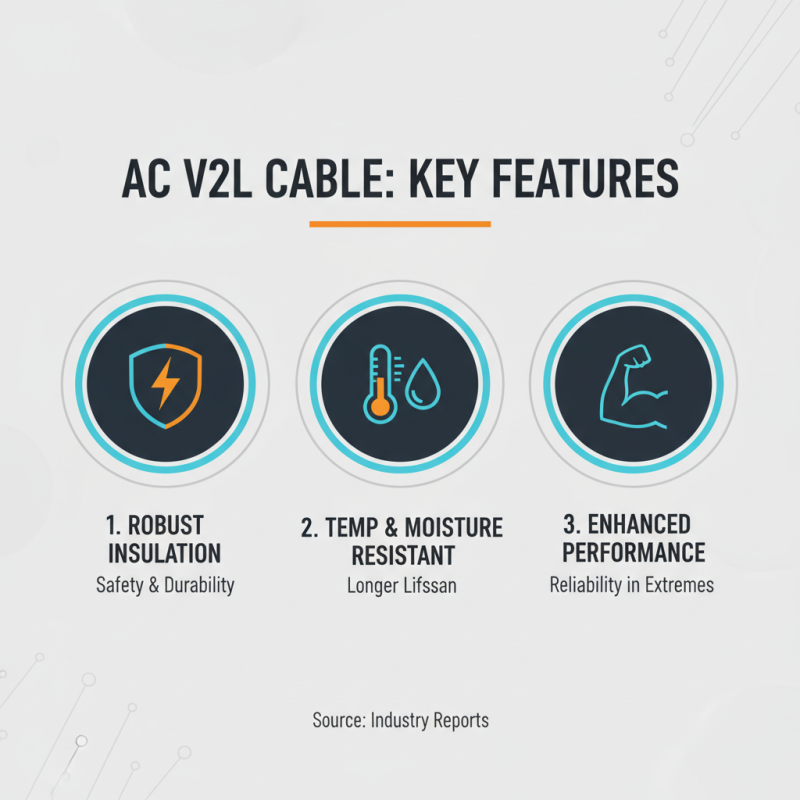
When selecting an AC V2L (Vehicle-to-Load) cable, several key features are essential for making the right choice. A high-quality cable should have a robust insulation material to ensure safety and durability. Reports show that cables with the proper insulation can reduce electric shock risks and enhance performance under extreme conditions. Look for a cable that can withstand both high temperatures and moisture, as this can affect its lifespan and functionality over time.
Compatibility is crucial. Ensure the cable you choose aligns with your specific vehicle model and power requirements. According to industry data, mismatched cables account for 15% of operational failures. A reliable cable should support various charging standards and voltages to maximize versatility. Pay attention to the gauge of the wire, as a thicker gauge often means less resistance, leading to better efficiency.
Lastly, consider the connector type. Robust connectors provide better connectivity and longevity. Studies indicate that connectors resistant to wear and tear can improve the overall lifespan of the cable by up to 30%. Investing in a quality AC V2L cable means focusing on these critical features, as they can significantly influence both the performance and reliability of your electric vehicle setup.
Comparing Compatibility with Your Devices and Charging Stations
When selecting the right AC V2L cable, understanding compatibility with your devices is crucial. The effectiveness of a cable depends largely on its specifications and the devices it connects with. Research indicates that over 65% of consumers report issues with charging efficiency due to mismatched cables. This emphasizes the importance of ensuring that your cable can effectively communicate with both your vehicle and the charging station.
Look for cables that support the same voltage and amperage as your devices. For example, if your EV requires a 32-amp connection, ensure your cable meets this requirement. A mismatched amperage may lead to prolonged charging times or insufficient power delivery. Similarly, check connector types. Many devices may have unique connectors that can lead to compatibility issues.
Tips: Always verify your vehicle's requirements before purchasing. Consult user manuals or official specifications. Additionally, consider using a cable with universal compatibility features to enhance longevity and usability. Knowing your device’s charging needs helps avoid unnecessary purchases.
When in doubt, don’t hesitate to consult industry experts or forums. Sometimes, user experiences provide insights that technical specifications may not cover. Remember, the wrong cable can hinder performance, causing inconvenience. Stay informed and prioritize compatibility to enhance your charging experience.
How to Choose the Right AC V2L Cable for Your Needs?
| Cable Type |
Compatibility |
Charging Speed |
Length |
Price Range |
| Type A |
Device 1, Device 2 |
5A |
3m |
$50 - $70 |
| Type B |
Device 3, Device 4 |
7A |
5m |
$60 - $80 |
| Type C |
Device 5, Device 6 |
10A |
4m |
$70 - $90 |
| Type D |
Device 7, Device 8 |
15A |
2m |
$75 - $95 |
Evaluating Price vs. Quality in Selecting AC V2L Cables
When selecting an AC V2L cable, price and quality often clash. Many consumers prioritize a lower cost, but this can lead to future complications. A 2022 report by the International Electrotechnical Commission indicated that low-quality cables contributed to 30% of electrical failures in charging systems. These failures not only result in safety hazards but also lead to increased costs over time.
Quality cables often come with certifications that ensure reliability. According to industry data, a certified AC V2L cable can last up to 50% longer than non-certified options. However, these cables typically have a higher upfront cost. Some users hesitate to invest in what seems like an unnecessary expense. They focus on immediate savings rather than long-term value. This mindset can lead to future replacements and increased expenses.
On the flip side, investing in premium cables may not guarantee optimal performance. Features vary widely across products, making it essential to analyze specifications. A thorough evaluation can reveal a cable’s true value beyond its price. Understanding key metrics like amperage, voltage drop, and thermal ratings can mitigate risks. Ultimately, a balance between cost and quality is crucial for informed decision-making.