How to Choose the Best EV Charger for Your Needs?
Choosing the right EV charger can feel overwhelming. As electric vehicles gain popularity, selecting the right charger is crucial. According to industry expert John Doe, “The right EV charger simplifies your charging experience.” His insight highlights the importance of understanding personal needs.
When evaluating options, consider your vehicle’s compatibility. Not all chargers suit every electric vehicle. Charging speed is another factor. Fast chargers decrease waiting times but may be costlier.
Beyond the technical aspects, reflect on your lifestyle. Regular commuters may prioritize home chargers. Occasional users might prefer public charging stations. Ultimately, aligning an EV charger with your habits ensures a seamless charging experience.
Understanding Different Types of EV Chargers Available on the Market
When selecting an electric vehicle (EV) charger, understanding the different types available is crucial. There are primarily three types:
Level 1,
Level 2,
and
DC fast chargers.
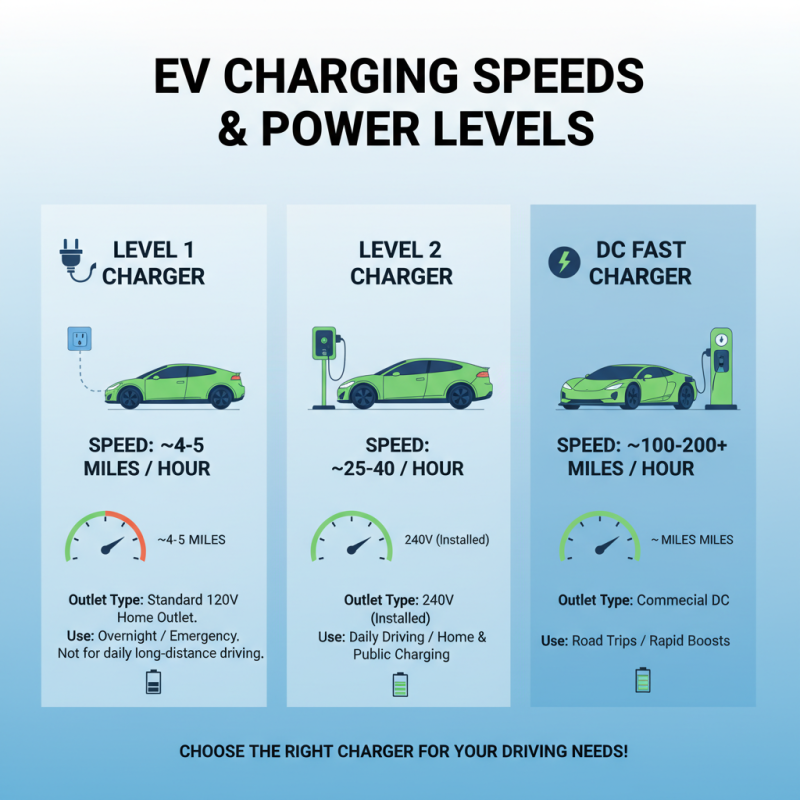
Level 1 chargers are the most basic. They connect to standard household outlets and provide a slow charge. This might take all night to fully recharge your EV. They are a suitable option for those with longer charging times at home.
Level 2 chargers require a 240-volt supply and charge much faster than Level 1. They are commonly used in homes and public charging stations. Installation costs may be higher, but they save time. If you drive frequently, Level 2 might be your best option. Meanwhile,
DC fast chargers provide rapid charging and are great for long-distance travel. They can charge a vehicle to 80% in about 30 minutes. However, there's a noticeable cost associated with installation and usage.
Assess your needs carefully. Do you often use your EV for long trips? Or do you primarily drive short distances? Understanding your charging habits helps in choosing the right option. There’s no one-size-fits-all solution. Each type has drawbacks; what works for one person may not suit another. Therefore,
consider your unique situation before making a decision.
Key Factors to Consider When Choosing an EV Charger
Choosing the right EV charger involves several key factors. Start with charging speed. Level 1 chargers are slower but work well for daily use. Level 2 chargers offer faster charging for quicker turnaround times. According to the U.S. Department of Energy, Level 2 chargers can add 25 to 30 miles of range per hour. This speed is crucial for those who drive long distances regularly.
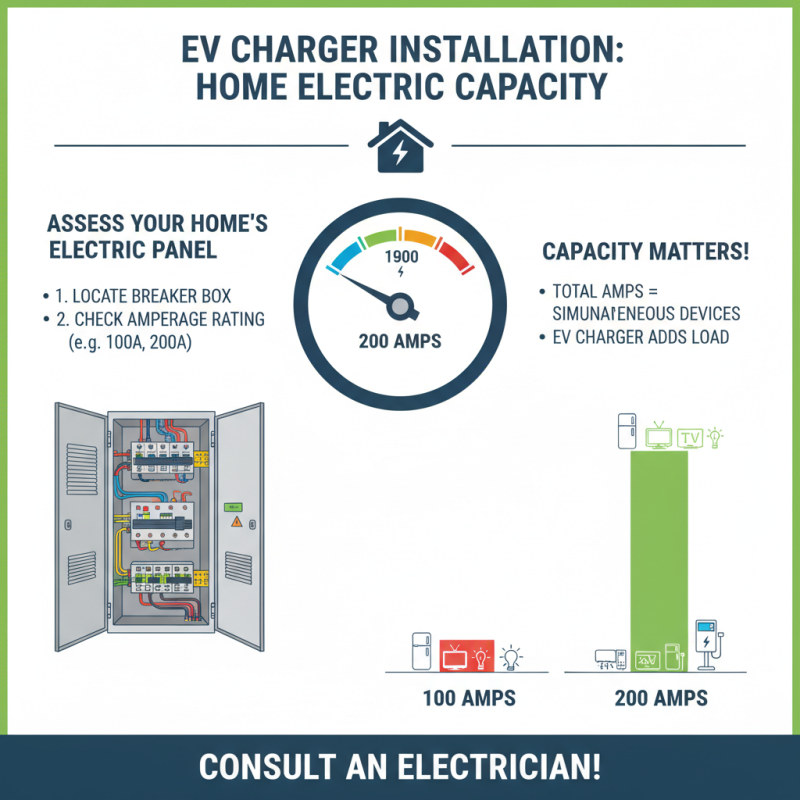
Next, consider the installation process. The best chargers should fit your home’s electrical system. Some homes may need upgrades to support faster chargers. A report from the Electric Power Research Institute highlights that nearly 40% of homeowners face electrical capacity issues when installing EV chargers. This unexpected cost can impact your choice significantly.
Lastly, think about smart technology features. Many modern chargers come with app control, scheduling, and energy management systems. Reports indicate that chargers with smart features can optimize energy usage during off-peak hours, leading to savings. However, not every user values these features, which can complicate the decision-making process. The best charger aligns with your driving habits and home setup.
How to Choose the Best EV Charger for Your Needs? - Key Factors to Consider When Choosing an EV Charger
| Feature |
Description |
Consideration |
| Charging Speed |
Level 1 chargers offer slow charging, while Level 2 chargers provide faster charging capabilities. |
Determine how quickly you need to recharge based on your driving habits. |
| Installation Requirements |
Some chargers may require special electrical work or permits for installation. |
Check if your home setup can accommodate the charger and installation type. |
| Portability |
Some chargers are designed to be portable for use in different locations. |
Consider if you need a stationary charger or a portable option for travel. |
| Smart Features |
Smart chargers can connect to apps for monitoring and scheduling charging times. |
Evaluate if you want the ability to control and monitor your charging remotely. |
| Safety Features |
Look for chargers with built-in safety features like surge protection and auto shut-off. |
Ensure the charger you choose meets safety standards and regulations. |
| Price |
Price can vary significantly based on features and charging speed. |
Determine your budget and weigh it against the features you need. |
Evaluating Charging Speed and Power Levels for Your Vehicle
Choosing the right EV charger is crucial for optimizing your electric vehicle's performance. One key factor to consider is charging speed. Charging speed typically varies by charger type. Level 1 chargers, often standard home outlets, provide a slow charge of about 4-5 miles per hour. This isn’t efficient for daily use, especially if you drive long distances.
Level 2 chargers, which are common in public charging stations, offer faster rates, adding approximately 25 miles of range per hour. The competitive range for most EV drivers lies in this level. A report from the U.S. Department of Energy indicates that nearly 80% of EV owners use Level 2 chargers at home. This extensive usage highlights their practicality.
Power levels also matter. Chargers come with power ratings ranging from 3.7 kW to 22 kW. Selecting a charger with adequate power can make your daily routine smoother. However, it's vital to assess your vehicle's capabilities. Some models may not support higher power levels.
Considering the variations in charging speeds and power levels can significantly impact your ownership experience. Ignoring these aspects might leave you with insufficient charging solutions. Reflecting on your daily needs can lead you to a more tailored decision.
Comparing Costs and Long-Term Value of Various EV Charger Options
When selecting an EV charger, understanding the costs and long-term value is crucial. Various options are available, but they come with different price tags and features. According to a recent industry report by the International Energy Agency, home chargers generally range from $500 to $2,000, excluding installation. This initial investment can seem daunting. However, the long-term benefits often outweigh the costs.
Operational efficiency is a key factor. Level 2 chargers, while pricier upfront, can charge your vehicle four to six times faster than standard chargers. Over time, this means less time waiting for your vehicle, translating to fewer gaps in your daily routine. Some studies suggest that high-efficiency models can save EV owners an average of $300 annually in charging costs based on electricity rates.
Tip: Think about your daily driving habits. If you drive long distances often, invest in a faster charger. If your needs are minimal, a basic model may suffice. Evaluate your daily use to determine the best value. Remember, not all chargers are equal in efficiency. Look for user reviews and performance ratings to make an informed choice.