How to Choose the Right Ac V2l Cable for Your Needs?
Selecting the right Ac V2l Cable is crucial in today’s fast-evolving technological landscape. It may seem simple, but various factors come into play. From the cable's length to its compatibility with your device, every detail matters.
A good Ac V2l Cable should meet your specific needs. You might think that a basic cable will suffice, but that could lead to disappointments later. Consider the quality of materials used. Sometimes, cheaper options may not perform well.
In addition to performance, think about the design and packaging. Some cables come with useful features like bend protection or eco-friendly materials. Reflect on what you truly need as not every fancy feature may be useful for you. Taking the time to analyze your requirements will help avoid common pitfalls.
Understanding the Basics of AC V2L Cables and Their Applications
AC V2L cables are crucial for modern energy solutions. Understanding their basics helps in selecting the right one. These cables enable Vehicle-to-Load (V2L) functionality, allowing electric vehicles to power appliances and devices. They are designed to transfer electricity safely and efficiently, ideal for outdoor activities and emergencies.
Data shows that V2L applications are growing rapidly. A recent report by a leading energy research firm indicates a 30% increase in demand over the past year. This trend reflects a shift towards renewable energy sources and smart grid technologies. The versatility of AC V2L cables makes them suitable for various applications, including camping, construction sites, and emergency backup power.
When choosing a cable, consider the wattage and amperage requirements. Not all V2L cables support the same power levels. A cable that is too weak can cause overheating, leading to safety hazards. It’s also important to factor in the environment where the cable will be used. Weather resistance may be necessary for outdoor uses, but extra weight could hinder portability. Reflecting on these aspects can enhance your user experience.
Identifying Your Power Requirements: Voltage and Current Specifications
When selecting the right AC V2L cable, understanding voltage and current specifications is crucial. Most devices operate within a specific voltage range. For example, many appliances require 110-240V. Exceeding these limits can cause equipment damage. Current specifications gauge how much power a device pulls from the cable. Typically, this is measured in amperes (A). A standard household circuit often carries 15-20A.
Industry reports indicate a significant number of users undervalue the importance of matching these specifications. A mismatch can lead to overheating or even fire hazards. Users must pay attention to their devices' power requirements. Ignoring this may result in costly repairs or replacements. Different applications require varying amperage. For example, high-watt appliances like air conditioners may need up to 30A.
It’s tempting to use a cable that seems compatible. However, not evaluating current needs can leave users puzzled when devices fail. Asking the right questions helps prevent issues. Checking compatibility with voltage ratings is essential in ensuring your setup is safe and efficient. This diligence can save time, money, and potential danger.
Power Requirements for AC V2L Cables
Evaluating Cable Length and Compatibility for Optimal Performance
Choosing the right AC V2L cable can be confusing. One of the key factors to consider is cable length. A longer cable offers more flexibility in connecting your devices. However, longer cables can cause signal degradation. This means you might not get the performance you expect. So, you need to balance convenience with functionality.
Compatibility is another critical aspect. Not all cables work with every device. Some cables might fit physically but won't transfer power effectively. It's essential to check specifications before purchasing. Using incompatible cables can lead to frustrating experiences. You may end up with devices that don’t charge as expected.
When selecting a cable, think about your environment. Will it be used indoors or outdoors? Factors like weather exposure, wear, and tear should influence your choice. A cable that works fine in one setting might fail in another. Reflect on your specific needs and how often you’ll use the cable. These considerations can guide you toward the best option for your situation.
How to Choose the Right AC V2L Cable for Your Needs?
| Cable Type |
Length (ft) |
Compatibility |
Max Current (A) |
Price ($) |
| Type A |
10 |
Device Model X |
16 |
25 |
| Type B |
15 |
Device Model Y |
20 |
35 |
| Type C |
20 |
Device Model Z |
25 |
45 |
| Type D |
25 |
Device Model A |
30 |
50 |
Assessing Durability and Weather Resistance in AC V2L Cable Selection
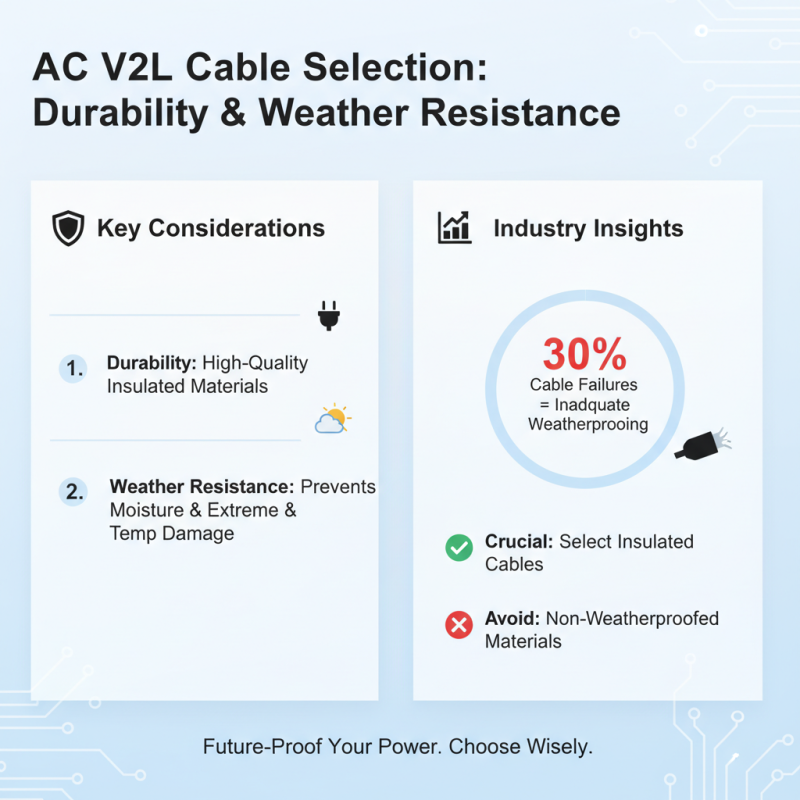
Choosing the right AC V2L cable requires careful consideration, particularly of durability and weather resistance. Industry reports indicate that approximately 30% of cable failures result from inadequate weatherproofing. Selecting cables made from high-quality, insulated materials is crucial. These materials help prevent damage from moisture and extreme temperatures.
When evaluating cables, look for IP ratings. A high IP rating means better protection against dust and water ingress. Research indicates that cables with a rating of IP68 can withstand being submerged in water. This is vital for outdoor use. Additionally, cables must be resistant to UV light, which can degrade less durable materials. Many fail to consider this factor, leading to premature wear.
It's important to scrutinize the longevity of the cable materials. The average lifespan of a weather-resistant cable can vary greatly, sometimes as short as five years. Be wary of vague warranties that do not guarantee performance in harsh conditions. Investing in more resilient cables might require a higher initial cost. However, it often pays off in the long run, reducing the need for frequent replacements. The challenge lies in striking a balance between cost and the necessary durability for your specific environment.
Exploring Industry Standards and Certifications for AC V2L Cables
When selecting an AC V2L cable, understanding
industry standards and certifications
is crucial. Many cables are compliant with IEC 62196, a key standard for electric vehicle connectors.
This ensures safety and compatibility across devices.
According to a recent report by the International Electrotechnical Commission, standardization can significantly
reduce risks associated with electrical faults.
One essential tip is to check for certification marks like
UL or CE. These certifications indicate that the cable meets safety regulations.
Beware of cables lacking these marks. They may save money but could compromise your safety.
Poorly designed cables might overheat or pose other hazards, leading to costly damages.
Additionally, consider the cable’s thickness and materials. A heavier gauge
can handle more current safely. Research shows that using the right gauge can prevent performance issues.
For example, using a cable that’s too thin for your needs can lead to voltage drops.
This diminishes efficiency and prolongs charging times. Remember, the right choice can enhance your
charging experience, while the wrong one may lead to regrets. Always prioritize quality and compliance
over price.