Top 10 Electric Car Chargers to Power Your EV Today?
Electric vehicles (EVs) are rapidly transforming the automotive landscape. As EV adoption grows, so does the need for reliable Electric Car Chargers. According to the International Energy Agency, the number of electric cars on the road reached 10 million in 2020. This statistic indicates a strong shift towards sustainable transportation. However, the charging infrastructure has not expanded at the same rate, raising concerns about accessibility.
Many drivers face challenges finding compatible chargers. A report by BloombergNEF states that the global EV charging market will reach $190 billion by 2030. This underscores the urgent need for a robust network of Electric Car Chargers. Innovation in charging technology is crucial. Fast chargers can significantly reduce wait times, enabling longer trips. Still, discrepancies in charger types complicate user experience.
Managing charging at home or on the go remains a puzzle for many. Quality and durability should be top priorities when selecting an Electric Car Charger. However, not every product meets these standards. Prospective buyers should be wary of less reliable options that may not withstand the test of time. Finding the right charger is essential for maximizing your EV's performance and convenience.
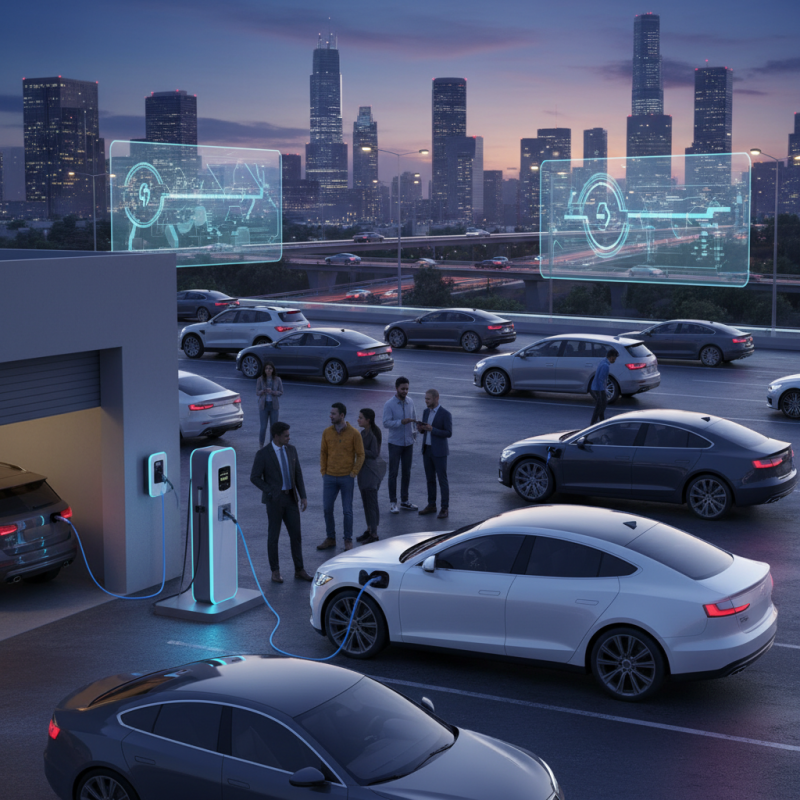
Top 10 Electric Car Chargers: A Comprehensive Overview
Electric vehicles (EVs) are becoming more common on our roads. As a result, the need for reliable charging solutions is critical. A good charger should be fast, efficient, and user-friendly. It's essential to find a charger that matches your driving habits. Some drivers prefer home chargers, while others need portable options.
When choosing an electric car charger, think about your lifestyle. Do you travel frequently? A portable charger may suit your needs better. If you stay close to home, a wall-mounted option could work. Many chargers offer features like smart connectivity or adjustable power settings. These can enhance your charging experience. However, some charging stations may take longer than expected to power up your vehicle. This delay can be frustrating for busy drivers.
It's important to understand the different charging speeds available. Fast chargers can significantly reduce charging time. But not all EVs can handle high-speed charging. Check your vehicle's compatibility before making a choice. Remember, while charging might seem straightforward, the wrong charger can lead to inconvenience. Exploring different options and features is vital in making an informed decision. Your choice can impact your daily routine and overall driving experience.
Charging Speed: Understanding Level 1, Level 2, and DC Fast Chargers
When charging an electric vehicle (EV), the type of charger you use significantly impacts charging speed. Level 1 chargers are the most basic. They typically use a standard household outlet and deliver about 4-5 miles of range per hour. This is slow, making them suitable for overnight charging at home. However, most EV owners find this insufficient for daily usage.
Level 2 chargers provide a substantial upgrade. These units can be found in public charging stations and can deliver 10-60 miles of range per hour, depending on the power output. A recent study by the International Energy Agency found that nearly 70% of EV charging happens at home using Level 2 chargers. This level strikes a balance between convenience and speed, allowing most users to recharge overnight or in a few hours during the day. Yet, many public charging stations still lack sufficient coverage.
DC Fast Chargers are another option, offering rapid charging capabilities. They can replenish 80% of an EV's battery in around 30 minutes. This speed is crucial for long road trips. However, infrastructure is still developing. A report from the U.S. Department of Energy revealed that only about 25% of public charging stations offer DC Fast Charging. For many drivers, this means planning trips carefully to avoid charging delays.
Top 10 Electric Car Chargers to Power Your EV Today
| Charger Type |
Charging Speed (miles/hour) |
Voltage (V) |
Charge Time (0-100% in hours) |
Best Use Case |
| Level 1 Charger |
2-5 miles/hour |
120V |
20-50 hours |
Home charging |
| Level 2 Charger |
10-60 miles/hour |
240V |
4-8 hours |
Home and public charging |
| DC Fast Charger |
60-100 miles/30 min |
400V+ |
0.5-1 hour |
Road trips, quick charging |
| Solar Charger |
8-15 miles/day |
Varies |
24 hours (sunlight dependent) |
Sustainable charging |
| Mobile Charger |
3-25 miles/hour |
120V or 240V |
8-20 hours |
Emergency charging |
| Smart Charger |
10-50 miles/hour |
240V |
4-10 hours |
Home automations |
| Level 1 Public Charger |
2-5 miles/hour |
120V |
20-50 hours |
Public locations |
| Level 2 Public Charger |
10-60 miles/hour |
240V |
4-8 hours |
Public stations |
| Fleet Chargers |
30-80 miles/hour |
480V |
1-2 hours |
Commercial fleets |
| Wireless Charger |
5-10 miles/hour |
Varies |
8-12 hours |
Innovative charging solution |
Key Features to Consider When Choosing an EV Charger
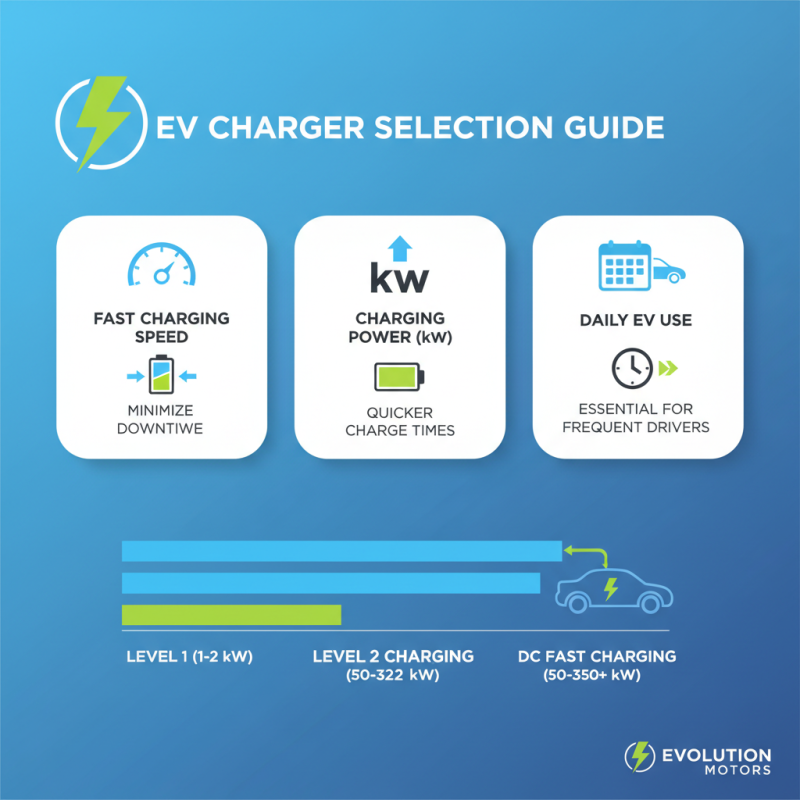
When selecting an electric vehicle charger, several key features should guide your decision. Charging speed is crucial. Look for options that support fast charging to minimize downtime. Charging power is measured in kilowatts (kW). Higher kW numbers enable quicker charging times. This is especially important for those who rely on their EVs daily.
Consider compatibility with your vehicle. Not all chargers work with every model. Check the specifications to ensure a proper fit. Another important factor is installation. Some chargers require professional setup. Others are designed for DIY installation, which may save you money. Ensure that the location you choose for installation is conveniently close to your parking area.
User interface is another aspect to reflect upon. Look for chargers with user-friendly designs. LED indicators, touchscreens, and mobile app connectivity can enhance your experience. Many chargers offer features like scheduling and usage tracking. These may help you manage your charging efficiently. Remember, not every feature will matter to every user. Assess your personal needs carefully and weigh the importance of each feature based on your lifestyle.
Market Leaders: Leading Brands in Electric Car Charger Technology
As electric vehicles (EVs) gain popularity, the need for effective charging solutions increases. Charging technology is rapidly evolving, enabling faster and more efficient charging for consumers. Today, several key players lead this market, focusing on innovation and sustainability. Their commitment shapes the future of EV charging.
Many brands focus on user-friendly designs. They provide easy installation and straightforward interfaces. Some chargers even integrate smartphone connectivity, allowing users to monitor the charging process remotely. This technology can sometimes feel overwhelming, especially for those new to EVs. Different standards can complicate compatibility, leaving customers confused.
The emphasis on fast charging remains crucial. While many chargers speed up the process, not all locations are equipped for high-powered options. An imbalance exists, with urban areas often better served than rural ones. This discrepancy can serve as a reminder that as technology advances, the infrastructure must keep pace. The evolution of charging solutions highlights the complexities of transitioning to a more electric future.
Future Trends in EV Charging Infrastructure and Technology
As electric vehicles (EVs) gain popularity, the charging infrastructure must evolve. A report from the International Energy Agency indicates that there are over 1.3 million public chargers worldwide as of 2023. Yet, this number needs to grow significantly to meet future demand.
Innovative solutions are emerging. Wireless charging technology is being tested in urban areas. This method allows cars to charge while parked or even driving over charging pads. However, it's still in the early stages. Many cities lack the required infrastructure for widespread implementation.
Battery technology is also advancing. By 2030, the cost of battery packs is expected to fall by 60%, according to analysts. This could drive the price of EVs down, making them more accessible. Yet, the charging network must keep pace. Many regions still struggle with long wait times at public chargers. These challenges highlight the need for ongoing investment and development.
Governments and companies must collaborate to create efficient, user-friendly charging solutions. As EV adoption increases, the charging network must adapt quickly. Otherwise, the frustration for drivers may lead to setbacks in EV growth.