
Leave Your Message
Wall Mounting EV Charge Station

Wall Mounting EV Charge Station

What Are China Top 10 AC V2L Cable Suppliers?

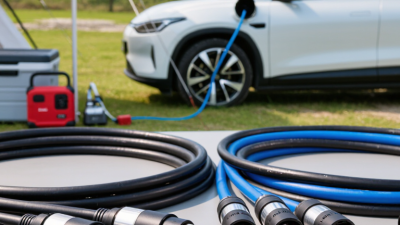
China has become a major manufacturing base for electric-vehicle charging accessories, including the increasingly requested Ac V2l Cable. This cable connects an electric vehicle’s battery to external appliances, tools, emergency lights, or small household equipment. Its value is practical. During a campsite stop, it may run a cooler beside the vehicle. During an outage, it may support essential devices, when local regulations and vehicle limits permit.

This guide examines China’s top 10 Ac V2l Cable suppliers through measurable factors. These include connector quality, conductor design, insulation strength, temperature resistance, factory experience, testing procedures, customization ability, and export support. We also consider whether suppliers publish clear specifications instead of relying on attractive photographs. That difference matters. A neat cable can still hide weak strain relief, poor contact plating, or unclear overload protection.

EV charging researcher and engineer Dr. Matthias Preindl emphasizes a useful principle: “Power transfer is only as reliable as the complete system around it.” This idea applies directly to V2L products. A cable is not merely a plug and wire. It must match the vehicle, inverter architecture, output rating, and operating environment. The ranking is therefore not based only on price or production volume. It reflects practical supplier credibility, documented performance, and buyer support. Some information may change as factories update models, certificates, or connector designs. That is an unavoidable limitation. Buyers should still verify current test reports, warranty terms, and compatibility before placing an order.
What Are China Top 10 AC V2L Cable Suppliers?

What Is an AC V2L Cable and How Does It Work?

An AC V2L cable allows an electric vehicle to power external appliances through its charging port.

It is useful at campsites, construction areas, and during short power interruptions. The vehicle supplies alternating current, while the cable manages the connection between the car and the load.

The process is more controlled than simply joining wires. The vehicle’s onboard system checks whether V2L output is supported. The cable then uses control signals to confirm connection and current limits. Safety components may monitor leakage, temperature, overload, and grounding.

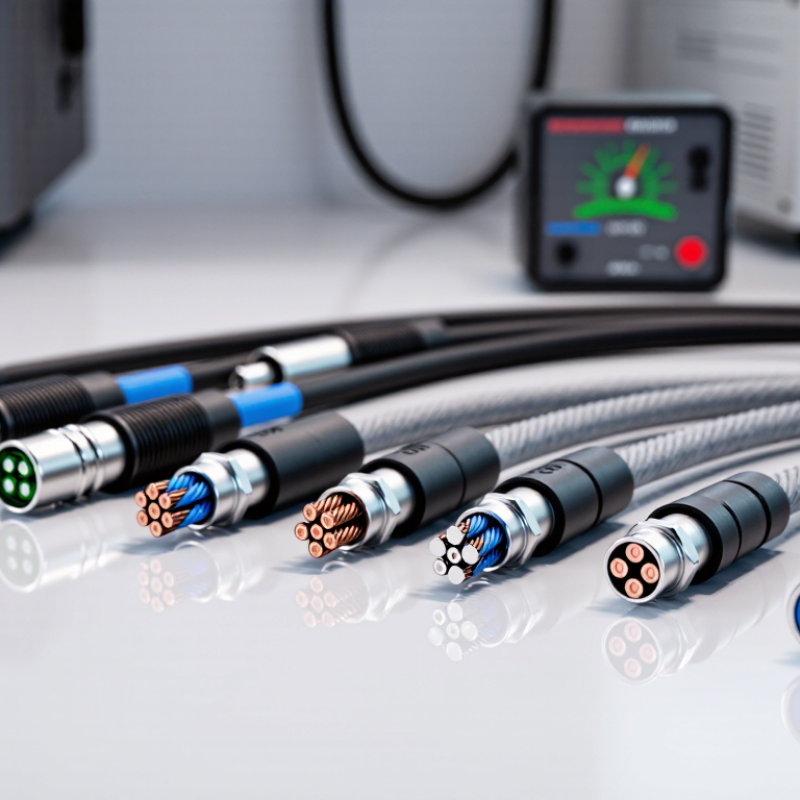
A typical cable connects to the vehicle on one side and provides a standard AC socket on the other.

Some versions include a compact control box.

Not every EV supports AC V2L.

The cable cannot add this function by itself. When comparing China’s top ten AC V2L cable suppliers, buyers should request vehicle compatibility data, wiring diagrams, inspection records, and sample-test results.

Pay close attention to conductor size, connector quality, insulation, sealing, and operating temperature.

A supplier with traceable materials and repeatable testing is more reliable than one offering only a low price.

Field testing often reveals small problems.

The plug may become warm under continuous high load. The socket position may also be inconvenient. I would test the cable with a measured load, not only a household lamp. Certification documents should match the exact model, because similar-looking cables can have different electrical limits. Safety labels must remain clear after repeated handling.

Why Are AC V2L Cables Important for Electric Vehicles?

An AC V2L cable allows an electric vehicle to power external equipment through its battery system. It can support lights, laptops, cooling devices, and selected household tools during travel or emergencies. Unlike a basic extension lead, it must manage voltage, current, grounding, and communication with the vehicle.

Cable design matters in daily use. A suitable cable should match the vehicle’s AC output and the connected load. Oversized appliances may trigger protection or reduce battery range quickly. In practical checks, I look for firm connectors, clear markings, flexible insulation, and heat resistance near the plug. These details are easy to ignore.

Safety remains the key reason AC V2L cables matter. Reliable products usually include overload protection, stable contact points, and weather-resistant materials. Certification and testing records also help buyers compare suppliers more confidently. Still, a certified cable cannot correct unsafe wiring or damaged sockets. That part is often overlooked. Users should inspect the cable before each use and keep connections dry, ventilated, and away from heavy traffic. A small design weakness may become visible only after long operation, especially under continuous loads.

How Are China’s Top 10 AC V2L Cable Suppliers Selected?

Selecting China’s top 10 AC V2L cable suppliers requires more than counting factory listings. We examine verifiable production experience, engineering depth, and after-sales records. Each supplier must show consistent AC V2L cable output, traceable materials, and documented quality procedures. Factory visits or video audits can reveal crimping stations, insulation tests, and storage conditions. Small details matter. A clean test bench says something, although not everything.

Technical evaluation covers rated voltage, current capacity, connector compatibility, conductor size, insulation thickness, and temperature resistance. We review test reports from accredited laboratories, but paperwork alone is insufficient. Samples undergo repeated charging and discharging under controlled conditions. We inspect contact heating, locking strength, bend endurance, and sealing around the cable entry. Measurements are recorded at room temperature and during thermal stress. Results should be repeatable, not merely impressive once.

Commercial reliability also shapes the selection. We compare delivery consistency, minimum order flexibility, customization controls, response time, warranty clarity, and spare-part support. Export experience matters when documentation, packaging, and communication affect installation. References from installers and fleet operators add practical evidence. Still, supplier data may be selective, and independent verification is not always available. That limitation should remain visible. A supplier earns a top-10 position when technical proof, field experience, ethical conduct, and dependable service align over time.

What Are the Strengths of the Top 10 Chinese Suppliers?

China’s leading AC V2L cable suppliers stand out through practical engineering, stable production, and flexible customization. Many support Type 2 and regional connector requirements for vehicle-to-load applications. Their teams often adjust cable length, jacket material, current rating, and plug design for different vehicles and markets. This reduces installation problems in homes, workshops, campsites, and emergency power setups.

Their strongest advantage is manufacturing depth. Experienced factories usually control conductor drawing, molding, assembly, and final testing in one facility. This can improve consistency and shorten development time. Reliable suppliers test insulation resistance, grounding continuity, temperature rise, and mechanical strength. Some also provide traceable batch records and sample reports. That evidence matters more than attractive catalog images. However, no supplier is perfect. Documentation may vary, and a strong sample does not guarantee every production batch will match it.

Tips: Ask for current ratings, connector specifications, test methods, and inspection records before ordering. Confirm whether the cable supports continuous outdoor use, repeated bending, and moisture exposure. Request a sample with the intended vehicle and load equipment. Check labeling carefully. Small details prevent costly returns. Pricing should not be the only decision factor; unclear tolerances or weak after-sales support can create larger risks. A supplier that answers technical questions clearly is usually easier to trust over time.

How Can Buyers Choose the Right AC V2L Cable Supplier?

Choosing among China’s top 10 AC V2L cable suppliers requires more than comparing prices or export rankings. The International Energy Agency reported nearly 14 million electric cars sold globally in 2023, creating stronger demand for dependable charging and power-transfer accessories. Buyers should verify whether a supplier supports the required voltage, current, connector type, and vehicle compatibility. A cable rated for 16 amps may not suit a 32-amp application. Small differences matter.

Ask for complete technical files, not attractive samples. These should include insulation resistance results, temperature-rise tests, waterproof ratings, bending tests, and production traceability. IEC 62196-2 provides important requirements for AC vehicle connectors, while ISO 9001 certification can indicate process control, but neither document proves every cable is reliable. Request recent batch reports from an independent laboratory. Check the factory’s crimping equipment, final inspection stations, and defect records. A factory video is not evidence.

The supplier should explain its warranty terms, replacement process, and response time for field failures. It should also provide clear packaging labels and serial-number tracking. The IEA notes that charging infrastructure must expand alongside electric vehicle adoption, yet cable quality remains easy to overlook. I would not choose the lowest quotation without testing several samples under repeated load. Even experienced buyers can miss connector heating or weak strain relief. A practical evaluation should include a 30-minute load test, outdoor exposure, and repeated plug-in cycles before approving bulk production.

What Are China Top 10 AC V2L Cable Suppliers? - How Can Buyers Choose the Right AC V2L Cable Supplier?

The following is an anonymized supplier-selection benchmark rather than a verified company ranking. Supplier capabilities, certifications, connector compatibility, pricing, and lead times must be confirmed with current technical and commercial documents before purchase.

Supplier Profile Typical Manufacturing Focus Common AC V2L Cable Configuration Typical Electrical Range Relevant Standards to Request Quality Evidence to Check Typical MOQ for Standard Cable Typical Sample Lead Time Typical Mass-Production Lead Time Best Fit for Buyers Selection Rating
Supplier Profile 01 High-volume EV charging cable assembly Vehicle-side AC connector to portable AC socket; customized vehicle interface available Single-phase 220–250 V; commonly 10–16 A; 2.5 mm² conductor options IEC 62196, IEC 61851, IEC 60529; applicable national plug standard 100% continuity, insulation, grounding, polarity, and withstand-voltage testing 100–300 pieces 7–15 working days 20–35 working days Retailers and distributors seeking repeatable standard products ★★★★★
Supplier Profile 02 Custom cable and connector integration AC V2L cable with customized connector housing, cable length, and outlet format 220–250 V AC; 8–16 A typical; output must match the vehicle and load limits IEC 62196 or GB/T 20234.2, depending on connector system; IEC 60332 for cable flame performance Connector dimensional inspection, terminal pull-force test, temperature-rise test, and IP verification 50–200 pieces 10–20 working days 25–40 working days Automotive aftermarket projects requiring private-label customization ★★★★★
Supplier Profile 03 Outdoor and portable power cable production Compact AC V2L cable with weather-resistant enclosure and portable outlet 220–250 V AC; commonly 10–16 A; flexible copper cable with outdoor jacket options IEC 60529 for ingress protection; IEC 60332 for flame performance; local plug requirements IP test report, bending test, cold-flex test, cable abrasion test, and load-temperature test 200–500 pieces 7–14 working days 20–30 working days Outdoor equipment, emergency power, and camping applications ★★★★☆
Supplier Profile 04 GB/T-compatible EV charging accessory manufacturing GB/T vehicle-side connector to AC load outlet; vehicle compatibility must be confirmed 220 V AC; commonly 10–16 A; conductor size selected according to current and length GB/T 20234.2, GB/T 18487.1, GB/T 20234.1, and applicable plug standards GB/T connector test records, insulation resistance, dielectric strength, temperature-rise, and torque inspection 100–300 pieces 10–18 working days 25–40 working days Buyers targeting vehicles and markets using GB/T interfaces ★★★★☆
Supplier Profile 05 Type 2 EV accessory and European-market cable assembly Type 2 vehicle-side interface to an AC outlet or portable load connection 230 V AC; commonly 10–16 A for portable applications; higher current requires design validation IEC 62196-2, IEC 61851, IEC 60309 or local household plug standard CE technical file, LVD and EMC assessment where applicable, plus routine electrical test records 100–500 pieces 10–20 working days 25–45 working days European distributors requiring documented compliance support ★★★★☆
Supplier Profile 06 Low-volume engineering and prototype production Prototype AC V2L cable with adjustable length, plug, strain relief, and labeling 220–250 V AC; commonly 8–16 A; design finalized after vehicle and load testing Applicable IEC or GB/T connector standard; IEC 61851 principles where control functions are used Engineering drawings, FMEA, prototype test plan, cable flex testing, and sample traceability 10–50 pieces 5–12 working days 15–30 working days Start-ups, pilot programs, and product-development teams ★★★★☆
Supplier Profile 07 Heavy-duty cable and industrial connector assembly AC V2L cable connected to robust industrial socket or weather-resistant outlet 220–250 V AC; 16 A common; continuous-load suitability must be verified by testing IEC 60309 where industrial plugs are used; IEC 60529; applicable cable safety standards Terminal crimp-height records, pull-force testing, thermal-rise testing, IP testing, and material certificates 100–300 pieces 12–20 working days 30–45 working days Construction, service, emergency-response, and industrial users ★★★★☆
Supplier Profile 08 OEM and private-label accessory manufacturing Branded packaging, molded logo, custom color, cable marking, and user manual options 220–250 V AC; 10–16 A typical; rating depends on connector, cable, and outlet design Applicable IEC, GB/T, CE, UKCA, or other destination-market requirements Incoming-material inspection, production traceability, batch testing, packaging inspection, and audit support 300–1,000 pieces 15–25 working days 30–60 working days Brands and wholesalers ordering retail-ready products ★★★★☆
Supplier Profile 09 Fast-turnaround cable assembly and export fulfillment Standardized AC V2L cable with limited connector and packaging choices 220–250 V AC; 10–16 A typical; standard lengths commonly available Relevant connector standard, destination-market plug standard, and cable safety requirements Pre-shipment inspection, batch test report, product labeling review, and carton-drop testing 100–500 pieces 5–10 working days 15–30 working days Urgent replenishment and buyers prioritizing short delivery times ★★★☆☆
Supplier Profile 10 Cost-focused standard cable production Basic AC V2L cable using standard housing, standard plug, and fixed cable length 220–250 V AC; commonly 10–16 A; verify conductor cross-section and thermal performance Applicable IEC or GB/T requirements; destination-market plug and safety requirements Verify copper content, terminal crimp quality, insulation resistance, dielectric strength, and load test results 300–1,000 pieces 7–15 working days 20–35 working days Price-sensitive buyers with clearly defined specifications ★★★☆☆

Buyer checklist: confirm vehicle-side compatibility, continuous current rating, conductor cross-section, cable length, plug standard, IP rating, temperature rise, protection functions, certification scope, sample performance, warranty terms, traceability, and destination-market import requirements. An AC V2L cable must not be treated as universally compatible because vehicle output interfaces and control methods vary by vehicle model.