Top Electric Car Charger Options for Every Driver in 2026?
As the electric vehicle market continues to expand, the demand for efficient Electric Car Chargers is surging. Industry reports indicate that by 2026, the number of EVs on the road will exceed 30 million in the U.S. alone. This growth necessitates the development of charging solutions that cater to varying driver needs. According to Dr. Emily Carter, a leading researcher in electric vehicle technology, “The future of charging infrastructure must be as innovative as the cars themselves.”
Drivers are now looking for chargers that offer not just speed, but also convenience and compatibility. Public charging stations are becoming more accessible, yet many consumers still feel a lack of reliable options. A recent survey revealed that 70% of potential EV buyers express concerns about charging accessibility. This gap highlights the need for diverse Electric Car Charger solutions tailored to everyday drivers.
Moreover, as automakers roll out new models, the variety of charging options can be overwhelming. Understanding the different types of chargers—level 1, level 2, and fast chargers—can be challenging. It's crucial to acknowledge the imperfections in the current charging landscape. As we advance, both manufacturers and consumers must collaborate to improve infrastructure and adapt to an evolving market.
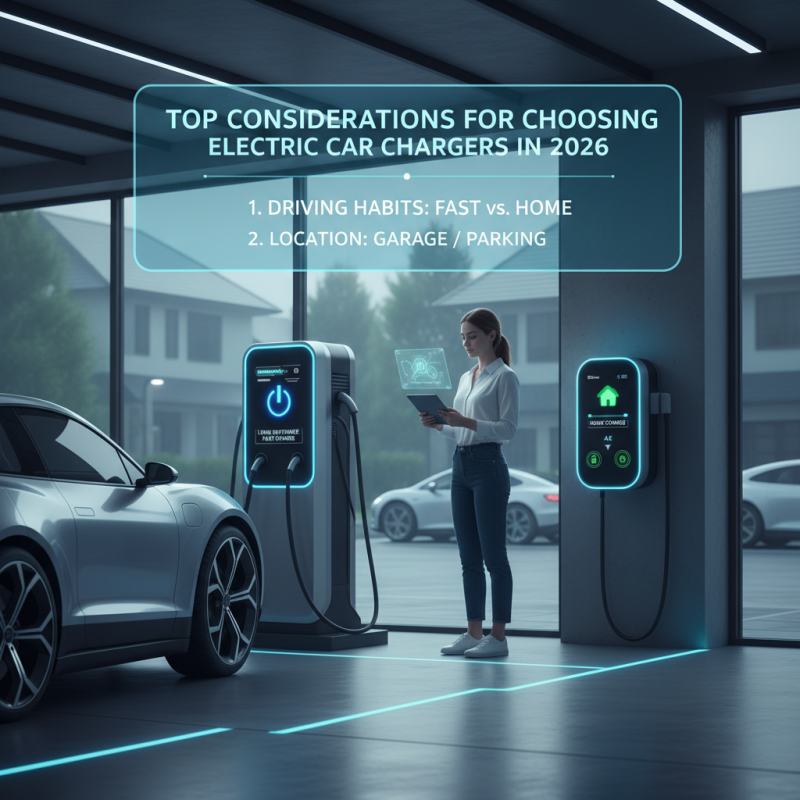
Top Considerations for Choosing Electric Car Chargers in 2026
Choosing the right electric car charger in 2026 requires careful consideration. First, assess your charging needs based on your driving habits. If you drive long distances frequently, consider a fast charger. Home charging stations may suit those with shorter daily commutes. Think about the location of your charger too. A garage or a designated parking space can simplify installation.
Compatibility is another crucial factor. Make sure the charger works with your vehicle model. Keep in mind that some chargers may require specific adapters. Also, evaluate the charging speed. Faster chargers can significantly reduce downtime. However, they can be more expensive to install. Price is a reflection of features, so balance needs with budget.
Future-proofing your investment can be challenging. New technology emerges quickly and needs change. It’s wise to stay informed about advancements in charging options. Consider the potential growth of charging infrastructure in your area. Look for trends that may impact accessibility. While selecting a charger can feel overwhelming, breaking down these elements eases the process.
Types of Electric Car Chargers: Level 1, Level 2, and DC Fast Charging
As electric vehicles (EVs) gain popularity, understanding charger types is essential. In 2026, three main types will dominate the market: Level 1, Level 2, and DC Fast Charging. Level 1 chargers use standard household outlets, providing about 4-5 miles of range per hour. This is ideal for overnight charging at home. However, it can be frustrating for those needing quicker solutions.
Level 2 chargers, with a higher voltage output, can deliver 10-20 miles of range per hour. According to the U.S. Department of Energy, installations for Level 2 chargers in public spaces increased by over 50% from 2020 to 2023. This trend indicates a growing network, easing range anxiety. Yet, access can still vary significantly by region, prompting concerns about equity in charging infrastructure.
DC Fast Charging offers the quickest solution, adding 60-100 miles of range within 30 minutes. Despite being praised for speed, these chargers can be scarce. A report from the International Energy Agency in 2022 noted that only 20% of charging stations are DC Fast Chargers. This raises important questions about accessibility for long-distance travelers. As we move forward, an imbalance in charger distribution and charging speed could impact EV adoption rates.
Top Electric Car Charger Options for Every Driver in 2026
This chart illustrates the various types of electric car chargers projected for widespread use in 2026. It compares the charging speed (in miles of range per hour) across Level 1, Level 2, and DC Fast Charging types, providing insights for drivers looking to choose the best option for their needs.
Key Features to Look for in Electric Car Charging Stations
When considering electric car charging stations in 2026, several key features stand out for any driver. Fast charging capabilities are essential. Look for chargers that can deliver at least 150 kW of power. This ensures quick turnaround times, which is particularly important during road trips. Availability of multiple charging ports also matters. It allows for simultaneous charging and makes stations more convenient.
Safety features should never be overlooked. Chargers should have built-in protections against overcurrent and short circuits. Additionally, user-friendly interfaces with clear instructions enhance the overall experience. Some stations even provide real-time updates on availability and charging status.
Tips: Always check compatibility with your electric vehicle before use. Built-in payment options can streamline the process. Particularly in high-demand areas, consider the station's location. It's ideal to find a charger close to amenities like cafes or rest areas. Remember that not all charging stations are created equal; some may take longer than others.
Top Electric Car Charger Options for Every Driver in 2026
| Charger Type |
Charging Speed |
Compatibility |
Key Features |
| Level 2 Charger |
4-10 hours |
Most EVs and PHEVs |
Smart app integration, adjustable power output |
| DC Fast Charger |
30 minutes |
Compatible with select EVs |
High power output, rapid charging, payment integration |
| Home Charger |
8-12 hours |
Most EVs |
User-friendly, plug-and-play installation |
| Solar Charger |
Varies |
Most EVs |
Eco-friendly, energy independence |
| Portable Charger |
Varies |
Most EVs |
Compact, easy to carry, versatile use |
Understanding Charging Speed and Its Importance for Electric Vehicle Drivers
Charging speed is crucial for electric vehicle (EV) drivers. A slow charger can be frustrating. You often find yourself waiting longer than expected. This can disrupt your plans. Fast-charging options, however, can significantly reduce downtime. Understanding the various charging levels helps drivers choose the best charging method for their needs.
Tips: Always check your vehicle's compatibility with charging stations. This ensures a smoother experience. Additionally, consider the locations where you'd typically charge. Not all areas have fast chargers available. It's essential to plan your routes accordingly.
The charging landscape is constantly evolving. New technologies emerge frequently, promising quicker and more efficient charging solutions. However, as advancements continue, not all chargers will serve every type of vehicle. It’s vital to stay updated. This ongoing change can lead to confusion among drivers.
You may find a charger that initially seemed ideal, but it may not meet future needs. This need for adaptability in an ever-changing market is essential for EV owners.
The Future of Charging Infrastructure: Trends and Innovations in 2026
The charging infrastructure expected in 2026 reveals significant innovations. Industry experts predict a substantial increase in
ultra-fast charging stations. These stations will provide charging capabilities of up to
350 kW. This means a full charge in less than 20 minutes for many electric vehicles.
Reportedly, the demand for fast charging solutions will rise by 50% over the next few years.
Wireless charging technology is also on the horizon. Trials show that it can make charging as convenient
as parking. Charging pads embedded in pavement could enable cars to charge passively. Advances in this area promise increased efficiency
but raise questions about installation costs. Additionally, some studies indicate that up to 30% of charging stations may
remain underutilized if locations are poorly chosen.
Another emerging trend is the integration of renewable energy sources. Solar-powered charging
stations are being introduced in urban areas. This shift is aimed at improving sustainability but may lead to reliability concerns during peak usage.
The balance between renewable energy use and grid demands will require ongoing discussion and adjustment.
Addressing these challenges is vital for building an accessible and efficient electric vehicle charging network.