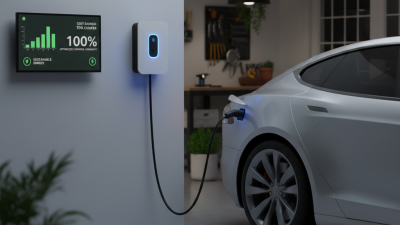

Wall Mounting EV Charge Station
Top EV Charging Cable Suppliers for Global Buyers?
Choosing the right Ev Charging Cable supplier now affects safety, uptime, and customer confidence. Global buyers need more than attractive pricing. They need verified materials, stable production, and documented testing.
The International Energy Agency’s Global EV Outlook 2024 reported more than four million public charging points worldwide by the end of 2023. Public charging networks also expanded by about 40% during that year. This growth increases demand for Type 2, CCS, GB/T, and liquid-cooled charging cables. It also exposes weaknesses in inconsistent quality control.
As IEA Executive Director Fatih Birol stated, “Electric cars are rapidly becoming a reality for many people.” His observation highlights a practical challenge. Cable suppliers must support this reality with dependable products, not only ambitious catalogs.
Reliable manufacturers usually provide IEC 62196 compliance, clear conductor specifications, IP ratings, temperature limits, and traceable test records. Buyers should also examine bend-cycle performance, connector heating, cable flexibility, and after-sales support. A cable may look identical in a photograph but perform differently beside a busy highway charger.
The market is not tidy. Some supplier claims remain difficult to compare. Certification documents can also be incomplete or outdated. That is why this guide evaluates suppliers through product evidence, manufacturing experience, regional delivery capability, and technical transparency.
Cost still matters. However, a cheaper cable can create replacement delays, unsafe heat buildup, or costly downtime. The strongest global suppliers combine engineering discipline with realistic communication. They admit limitations. That matters.
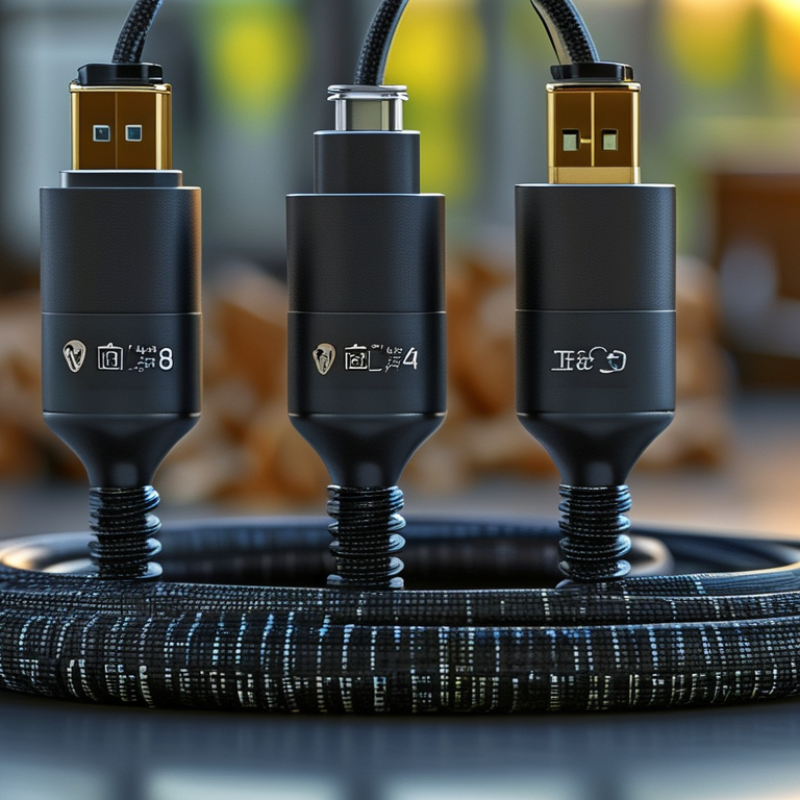
Define Global Demand with IEA’s 2023 Baseline of Over 4 Million Public Chargers
Top EV Charging Cable Suppliers for Global Buyers?
The IEA’s Global EV Outlook 2024 reported more than 4 million public charging points worldwide in 2023. This figure defines a large, uneven market for charging cables. Europe, China, and North America hold major infrastructure shares, while emerging markets continue building basic charging access. The number is imperfect. Public chargers are counted differently across countries, and cable demand does not equal charger demand. Some stations use fixed cables, while others require replaceable units.
Global buyers should assess suppliers against actual operating conditions, not catalog claims. The IEA expects public charging capacity to expand sharply by 2035 under stated policies. That growth increases demand for cables supporting higher currents, frequent bending, outdoor exposure, and long service cycles. The International Electrotechnical Commission’s IEC 61851 and IEC 62196 standards provide useful references for charging equipment safety and connector compatibility. Cables should also show clear test records for insulation, temperature rise, water resistance, and mechanical durability.
A practical sourcing review can compare conductor size, cooling design, bend radius, connector protection, and traceable quality control. The U.S. Department of Energy notes that charging reliability depends on equipment performance, installation quality, and maintenance. That matters in dusty depots and freezing parking areas. Price alone can mislead. A cheaper cable may increase replacement frequency, downtime, and inspection costs. Suppliers should provide samples and field data. Even strong specifications need real-world verification.
Classify Charging Cables by IEC 62196, IEC 61851, and ISO 15118 Standards
Top EV Charging Cable Suppliers for Global Buyers
Global buyers should classify charging cables by function, not appearance. IEC 62196 defines plugs, sockets, vehicle connectors, and couplers. Type 1 commonly serves single-phase systems, while Type 2 supports single- and three-phase charging. DC systems use combined connectors covered by IEC 62196-3. The International Energy Agency reported over 17 million electric cars sold globally in 2024. That growth increases demand for tested, region-compatible cable assemblies.
IEC 61851 explains charging modes and control behavior. Mode 2 cables include in-cable protection for household charging. Mode 3 cables connect vehicles with dedicated AC equipment. Mode 4 supports controlled DC charging through external conversion equipment. ISO 15118 adds communication between the vehicle and charging station, including authentication and energy-management functions. It is not a connector standard. A cable may meet IEC 62196 yet fail a system’s communication requirements. This detail is often missed.
Tips: Ask suppliers for IEC test reports, temperature-rise data, IP ratings, bend-cycle results, and conductor cross-sections. Confirm whether ISO 15118 functions are supported by the complete charging system. The IEA also notes that public charging infrastructure must expand sharply to support EV adoption. Procurement teams should therefore test cables at cold, wet, and high-load conditions. Laboratory claims are useful, but field performance can differ. That gap deserves honest attention.
Compare Leading Suppliers by Power Ratings, Amperage, Cooling, and Test Data
Top EV Charging Cable Suppliers for Global Buyers?
For global buyers, power ratings should match the charging system, not just the sales brochure. A 7 kW AC cable commonly supports 32A single-phase charging. An 11 or 22 kW AC cable may require three-phase compatibility and suitable vehicle inlets. For DC applications, suppliers may offer cables rated from 60 kW to over 350 kW. Check continuous current, voltage range, connector temperature, and cable length together. A higher headline rating means little if the handle becomes uncomfortable after repeated charging cycles.
Amperage reveals practical performance. Many AC cables use 16A or 32A conductors, while high-power DC cables can reach 200A, 300A, or more. Liquid-cooled designs can reduce heat at high current. Air-cooled cables are usually simpler, lighter, and easier to maintain. During supplier evaluations, request thermal images, resistance readings, and test results after sustained operation. Ask whether tests used a warm outdoor environment, because laboratory data can look too clean.
Reliable suppliers should provide traceable reports for insulation resistance, contact temperature, mechanical endurance, water protection, and plug insertion cycles. Relevant testing should follow applicable international charging standards and local certification requirements. I would question any document without test dates, sample numbers, or laboratory details. One weakness remains: published data rarely shows long-term bending damage. A cable may pass a short test yet feel stiff after winter storage. Inspect sample flexibility, strain relief, and connector fit personally before placing a large order.
Verify CE, UL 2263, RoHS, REACH, IP, and IK Compliance for Global Markets
Top EV Charging Cable Suppliers for Global Buyers?
Global EV demand makes compliance verification a purchasing requirement, not a paperwork exercise. The IEA’s Global EV Outlook 2024 reported nearly 14 million electric car sales in 2023, representing about 18% of total car sales. As charging networks expand, cable suppliers must prove market readiness with traceable evidence.
Check CE documentation against the applicable European directives, because CE is a manufacturer’s conformity declaration, not an independent quality mark. For North American projects, request test evidence aligned with UL 2263. Confirm RoHS and REACH declarations for restricted substances, including material records for plugs, insulation, and terminals. Ask whether the documents cover the exact cable model, connector design, and production site. Paperwork is not proof.
Physical protection also matters. IP ratings, tested under IEC 60529, indicate resistance to dust and water. IK ratings, assessed under IEC 62262, address mechanical impact. A cable used beside a public charger may face rain, mud, trolley strikes, and repeated bending. Request laboratory reports, not only marketing sheets. The IEA’s Global EV Outlook 2024 also noted that public charging points exceeded four million worldwide in 2023, increasing pressure on reliable equipment. One weakness remains common: certificates may be valid, but samples may differ from mass production. Conduct incoming inspections, verify markings, and retain batch records. Suppliers should welcome that scrutiny.
Rank Suppliers by Capacity, Lead Times, Pricing, Warranty, and 2024 EV Demand
Top EV Charging Cable Suppliers for Global Buyers
A practical 2024 ranking should measure more than factory size. High-capacity suppliers usually support stable monthly output, automated testing, and multiple connector configurations. They suit fleet projects and public charging networks. Mid-sized suppliers often offer better pricing and faster customization. However, their production schedules may change during demand spikes.
Lead time deserves equal attention. A strong supplier can provide samples within two weeks and repeat orders within four to eight weeks. Check copper quality, insulation thickness, temperature ratings, and bend-cycle results. These details reveal manufacturing discipline. Pricing should include tooling, packaging, certification, and shipping costs. The lowest quote can become expensive later. Warranty terms also matter. Look for clear coverage on cable heating, connector failure, and insulation defects. A two-year warranty is useful, but responsive technical support is better. Sometimes.
For global buyers, rank suppliers by a balanced score:
capacity
lead time
pricing
warranty
2024 demand readiness
Suppliers serving fast-growing charging markets should show spare production capacity, documented quality systems, and realistic forecasts. Do not trust impressive brochures alone. Request recent inspection records and a small pilot order. My own procurement reviews have found that delivery consistency often beats a slightly lower unit price. Still, this ranking model needs adjustment for seasonal projects and regional certification requirements.
Tips: Ask for five production samples, not one. Compare cable weight and connector fit. Confirm warranty exclusions in writing. Recheck capacity before signing large contracts.
Related Posts
-
Top 10 Benefits of Installing a Home EV Charger for Electric Vehicle Owners
-
How to Choose the Best Portable EV Charger for Your Electric Vehicle
-
Top 10 China EV Charging Stations Buyers Should Know?
-
2025 Top 10 Ac Portable EV Chargers: Best Options for Electric Vehicle Owners
-
Why You Should Install an EV Charger Station at Home for Convenience and Savings
-
Top Electric Car Charger Options for Every Driver in 2026?