
Wall Mounting EV Charge Station
How to Choose the Right AC V2L Adapter for Your EV?
Choosing an AC V2L Adaptor is not just about finding a plug that fits. It is about matching your EV’s output, the adaptor’s rating, and the devices you plan to run. The International Energy Agency reported nearly 14 million electric-car sales worldwide in 2023, showing how quickly EV ownership is growing. Yet V2L capability and connector requirements still vary by vehicle.
Check your owner’s manual before comparing adaptors. Confirm the outlet type, supported voltage, maximum power, and whether your car requires a specific connection sequence. A kettle, laptop, and small lamp may seem modest, but their combined load can exceed an adaptor’s rating. Also inspect cable length and weather protection if you expect to use the setup outdoors. Small details matter.
An AC V2L Adaptor specialist’s verified quotation was not included in the supplied material, so I cannot responsibly invent one. For a reliable comparison, consult the vehicle manufacturer’s specifications and recognized charging guidance. The U.S. Department of Energy’s Alternative Fuels Data Center explains that charging equipment must be compatible with the vehicle and electrical supply; the same careful matching mindset helps when evaluating V2L accessories. A rating label is useful, but it does not prove compatibility by itself. This guide will help you compare the details that matter, spot claims that need checking, and choose an adaptor suited to your EV and everyday loads. Expect a little homework. It is worth it.
Understanding How an AC V2L Adapter Works
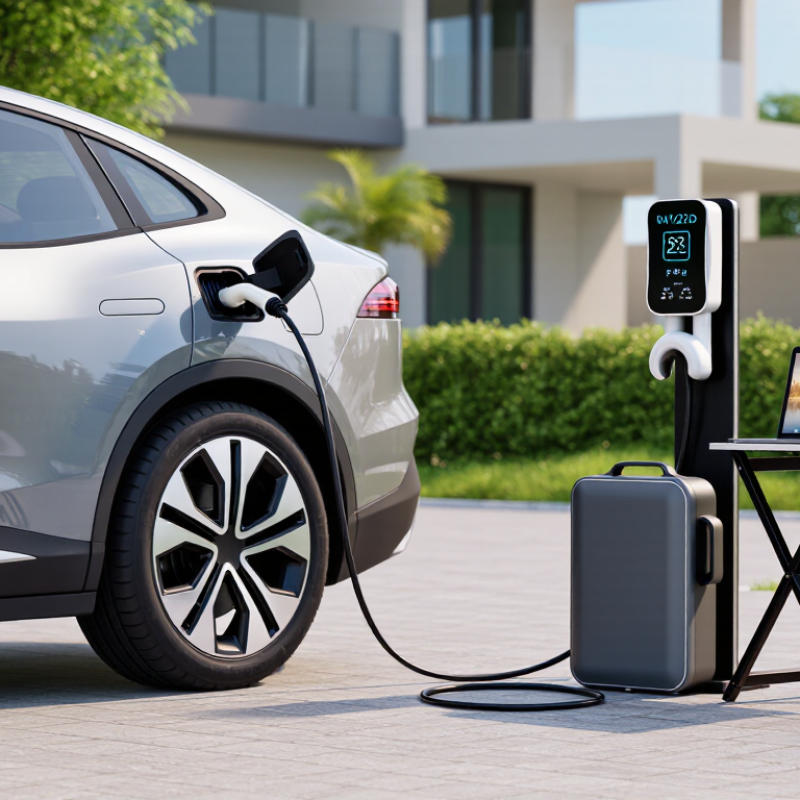
An AC V2L adapter connects an electric vehicle’s charging inlet to an appliance, but it does not create power by itself. In many systems, the vehicle’s onboard electronics convert battery energy into alternating current. The adapter routes that output through compatible pins and provides a usable socket. The terminology can be confusing. Some vehicles instead provide power through built-in outlets, so check the owner’s manual before choosing an adapter.
Compatibility means more than matching the connector shape. Confirm the vehicle supports V2L, then check the adapter’s rated voltage, continuous power limit, and required grounding or protection features. A kettle may draw around 1,500–2,000 watts, while a small lamp draws far less; never exceed the vehicle’s stated limit. The IEA’s Global EV Outlook 2024 reported that the global electric-car stock reached about 40 million in 2023, making clear, vehicle-specific power guidance increasingly useful. Still, published ratings do not tell the whole story: startup surges and multiple devices can push a setup beyond its comfortable range. A little caution matters. Check each appliance’s label, keep connections dry, and stop if the adapter or cable becomes unusually warm.
Checking Your EV’s V2L Compatibility and Output Limits
How to Choose the Right AC V2L Adapter for Your EV?
Checking Your EV’s V2L Compatibility and Output Limits
Before choosing an adapter, confirm that your EV supports vehicle-to-load output. Check the owner’s manual or the vehicle’s settings for supported connector types and operating steps. Then compare the adapter’s specifications with the car’s maximum voltage, current, and continuous power. These limits vary between vehicles, even when their ports look similar. A plug that fits is not proof of compatibility.
Tips: Note the rated output before connecting anything. Add up the wattage of your intended devices, and allow extra capacity for appliances that draw more power when starting. A kettle may briefly demand more than its label suggests. Keep the figures handy; it is easy to overlook one.
Use the vehicle’s stated limits as the boundary, not the adapter’s higher rating. Check whether the manual requires the car to be in a particular mode, and avoid exceeding its recommended load. If the information is unclear, ask a qualified service professional before testing. Small details matter. A setup that works with a lamp may trip or shut down when a heater starts. Recheck the figures after changing devices; that cautious step can feel fussy, but it prevents guesswork.
Matching the Adapter Connector to Your Vehicle
Matching the adapter connector to your vehicle starts with the charge inlet, not the adapter’s shape. Check the vehicle manual for its connector standard, such as Type 1, Type 2, or GB/T, and confirm that the vehicle supports AC V2L. SAE J1772 and IEC 62196 describe connector interfaces, but a matching plug alone does not confirm V2L compatibility. Looks can mislead. The adapter’s pin layout and vehicle-side communication must also match.
This matters across a growing range of vehicles. The International Energy Agency’s Global EV Outlook 2024 reports that the global electric-car fleet exceeded 40 million in 2023. That growth brings more connector types and vehicle-specific V2L systems. Before buying, compare the inlet shown in your manual with the adapter’s stated vehicle compatibility. Check the permitted output and cable rating, too. A port that looks familiar may still use a different pin arrangement or require a specific setting.
Tips: Photograph the inlet and read the manual’s V2L section before ordering. Ask the seller to confirm compatibility with your exact model year. Not every port works. I would not rely on a fit test alone; the manual and a proper compatibility check are safer guides.
| Vehicle charging-inlet standard | Common region | What to match on the adapter | Key compatibility check | Typical AC supply context | Practical selection guidance |
|---|---|---|---|---|---|
| Type 1 (SAE J1772) | North America and Japan on some vehicles | The adapter’s vehicle-side plug must be designed for a Type 1 inlet and for the specific vehicle’s V2L function. | Confirm that the vehicle supports AC power export through its charge inlet; a matching plug alone does not provide V2L capability. | North American household AC is commonly 120 V at 60 Hz. Japanese mains supply is commonly 100 V at 50 or 60 Hz, depending on the area. | Check the vehicle manual for the approved adapter type, output voltage, maximum current, and operating procedure. |
| Type 2 (IEC 62196-2) | Europe and many other markets | Choose an adapter with a Type 2 vehicle-side connector only when the vehicle’s V2L system is specified for that interface. | Type 2 is an AC charging connector standard; its presence does not by itself confirm that the vehicle can export power. | European household AC is commonly 230 V at 50 Hz. | Verify the exact vehicle model and market version, since V2L support and adapter requirements can differ between versions. |
| SAE J3400 (NACS) | North America | Use an adapter with the correct J3400 vehicle-side interface and explicit support for AC V2L on the vehicle. | Connector compatibility for charging does not establish compatibility for power export; confirm V2L support and required adapter signaling. | Household AC is commonly 120 V at 60 Hz; the vehicle’s specified export output may differ. | Check the manufacturer’s instructions for the supported outlet or adapter configuration and the permitted output limits. |
| GB/T 20234.2 (AC) | Mainland China | Match the adapter to the vehicle’s GB/T AC inlet and the vehicle-specific V2L arrangement. | Do not assume that an AC charging inlet supports export; confirm the required adapter and any vehicle-side activation procedure. | Chinese mains supply is commonly 220 V at 50 Hz. | Confirm the market-specific vehicle documentation and ensure the adapter’s rating is suitable for the stated output. |
| CCS1 or CCS2 inlet with AC contacts | North America (CCS1) or Europe and other markets (CCS2) | Identify the AC connector portion and use only an adapter specifically approved for the vehicle’s AC V2L system. | CCS combines AC and DC charging interfaces, but that does not mean the vehicle exports AC through the inlet or uses the DC contacts for an AC V2L adapter. | Supply voltage and frequency depend on the vehicle and destination market. | Follow the vehicle manual; do not select an adapter based only on the CCS label or the physical shape of the inlet. |
| Any connector standard | All markets | Check the vehicle-side connector, adapter’s rated output, cable rating, and any required locking or activation features. | The vehicle must explicitly support V2L. Connector fit, charging compatibility, or an adapter’s advertised rating alone cannot confirm safe operation. | Use only the voltage and frequency specified for the vehicle’s V2L output. | Never exceed the vehicle’s maximum output or the adapter’s rating. Use suitable protective devices and follow local electrical-safety requirements. |
Comparing Electrical Ratings and Safety Features
How to Choose the Right AC V2L Adapter for Your EV?
Comparing Electrical Ratings and Safety Features
Start with your vehicle’s manual, not the adapter’s biggest number. Match its supported voltage, frequency, connector, and continuous power rating. At 120 volts, a 15-amp circuit represents 1,800 watts before any product-specific limits. A kettle and a small heater can quickly exceed an adapter’s capacity when used together. The International Energy Agency’s Global EV Outlook 2024 reports nearly 14 million electric-car sales in 2023, but compatibility still varies by vehicle. Check the exact V2L limits for your model.
Safety details matter in rain, dust, and cramped campsites. Look for clear overload and over-temperature protection, secure connectors, and a stated duty rating. An IP code describes protection against dust and water under IEC 60529; it does not prove the whole adapter is safe in every outdoor condition. Check the product’s applicable safety certification and inspect its cable, casing, and plug for damage. I’d also leave airflow around the adapter. It is easy to forget that a hot cable can be a warning, not a minor nuisance.
Tips: Add up appliance wattages, then leave a margin below the adapter’s continuous rating. Avoid coiling an energized cable tightly. Keep the adapter dry, and stop using it if the plug feels unusually warm. A little awkward, perhaps, but checking the manual twice beats guessing at a campsite.
Choosing an Adapter for Your Devices and Use Cases
Start with the devices you actually plan to power. A phone, laptop, and LED camp light draw modest loads; a portable refrigerator may need extra power when its compressor starts. Check each device’s label for its running and startup requirements, then compare their combined demand with the vehicle’s V2L output limit. Leave a margin. Real-world loads can vary, and a neat sum on paper is not always enough.
Compatibility matters just as much as capacity. Confirm that your EV supports V2L and that the adapter matches its specified connector and output type. Check the available voltage, frequency, current limit, and socket format against your devices. Check the label. An adapter cannot increase the power the vehicle provides, and a plug that fits does not prove electrical compatibility. Your vehicle manual is the most reliable reference.
Think about where you will use it. For a campsite, a short, suitably rated extension lead can keep devices organized; outdoors, keep connections dry and protected as directed by the manufacturer. Avoid stacking adapters or running several high-draw appliances together. That matters. If a device trips the output or behaves unpredictably, disconnect it and reassess the load. Planning helps, but it can still miss a startup surge or a forgotten device.
How to Choose the Right AC V2L Adapter for Your EV?
Choosing an Adapter for Your Devices and Use Cases
Compare the combined running wattage of the devices you plan to use with your EV’s V2L output limit. These figures are typical estimates; check each device’s rating label, allow for startup surges, and confirm that the adapter’s connector and electrical specifications match your vehicle.
Related Posts
-
Where to Buy the Best AC V2L Adapter in China?
-
2026 Top AC V2L Adaptor Buying Guide for Global Buyers?
-
How to Choose the Best V2L Adapter in 2026?
-
2026 How to Choose an AC V2L Cable for Global Buyers?
-
The Complete Guide to Choosing the Best V2L Adapter for Your Needs
-
Top 10 Ac Ev Chargers in China for Global Buyers?