


Wall Mounting EV Charge Station
How to Choose the Right AC EV Charging Cable?
Choosing the right Ac Ev Charging Cable affects charging safety, speed, and daily convenience. It is not simply a matter of selecting the thickest cable available. Your vehicle, wallbox, electrical supply, and parking environment must work together. Check the vehicle manual and charging-unit specifications before buying. A mismatch can reduce charging speed or create unnecessary strain on equipment.
Cable length matters in real situations. A five-meter cable may reach a driveway socket, while a shorter lead could leave tension around the connector. Look for the correct connector type, current rating, phase configuration, and charging capacity. A cable rated for higher power does not make your vehicle charge faster than its onboard charger allows. That detail is often misunderstood. Weather resistance, connector protection, and flexible insulation also deserve attention, especially when charging outdoors during cold rain or summer heat. Certified products from reputable manufacturers provide stronger evidence of safety and durability. However, certification labels should still be checked against reliable documentation.
Practical handling reveals weaknesses that product pages may hide. A cable should coil without sharp bending and remain manageable beside the vehicle. Heavy cables can become tiring during daily use. I have found that extra length helps in awkward parking spaces, but it can also create clutter and trip risks. That trade-off deserves honest consideration. Inspect the plug, pins, and outer jacket regularly. Stop using the cable if you notice cracks, overheating, discoloration, or loose connections. When specifications remain unclear, ask a qualified installer or the manufacturer directly. A careful choice may cost slightly more, yet dependable charging is worth more than a tempting bargain.

What an AC EV Charging Cable Is and How It Works
An AC EV charging cable connects the vehicle to an AC charging point. It carries alternating current through its conductors, while the vehicle’s onboard charger converts that current into DC for the battery. The cable does not perform the conversion itself. That distinction matters when comparing charging speeds.
Inside the connector, control and proximity contacts exchange basic information. They help the vehicle detect the connection and understand the permitted current. A charging unit may offer single-phase or three-phase power, depending on the installation and local electrical system. The cable must support the same connection type, current rating, and connector standard as both devices. Compatibility comes first.
Choose a practical length rather than the largest available size. A longer cable can reach a difficult parking position, but it is heavier and harder to store. Check its current rating, insulation, outdoor protection, temperature range, and visible certification marks. A cable used in rain should remain clean, undamaged, and properly connected. Never rely on appearance alone.
The common mistake is assuming a high-rated cable always charges faster. The vehicle, charging point, and building supply may still limit performance. Read the vehicle manual and charging-point specifications carefully. If the electrical installation is uncertain, ask a qualified electrician to inspect it. Small details matter.
How to Choose the Right AC EV Charging Cable? - What an AC EV Charging Cable Is and How It Works
| Selection Dimension | Factual Information | How to Choose |
|---|---|---|
| What an AC charging cable does | An AC EV charging cable transfers alternating current from an AC charging point to the vehicle. The vehicle's onboard charger converts AC power into DC power for the battery. | Select a cable that matches the vehicle inlet, charging point socket, electrical supply, and required charging current. |
| Charging mode | Mode 2 cables include an in-cable control and protection device for connection to a standard household outlet. Mode 3 cables are designed for dedicated AC EV charging equipment and use control-pilot communication. | Use Mode 2 for occasional or emergency charging where permitted. Use Mode 3 for regular charging from a dedicated AC charging station. |
| Vehicle connector type | Type 1, also called SAE J1772, is a single-phase connector commonly used in some regions. Type 2, covered by IEC 62196-2, supports single-phase and three-phase AC charging and is widely used in Europe and other markets. | Check the vehicle's AC inlet before purchasing. A Type 1 and Type 2 connector are not interchangeable without a suitable, compliant adapter. |
| Connector arrangement | A tethered cable is permanently attached to the charging station. A detachable cable has a vehicle connector on one end and a charging-station connector on the other end. | Choose a tethered cable for convenience at one location. Choose a detachable cable when you need to use different compatible charging stations. |
| Rated current | Common AC cable ratings include 16 A and 32 A. The cable, charging point, vehicle onboard charger, and electrical circuit must all support the selected current. | A 32 A cable does not automatically make a vehicle charge at 32 A. Charging current is limited by the lowest-rated component in the system. |
| Charging power | Approximate AC power can be calculated as: single-phase power = voltage × current; three-phase power = √3 × voltage × current. Typical examples include about 3.7 kW at 230 V and 16 A single-phase, about 7.4 kW at 230 V and 32 A single-phase, and about 11 kW at 400 V, 16 A three-phase. | Match the cable rating to the vehicle's maximum AC charging power and the charging point's available supply. |
| Number of phases | Single-phase charging uses one live conductor. Three-phase charging uses three live conductors and can deliver more power when the vehicle and installation support it. | Use a three-phase cable for an installation and vehicle that support three-phase charging. A three-phase cable may still be used for compatible single-phase charging, but it will not increase the vehicle's charging capability. |
| Cable length | Common cable lengths are approximately 4 m, 5 m, and 7 m. Longer cables generally add weight, storage difficulty, and voltage drop. | Choose the shortest length that comfortably reaches the charging inlet without stretching. A moderate length is usually easier to handle and store. |
| Cable conductor size | Higher-current cables generally require larger conductors to manage heat and voltage drop. Actual conductor sizing depends on current, cable construction, ambient temperature, and applicable standards. | Do not select a cable only by appearance or flexibility. Verify its continuous current rating and compliance information. |
| Safety communication | Control-pilot communication allows the charging equipment and vehicle to identify connection status and available current. Proximity detection helps prevent movement or unsafe disconnection while connected. | Use a cable designed for EV charging with the required control and protective functions. Do not use a basic extension lead as a substitute for an EV charging cable. |
| Ingress protection | The connector and cable assembly may have an IP rating indicating protection against solid objects and water under defined test conditions. The exact rating applies only as specified by the manufacturer and test standard. | For outdoor charging, choose a cable with clearly stated environmental protection and keep connectors clean, dry, and properly capped when not in use. |
| Operating temperature | EV charging cables are designed for a specified operating-temperature range. Extreme heat, cold, direct sunlight, and coiled operation can affect cable temperature and handling. | Check the stated temperature range and fully uncoil the cable during use unless the instructions specifically allow otherwise. |
| Mechanical durability | The cable should withstand repeated bending and normal outdoor handling, but it is not intended to be driven over, crushed, sharply kinked, or used while damaged. | Look for robust strain relief, flexible insulation, secure connector locking, and clear maintenance instructions. |
| Standards and certification | Relevant requirements may include IEC 61851 for conductive charging systems, IEC 62196 for plugs and vehicle connectors, or SAE J1772 for Type 1 connector systems, depending on the market. | Confirm that the cable is certified or declared compliant for the country and charging system where it will be used. |
| Best overall matching rule | The correct cable must be compatible with the vehicle inlet, charging-station connector, phase arrangement, voltage, current, charging mode, environmental conditions, and local electrical requirements. | Before buying, compare the vehicle handbook, charging-station specifications, and cable label. If any rating differs, follow the lower rating and consult a qualified electrician when necessary. |
Related Posts
-

Top EV Charging Cable Suppliers for Global Buyers?
-

5 Reasons Why the Ac V2L Cable is the Best Choice for Electric Vehicle Charging in 2023
-
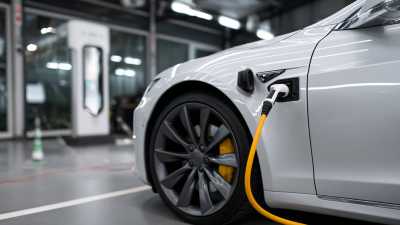
How to Choose the Right AC EV Charging Cable for Your Electric Fleet: A Comprehensive Guide
-
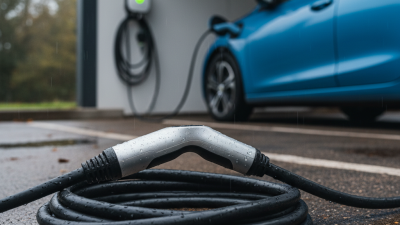
What is the Best Ac Ev Charging Cable for Electric Vehicles?
-
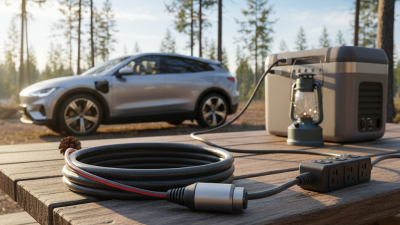
Best Ac V2l Cable What to Know Before You Buy?
-
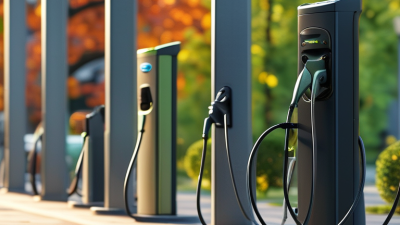
Why Choose the Right EV Charging Station for Your Business?