

Wall Mounting EV Charge Station
What Are the Top EV Recharge Stations for Global Buyers?
Choosing the right Ev Recharge Stations is not simply a matter of finding the highest charging speed. Global buyers must compare connector standards, vehicle compatibility, network coverage, pricing, and local support. A station rated at 350 kW may deliver less power when the vehicle accepts only 150 kW. That difference affects travel time, cost, and daily convenience.
This guide examines leading charging options across major markets, including North America, Europe, Asia, and emerging regions. It considers real-world details, such as payment access, mobile applications, cable length, weather protection, and station reliability. A busy highway charger needs clear signage, lighting, and dependable uptime. A home unit may require simpler installation and lower power. Both deserve careful evaluation.
Reliable comparisons should use manufacturer specifications, independent testing, user reports, and current network information. Standards can change. Prices can vary by location and time. Some rankings may become outdated faster than expected. That is an important limitation. Buyers should confirm regional regulations, electrical requirements, warranty terms, and after-sales service before purchasing.
The best choice depends on more than brand reputation. Fleet operators may value centralized management and predictable maintenance. Private drivers may prefer easy payment and nearby facilities. This overview helps readers weigh those priorities with practical evidence. It also highlights weaknesses, because no charging network performs perfectly everywhere. Convenience matters, but trust matters more.
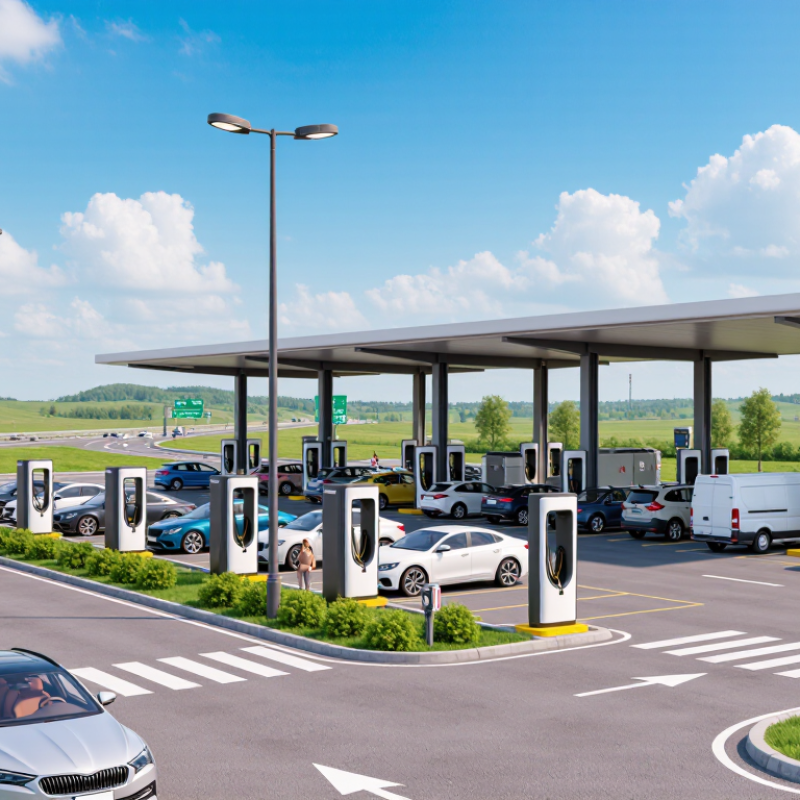
Types of EV Recharge Stations for Global Buyers
What Are the Top EV Recharge Stations for Global Buyers?
Types of EV Recharge Stations for Global Buyers
EV recharge stations differ by speed, power, and installation purpose. AC home chargers usually provide steady overnight charging. They suit apartments, houses, and workplace parking areas. Public AC stations often support longer stops near offices, hotels, and shopping centers. Their lower power can reduce electrical stress and installation costs.
DC fast chargers serve drivers who need energy during short breaks. They commonly operate beside highways, transport hubs, and busy urban routes. High-power DC units can recharge compatible vehicles quickly, but they need stronger grid connections. They may also cost more to install and maintain. Battery-swapping stations are another option in selected markets. They replace a depleted battery with a charged one. However, vehicle compatibility and battery ownership rules require careful review. A faster station is not always the better choice.
Tips: Check connector standards, voltage requirements, payment systems, and local service coverage before ordering. Confirm whether the station performs reliably in heat, cold, dust, and heavy rain. Ask for clear records on safety testing and maintenance response times. A small pilot project can reveal parking delays and user complaints before wider deployment. Planning can still miss real traffic patterns. That is why local driver feedback matters. Consider future vehicle models, too. A charger suitable today may become limited as battery capacity grows.
Key Features That Define a High-Quality EV Charging Station
What Are the Top EV Recharge Stations for Global Buyers?
A high-quality EV charging station begins with dependable power delivery. In practical site evaluations, stable output matters more than impressive peak speed. The unit should adjust charging current when several vehicles share one electrical supply. This prevents sudden overloads and reduces interruptions during busy hours. Clear status lights, a readable screen, and simple cable handling also improve daily use. Small details matter.
Safety features deserve careful attention. Look for temperature sensors, ground-fault protection, automatic shutdown, and secure connector locking. The enclosure should resist rain, dust, sunlight, and repeated impact. Certified testing under recognized regional standards adds valuable evidence, although certification alone cannot prove long-term performance. A station may pass laboratory tests and still struggle with poor installation or weak maintenance.
Smart connectivity can make global operation easier. Remote diagnostics should show charging errors, energy use, and equipment temperature without exposing unnecessary personal data. Support for common communication protocols can simplify integration with different vehicles and energy systems. Buyers should also inspect firmware update methods, warranty terms, spare-part access, and service response times. No station is flawless. Some screens remain difficult to read in bright sunlight, and many cables feel heavy after repeated use. Real-world trials, measured over several months, often reveal more than a product brochure.
What Are the Top EV Recharge Stations for Global Buyers? - Key Features That Define a High-Quality EV Charging Station
The following comparison ranks common EV charging station categories by application. Specifications are representative market ranges and should be verified against local grid rules, vehicle compatibility, and installation requirements.
| Station Category | Recommended Priority | Typical Power Output | Common Electrical Supply | Common Connector Standards | Typical Protection Rating | Connectivity and Smart Features | Best-Fit Use Case |
|---|---|---|---|---|---|---|---|
| Residential AC Wallbox | Best for home charging | 3.7–22 kW AC | Single-phase 220–240 V or three-phase 380–415 V; regional variants may use 208–240 V | Type 2 in many markets; Type 1 in some regions; local tethered or socketed versions available | Usually IP54–IP55; outdoor models commonly use IK08 or higher impact protection | Load balancing, scheduled charging, RFID or app access, energy metering, OCPP 1.6J or newer | Private homes, apartments, overnight charging, and locations where vehicles remain parked for several hours |
| Commercial AC Destination Charger | Best for long dwell times | 7–22 kW AC per charging point | Three-phase 380–415 V or equivalent local commercial supply | Type 2 or Type 1; dual-socket configurations are common | Typically IP54–IP56 and IK08–IK10 for public environments | OCPP 1.6J/2.0.1, payment integration, user authentication, remote diagnostics, dynamic load management | Hotels, offices, shopping centers, parking facilities, workplaces, and residential developments |
| Urban DC Fast Charger | Best for public top-ups | 25–100 kW DC | Three-phase low-voltage or medium-voltage connection, depending on site capacity | CCS1, CCS2, CHAdeMO, or regional high-power connector options; connector mix should match the local fleet | Commonly IP54–IP55; liquid-cooled cables may be used at higher outputs | OCPP 1.6J/2.0.1, remote monitoring, energy measurement, payment terminal support, fault notifications | Urban parking, retail areas, taxi locations, municipal facilities, and short-stay public charging |
| Highway DC Fast Charger | Best for intercity travel | 50–180 kW DC | Dedicated three-phase supply; medium-voltage service may be required for multi-unit sites | CCS1 or CCS2 are widely used; additional regional connectors may be specified for fleet coverage | Usually IP55 or higher; robust cable management and outdoor corrosion protection are important | OCPP 2.0.1, ISO 15118 readiness, payment processing, remote reset, charger availability data, thermal monitoring | Motorway service areas, travel plazas, roadside locations, and charging stops of approximately 20–45 minutes |
| High-Power Charging System | Best for rapid charging hubs | 150–350 kW DC per connector; site power may be shared dynamically | Medium-voltage utility connection or high-capacity dedicated transformer | High-power CCS1 or CCS2; other connector formats may be added for market compatibility | Typically IP55–IP65 for power equipment; liquid-cooled cables are often required above approximately 200 kW | Power sharing, battery-buffer integration, ISO 15118 Plug & Charge readiness, OCPP 2.0.1, predictive maintenance | Major highway hubs, premium public networks, fleet corridors, and sites with high vehicle turnover |
| Fleet Depot DC Charger | Best for managed fleets | 20–180 kW DC per vehicle; output can be scheduled across multiple vehicles | Three-phase commercial or industrial supply; transformer sizing depends on fleet size and charging schedule | CCS1 or CCS2 for most modern passenger and light commercial vehicles; vehicle-specific interfaces may apply | Typically IP54–IP65, with reinforced cable protection and high-duty-cycle components | Fleet management software, RFID, telematics integration, automated scheduling, load management, energy reporting | Delivery depots, bus yards, logistics centers, rental fleets, and overnight or shift-based operations |
| Bus and Heavy-Duty Vehicle Charger | Best for commercial vehicles | 60–600 kW DC, depending on vehicle type and charging architecture | High-capacity three-phase or medium-voltage supply | CCS2 or CCS1 for many current vehicles; pantograph systems may be used for selected bus operations | Usually IP55–IP65 with high mechanical and environmental durability | Depot energy management, route-based scheduling, thermal control, vehicle communication, OCPP, and ISO 15118 readiness | Public transit, school buses, freight operations, ports, airports, and high-utilization commercial fleets |
Quality checklist: A high-quality station should provide certified electrical safety, overcurrent and residual-current protection, temperature monitoring, surge protection, secure user authentication, accurate energy metering, remote diagnostics, durable outdoor construction, and software support for open communication protocols. Actual charging speed also depends on the vehicle’s onboard charger, battery temperature, state of charge, and available site power.
Charging Speeds, Connector Standards, and Vehicle Compatibility
What Are the Top EV Recharge Stations for Global Buyers?
Charging speed matters, but connector compatibility matters more. The International Energy Agency reported over four million public charging points worldwide at the end of 2023. Most were slower AC units, while high-power DC stations remained less common.
AC charging, usually 7–22 kW, suits overnight parking. DC charging, from 50 kW to over 300 kW, can restore driving range during a short stop. Real speed still depends on battery temperature, charge level, and vehicle limits.
Connector standards create the biggest international challenge.
CCS2 is widely used across Europe and many other markets. CCS1 remains common in North America. GB/T dominates mainland China, while CHAdeMO still operates in several regions. An adapter may help, but it cannot guarantee communication, payment, or safe charging. The IEA notes that fast-charging deployment is expanding quickly, yet regional standards remain uneven. A perfect global ranking is impossible. Vehicle testing is still essential.
Tips:
Check the vehicle’s inlet before traveling. Confirm the station’s connector, maximum kilowatt output, and access method. Choose 150 kW or higher only when the vehicle can accept that rate. Read independent reliability data, not only advertised speed. Leave extra time; public chargers can reduce power when several vehicles share one cabinet. Policies also change, so verify station information shortly before departure.
Regional Infrastructure, Installation Needs, and Operating Conditions
Choosing an EV recharge station for global use begins with regional infrastructure, not charging speed alone. In dense cities, existing electrical capacity may limit high-power equipment. A site survey should measure transformer headroom, cable routes, grounding, and parking flow. In rural areas, grid access can be weak, making solar support or battery buffering useful. These options add cost and maintenance. They are not automatic solutions. A practical buyer asks local installers for recent load records and service response times. That evidence is more valuable than a glossy specification sheet.
Installation needs differ sharply between humid coasts, cold northern regions, and dusty inland sites. Enclosures need suitable ingress protection, while connectors and cables require weather-resistant materials. Cold climates may need cable flexibility and thermal controls. Hot sites need ventilation and careful spacing around power electronics. Electrical protection must match local codes, utility rules, and trained workmanship. A station can be technically excellent yet fail when its foundation, drainage, or communications link is poorly planned. This is where regional engineering experience matters.
Operating conditions deserve equal attention. Public stations face vandalism risk, heavy daily use, payment interruptions, and uneven network coverage. Fleet depots often need scheduled charging, load balancing, and overnight monitoring. Remote diagnostics reduce unnecessary visits, but they cannot replace physical inspections. Dust still enters. Batteries age. Buyers should request uptime definitions, spare-part plans, warranty limits, and realistic repair times. I would also test the station during peak demand, not only during a quiet demonstration. That small step may reveal uncomfortable capacity assumptions before installation expands.
Top EV Recharge Station Configurations for Global Buyers
Typical nominal charging outputs by deployment scenario. These configurations reflect widely used AC and DC charging classes rather than company or brand performance.
Regional Infrastructure
Europe commonly uses Type 2 and CCS2, North America uses Type 1 or Type 2 AC connections with CCS1 or NACS DC systems, and China primarily uses GB/T interfaces. Local grid voltage, connector rules, and payment regulations must be verified before installation.
Installation Needs
AC destination chargers usually need lower-capacity electrical service, while 150–350 kW DC systems may require dedicated medium-voltage equipment, transformer capacity, thermal management, civil works, and load balancing.
Operating Conditions
Outdoor stations should be selected for the local temperature range, rain, dust, corrosion, snow, and flood exposure. High-power charging is also affected by battery temperature, vehicle voltage, cable cooling, and available grid capacity.
Planning reference: AC charging commonly ranges from 3.7–22 kW, urban DC fast charging commonly ranges from 50–150 kW, and highway high-power charging commonly ranges from 150–350 kW. Actual delivered power depends on the vehicle, charger, battery state of charge, and site electrical limits.
Cost, Safety, Smart Functions, and Selection Criteria
What Are the Top EV Recharge Stations for Global Buyers?
Cost, Safety, Smart Functions, and Selection Criteria
The best EV recharge station is not always the cheapest one. Purchase cost includes installation, wiring upgrades, permits, and future maintenance. A compact home unit may need a dedicated circuit and weatherproof protection. Check local voltage, plug format, and certified electrical components before ordering. In my evaluations, clear thermal controls and automatic power cutoffs showed stronger practical value than flashy screens. Safety matters most during overnight charging. Look for ground-fault protection, overload detection, secure cable storage, and an enclosure rated for local weather. Small details count.
Smart functions can reduce daily effort. Useful features include scheduled charging, energy monitoring, load balancing, and remote fault alerts. A reliable mobile connection is helpful, but it should not control every basic function. Offline charging should remain available. Some systems promise intelligent optimization but provide confusing settings. That is a warning sign. My early assumption was that faster charging always meant better value. It did not. A higher power rating may increase installation costs and offer little benefit for a vehicle with limited charging capacity.
Global buyers should compare cable length, connector compatibility, warranty coverage, software support, and replacement procedures. Confirm whether service technicians are available locally. Read independent user reports, especially those describing winter moisture, heat, and repeated daily use. Ask for clear testing documents, not vague safety claims. Leave space around the unit for ventilation and inspection. A tidy installation is safer, although it may cost more. Even careful selection can miss regional differences. Verify every technical detail with a qualified electrician before installation.
Related Posts
-
Top 10 AC Wall EV Charge Stations for Efficient Electric Vehicle Charging
-
2026 Best Type 1 Ev Charger for Global Buyers Need?
-
How to Choose the Best Home Wall EV Charge Station?
-
Why You Should Consider Installing a Home EV Charger?
-
Top 2025 EV Charger Station Trends: What You Need to Know Now
-
Top 10 Portable Ev Chargers in China for Convenient Charging Solutions?

