
Leave Your Message
Wall Mounting EV Charge Station

Wall Mounting EV Charge Station

10 Best EV Charging Stations for Businesses in 2026

For businesses, an EV charging station is no longer just a socket beside the parking lot. It can shape employee commutes, customer visits, fleet operations, and a site’s energy costs. The International Energy Agency’s Global EV Outlook 2025 reports that electric car sales exceeded 17 million worldwide in 2024, accounting for more than one in five new cars sold. More vehicles mean more demand for charging where people work, shop, and stay.

The trend is significant. But choosing equipment is not simple. A charger that suits a small office may not serve a busy hotel or delivery fleet. Installation capacity, charging speed, software, support, and payment options all matter. Fatih Birol, Executive Director of the IEA, put the broader shift plainly: “The future of the global car industry is electric.” That does not mean every business needs the same charging setup.

This guide compares 10 EV charging stations for businesses in 2026, focusing on practical considerations such as network management, reliability, and expansion. Look beyond the advertised power rating. A unit’s real value depends on how it performs at your site, with your vehicles and electrical capacity. Details can change. Prices, features, and service terms should be verified with vendors before purchase. No single product is best for everyone. The comparison aims to make that trade-off clearer, while recognizing that even a well-researched shortlist cannot replace a site assessment.
10 Best EV Charging Stations for Businesses in 2026

Business EV Charging: Station Types and Essential Features

Businesses usually choose between AC Level 2 stations and DC fast chargers. Level 2 suits offices, hotels, and employee parking, where vehicles remain for several hours. DC fast charging fits fleets, retail stops, and sites with frequent turnover. It can deliver energy quickly, but demands greater electrical capacity and often higher installation costs. Not every site can.

Match station type to dwell time, daily mileage, and parking patterns—not headline charging speed. A workplace with eight-hour shifts may serve more drivers with several moderate-power ports than one high-output unit. For fleet depots, predictable departure times and vehicle energy needs matter. That matters. Network controls and dynamic load management can share available power across chargers, reducing unnecessary peaks. Accurate energy metering helps teams review costs and usage.

Check connector compatibility across vehicle types, cable reach, weather protection, and placement around curbs, walls, and parking bays. Reliable payment or employee-access options, remote fault alerts, and clear uptime reporting support daily operations. Confirm service support and spare-part availability before purchase; a capable station is less useful when repairs linger. The awkward part is planning for growth: spare electrical capacity costs money now, yet ignoring it can make expansion harder. Site assessments are not perfect forecasts, so revisit assumptions after real usage data arrives.

How to Evaluate Commercial EV Charging Stations in 2026

Choosing commercial EV charging stations in 2026 starts with the vehicles, parking patterns, and electrical capacity a site actually has. Start with demand. Count daily arrivals, typical dwell time, and peak overlap; a delivery depot needs a different charging mix than a hotel where cars sit overnight. Check connector compatibility against the vehicles expected over the next several years, not just today’s fleet. Have a qualified electrical professional assess panel capacity, cable routes, and likely upgrade costs before comparing equipment prices.

For a workplace lot, load management can reduce simultaneous peak demand by adjusting power as cars plug in. Ask how the system behaves during a network outage and whether charging can continue locally. Reliability is more than a polished uptime figure: request service-response terms, parts availability, and a clear process for reporting faults. Test the payment flow on a real phone. Small snags matter. A confusing screen at 7 a.m. can turn a usable charger into an ignored one.

Compare operating costs, including installation, software, energy, maintenance, and payment fees. Confirm that reports show useful details, such as energy delivered per port and failed sessions, without trapping staff in manual spreadsheets. Review accessibility, weather protection, and cable reach in the actual parking layout. Ask for references from sites with similar traffic, then verify what changed after installation. Forecasts are uncertain; utilization may grow unevenly, and some ports may sit idle for months. Leave room to expand, but avoid paying for capacity the site cannot use yet.

10 Best EV Charging Stations for Businesses in 2026

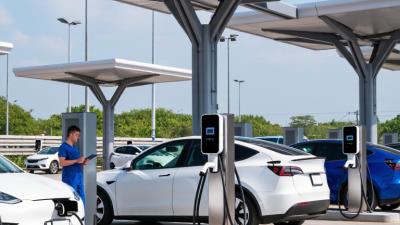
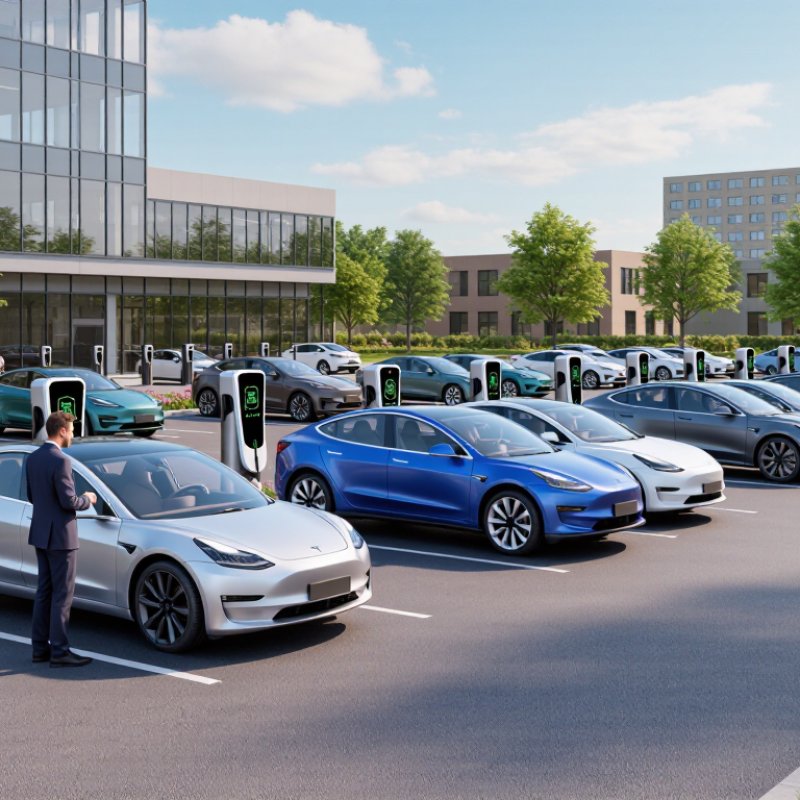
The 10 best EV charging stations for businesses in 2026 depend on the site, drivers, and available electrical capacity. A practical shortlist includes wall-mounted Level 2 units for small offices, dual-port pedestals for shared parking, and networked chargers that balance power across several vehicles. Fleet depots may need scheduled charging, while public-facing locations can benefit from simple payment options. Weather-resistant models suit exposed lots. Accessibility matters, too; allow clear space around each stall and keep cables from crossing walking paths. Small details count.

Solar-ready units, modular systems, and chargers with remote monitoring can also fit business needs. For busy highways or quick-turnover sites, consider DC fast charging, but check the added equipment and power costs. A site assessment should review panel capacity, parking patterns, expected daily energy use, and future expansion plans. Ask installers to explain load management and maintenance response times in plain language. Compare warranties and software fees, not just the purchase price. That part is easy to miss. No single station is best everywhere, and forecasts can be wrong. A pilot installation may reveal that employees charge longer than expected—or barely use the ports at all.

10 Best EV Charging Stations for Businesses in 2026

These brand-neutral options represent common commercial charging configurations, not a ranked list of specific products. Power ratings are typical North American examples; actual output depends on the electrical service, charger settings, vehicle capability, and local requirements.

Charging Station Configuration Typical Power Best Business Fit Key Advantages Planning Considerations
1. Networked Level 2, Single Port About 7.2–11.5 kW AC per port Offices, hotels, retail locations, and employee parking Supports managed access, usage tracking, and scheduled charging; well suited to vehicles parked for several hours. Confirm network coverage, payment or access needs, and compatibility with local connector standards.
2. Dual-Port Level 2 Station Commonly up to about 19.2 kW AC total; power may be shared Workplaces and public parking areas with limited installation space Serves two parking spaces from one station enclosure and can make efficient use of electrical capacity. Check whether the stated rating is per port or shared between ports, especially when both vehicles charge at once.
3. Higher-Power Level 2 Fleet Station Up to about 19.2 kW AC per port where supported Delivery fleets, service vehicles, and workplaces with predictable overnight parking Can provide more energy during a fixed parking window than lower-power AC equipment. Vehicles’ onboard AC chargers can limit actual charging power; verify service capacity and load-management options.
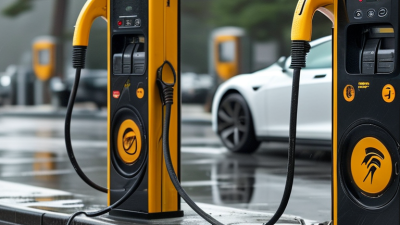
4. Pedestal-Mounted Level 2 Station Typically about 7.2–11.5 kW AC per port Open parking lots, campuses, and customer-facing parking Places charging connectors conveniently between or beside parking spaces and can be configured for one or more ports. Include protective placement, cable reach, bollards where needed, and trenching or conduit in site design.
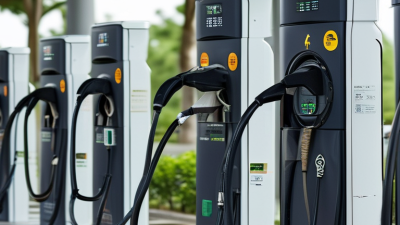
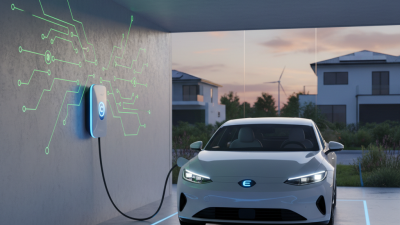
5. Wall-Mounted Level 2 Station Commonly about 7.2–11.5 kW AC per port Garages, depots, and parking areas with suitable walls or structural supports Can reduce pedestal and foundation work where a suitable mounting surface is already available. Check mounting strength, cable reach, indoor or outdoor rating, and accessible parking layout.
6. Compact DC Fast-Charging Station About 25–50 kW DC Dealerships, small fleets, convenience stops, and businesses with shorter visits Provides DC charging without requiring vehicles to use their onboard AC charger. Charging speed is limited by vehicle acceptance rates, battery state of charge, and temperature; utility upgrades may be needed.
7. Mid-Power DC Fast-Charging Station About 60–150 kW DC Retail, hospitality, commercial fleets, and public charging sites Balances faster turnaround with a lower peak rating than many high-power systems. Assess demand charges, available transformer capacity, connector choices, and expected session frequency.
8. High-Power DC Fast-Charging Station About 150–250 kW DC Highway-adjacent businesses, busy public sites, and vehicles with brief dwell times Can support faster sessions for compatible vehicles when the vehicle and site conditions allow. Not all vehicles can accept this power; installation may require substantial electrical capacity and utility coordination.
9. Ultra-High-Power DC Fast-Charging Station About 250–350 kW DC Major travel corridors and high-throughput charging locations Designed for rapid charging of vehicles capable of accepting high DC power. Peak output is not sustained for every session. Consider grid capacity, cooling, site utilization, and operating costs.
10. Modular, Power-Shared DC Charging System System ratings commonly range from tens to several hundred kW, allocated across dispensers Fleet depots and multi-bay commercial charging sites Can distribute available power across several vehicles and may allow capacity to be expanded in stages. Review simultaneous charging demand, power-allocation rules, future expansion plans, and the system’s total site rating.

Comparing Costs, Software, and Network Capabilities

When comparing the 10 best EV charging stations for businesses in 2026, look beyond the charger’s purchase price. Installation, electrical upgrades, maintenance, payment processing, and software subscriptions can change the real cost. The International Energy Agency’s Global EV Outlook 2024 reported nearly 4 million public charging points worldwide in 2023, up 40% from 2022. Fast chargers grew even faster, by 55%. That growth makes reliable network access and clear usage data increasingly important.

Tips: Request a full cost breakdown. Check whether software supports remote monitoring, user access controls, and energy-use reports. Confirm network fees, roaming access, service response times, and charger uptime in writing. Compare costs over five years, not just the first invoice.

For a busy workplace, test whether the network can show which units are active and flag faults quickly. Ask how pricing, driver access, and monthly reports work in practice.

Open communication standards, such as OCPP, may help equipment work with different software platforms, but compatibility should be confirmed for each proposed setup. A low quote can still become expensive after site work begins. And even a polished dashboard is of little use if staff cannot get help when a charger stops working.

Planning Installation, Management, and Future Expansion

A business charging site should be planned around real parking behavior, not just the number of plugs that fit on a drawing. The International Energy Agency’s Global EV Outlook 2024 reports that public charging points grew by 40% worldwide in 2023, while fast chargers grew by 55%. That growth signals a changing market, but it does not predict demand at your property. Count parked vehicles, note how long they stay, and map electrical capacity before choosing equipment. Small details matter. A concrete island, a long cable route, or a crowded service panel can change installation costs.

Plan for management and expansion at the same time. Specify networked chargers that can report faults and track energy use, then decide who will handle support after business hours. Load management can help share available power among vehicles, but it cannot replace a site-specific electrical assessment. Leave space in conduit runs and electrical rooms for additional circuits where practical. Keep a record of installation drawings and charger performance; future contractors will need both. Still, forecasts are not site plans. Review utilization after several months, including quiet periods, and adjust expansion plans to actual charging patterns rather than optimistic projections.

EV Charger Power Classes for Business Planning

Representative rated power levels (kW) for common AC Level 2 and DC fast-charging equipment.

Higher-rated equipment can support faster charging, but actual charging speed depends on vehicle limits, site capacity, and how power is shared across chargers. These are example equipment ratings, not average charging speeds.