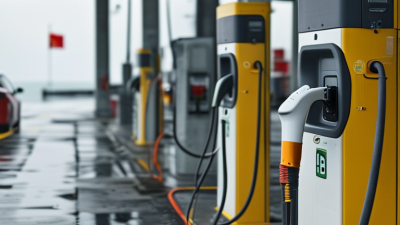

Wall Mounting EV Charge Station
China Top 10 EV Charger Station Suppliers?
China has become a central force in the global electric vehicle charging market. The International Energy Agency’s Global EV Outlook 2024 reported that China held the world’s largest public charging network, with more than half of global public chargers. China’s charging infrastructure also expanded rapidly in 2023, supported by strong electric vehicle sales and highway electrification projects.
This article examines China’s top 10 Ev Charger Station suppliers through practical industry criteria. These include charging output, connector compatibility, software capability, safety certifications, installation experience, and after-sales support. The assessment also considers AC destination chargers, DC fast chargers, and high-power systems for commercial fleets. Standards such as IEC 61851 and ISO 15118 help frame technical comparisons, while public data from the China Electric Vehicle Charging Infrastructure Promotion Alliance provides useful market context.
A ranking is never permanent. Supplier shipment figures, installed-base data, and export revenue are not always reported in identical ways. Some companies emphasize factory capacity, while customers may care more about uptime, maintenance response, and spare-part availability. That difference matters.
Real projects reveal more. A busy highway station needs stable cooling, clear payment functions, and dependable load management. A residential site may prioritize compact design and quieter operation. Therefore, this overview combines published company information, industry reports, technical specifications, and market reputation. It does not treat marketing claims as final proof. Readers should verify certifications, local grid requirements, warranty terms, and field references before selecting a supplier.
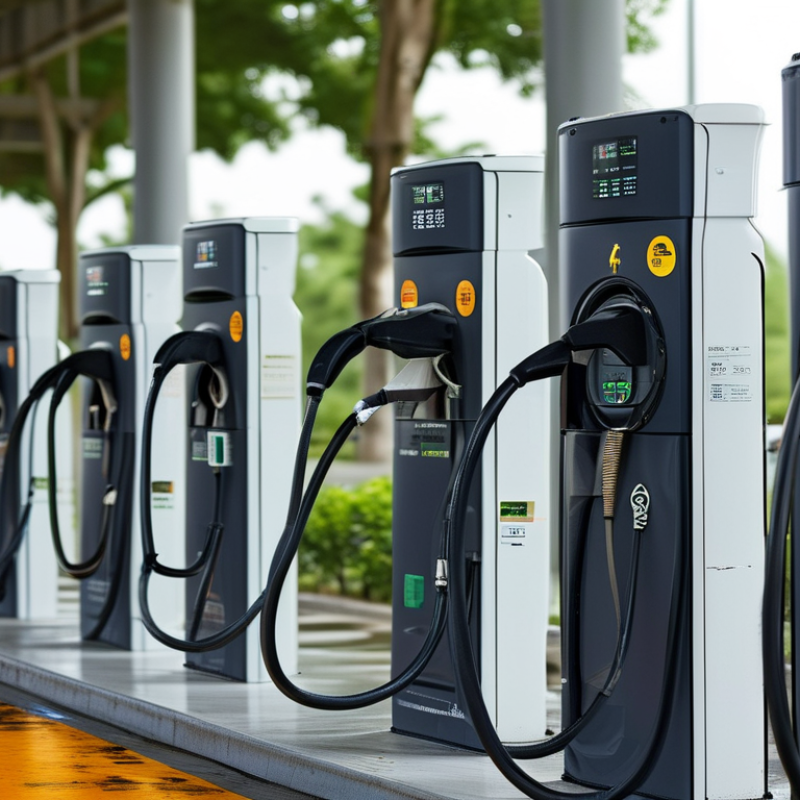
What Are EV Charger Stations and How Do They Work?
An EV charging station is a physical site where vehicles receive electrical energy. It may contain one charger or several charging points. The charger converts grid electricity into a form the vehicle battery can accept. Communication with the battery management system controls voltage, current, and charging limits.
Alternating-current charging usually uses the vehicle’s onboard converter. Direct-current charging performs conversion inside the station, allowing higher power and shorter stops. The International Energy Agency reported more than four million public charging points worldwide in 2023. China accounted for over half of new public installations that year. Its national charging infrastructure alliance reported more than 2.7 million public charging points by the end of 2023.
Power is only one part of the experience. A station also needs safe connectors, payment control, cooling, network monitoring, and balanced load management. During field checks, an advertised 120-kilowatt charger may deliver less power when the battery is cold or nearly full. That detail matters. Site capacity can also fall when several vehicles charge together. The IEA notes that grid planning must expand alongside charging deployment, especially for high-power locations. Some stations still feel inconvenient, despite impressive specifications. Better maintenance records, transparent uptime data, and clearer pricing would make supplier comparisons more reliable. As a result, evaluating station suppliers requires more than counting charging speed or installed units.
How to Evaluate EV Charger Station Suppliers in China
Choosing among China’s top EV charger station suppliers requires more than comparing catalog prices. Evaluate manufacturing depth, engineering records, and documented quality controls. Ask whether the supplier designs key components in-house or relies heavily on subcontractors. A factory audit can reveal testing rooms, assembly discipline, and spare-parts storage.
Request samples before signing a large contract. Check charging stability, connector temperature, screen visibility, and cable flexibility during repeated use. Review certificates relevant to your destination market, but verify their issuing bodies and validity. Also examine software functions, including remote monitoring, user permissions, firmware updates, and data protection. A polished dashboard is not enough.
Field experience often appears in small details. Ask for installation references with similar climate, traffic, and grid conditions. Study warranty response times, technician coverage, and replacement procedures. Confirm whether the supplier supports common charging protocols and provides clear integration documents. Calculate total ownership cost, including shipping, installation, maintenance, energy losses, and downtime.
Do not trust the lowest quotation too quickly. It may exclude commissioning or critical accessories. Some supplier presentations look stronger than their production consistency. I would inspect a pilot site personally when possible. Even then, one successful visit cannot prove long-term reliability. Keep evaluation records, test acceptance criteria, and payment milestones specific. This protects the project when early assumptions prove incomplete.
China Top 10 EV Charger Station Suppliers: How to Evaluate Suppliers
A practical procurement weighting model for comparing EV charger station suppliers in China. The percentages represent the relative importance of each evaluation dimension and do not represent any individual company or brand.
Safety and regulatory compliance receive the highest weight because chargers must meet applicable electrical, communication, and installation requirements. Reliability, charging performance, lifecycle cost, interoperability, and after-sales support should also be verified through test reports, service-level agreements, field references, and total-cost analysis.
China’s Top 10 EV Charger Station Suppliers
China’s EV charging market combines large-scale manufacturing with rapid infrastructure growth. The International Energy Agency’s Global EV Outlook 2024 reported that China held about 60% of the world’s public charging points in 2023. This scale supports a broad field of leading suppliers, including companies focused on DC fast chargers, AC units, fleet systems, and charging software.
A practical top-ten assessment should examine more than shipment volume. Buyers should compare charging efficiency, uptime, thermal management, payment compatibility, cybersecurity, and after-sales service. China’s Electric Vehicle Charging Infrastructure Promotion Alliance reported approximately 3.58 million public charging facilities by the end of 2024. That figure shows strong demand, but it also exposes uneven maintenance quality. A charger can look advanced yet perform poorly in rain, heat, or crowded parking areas. Field testing matters.
Tips: Request independent test records, installation references, and service-response targets. Check whether the supplier supports local electrical standards and spare-part availability. Ask for measured uptime, not marketing promises. Small details matter.
The strongest suppliers usually provide modular designs, remote fault monitoring, and clear energy-management data. However, rankings remain imperfect because public financial information and regional performance are not always comparable. A supplier with excellent export experience may have weaker rural coverage. Another may offer lower prices but slower technical support. Buyers should score suppliers against actual site conditions, traffic patterns, grid capacity, and fleet charging schedules. The best choice is rarely the cheapest quotation.
Products, Technologies, and Services Offered by Leading Suppliers
China’s leading ten EV charger suppliers serve a market that added more than 3.5 million public charging piles by the end of 2024, according to the China Electric Vehicle Charging Infrastructure Promotion Alliance. Their portfolios usually combine residential AC units, commercial AC chargers, and high-power DC systems. Some cabinet designs now support 480 kW or more, shortening charging stops for electric buses and delivery fleets. Liquid cooling, modular power modules, and dynamic load balancing help manage heat and limited grid capacity.
Hardware is only one part of the offer.
Leading suppliers provide charging-management platforms, mobile payment integration, remote diagnostics, open communication protocols, and fleet dashboards. These tools can show connector status, energy consumption, fault codes, and daily revenue on one screen. The International Energy Agency reported that China held more than half of the world’s public charging stock in 2023. That scale has pushed suppliers to improve uptime, interoperability, and installation speed.
Field experience still exposes weaknesses.
A charger may advertise high output, but shared power cabinets can reduce actual speed. Network software also fails when data interfaces are poorly tested. Suppliers increasingly offer site surveys, civil works, commissioning, spare-parts support, and service-level maintenance. Buyers should verify measured output, temperature performance, payment reliability, and repair response times. Marketing figures are not enough. Availability data from real operating sites matters more.
How to Choose the Right Chinese EV Charger Supplier
China Top 10 EV Charger Station Suppliers?
How to Choose the Right Chinese EV Charger Supplier
Choosing an EV charger supplier requires more than comparing factory prices. Start with your charging scenario, including vehicle types, power demand, climate, and installation limits. A supplier should explain output stability, connector compatibility, protection systems, and software integration clearly. Vague answers deserve caution.
Ask for technical documents, test reports, and relevant safety certifications. Check whether the factory controls core assembly or relies heavily on subcontractors. A video tour helps, but an independent factory audit provides stronger evidence. Review production capacity, quality inspections, and traceability for critical components. Request samples before placing a large order.
Field performance matters most. Test chargers during heat, rain, voltage changes, and repeated charging cycles. Confirm the enclosure rating, emergency stop function, communication protocol, and remote fault alerts. Also examine warranty terms, spare-part availability, response times, and technician training. A low price can become expensive after installation. This happens often.
Do not judge suppliers only by polished websites or impressive client lists. A supplier may offer excellent hardware but weak software support. Another may respond quickly but lack stable production capacity. These details are easy to miss. Compare at least three proposals using the same technical checklist. Keep every promise in the contract, including delivery tolerances, acceptance tests, and after-sales responsibilities.
Related Posts
-
How to Source Electric Car Recharge Stations Globally?
-
2026 How to Choose the Best Electric Car Charger for Your Vehicle?
-
2026 Top Electric Car Charger Trends for Global Buyers
-
How to Choose the Best Ac Portable Ev Charger for Your Needs?
-
Top 10 EV Charging Cables from China for Global Buyers?
-
What is an Electric Car Charger and How Does it Work?