
Leave Your Message
Wall Mounting EV Charge Station

Wall Mounting EV Charge Station

What Is an EV Charger and How Does It Work?

An Ev Charger is the equipment that transfers electrical energy from a power source to an electric vehicle’s battery. It may sound simple, but the process involves communication, safety checks, and controlled power delivery. In many home installations, the charger connects to a 240-volt circuit and supplies alternating current to the vehicle’s onboard charger. Public DC fast chargers work differently. They send direct current to the battery through dedicated power electronics, reducing charging time significantly.

The connector is only one part of the system. A charger also monitors voltage, current, temperature, and the vehicle’s charging request. If a fault appears, it should stop the flow of electricity. This protection matters beside a garage wall, in a crowded parking area, or during heavy rain. Real-world charging speed depends on battery size, temperature, cable limits, and the vehicle’s maximum acceptance rate. A powerful charger cannot force a car to charge faster than its design allows.

Small details matter.

Choosing equipment requires more than comparing advertised kilowatts. Electrical capacity, installation quality, certification, weather exposure, and software reliability deserve attention. Standards and manufacturer instructions should guide the decision, while a qualified electrician should assess permanent wiring. This introduction explains how an Ev Charger works, what happens during a charging session, and why different charger levels produce different results. The explanation is practical, though not flawless; charging technology changes quickly, and older assumptions may already need revision.
What Is an EV Charger and How Does It Work?

What Is an EV Charger?

An EV charger is equipment that safely transfers electricity to an electric vehicle’s battery. It connects the vehicle to a suitable power source and controls the charging process. In everyday speech, “charger” often means the wall unit, cable, and connector together. Technically, the vehicle usually contains the main AC-to-DC charger. The wall equipment manages power delivery, communication, grounding, and safety checks.

There are two common charging methods. AC charging sends alternating current to the vehicle’s onboard charger, which converts it for the battery. DC fast charging performs that conversion inside the charging equipment, sending controlled direct current to the battery. Charging speed depends on power output, battery temperature, battery condition, and the vehicle’s acceptance rate. A powerful charger cannot force a vehicle to charge faster than its design allows.

Safety systems monitor current, voltage, temperature, and connection status. If a fault appears, power should stop automatically. The connector must fit firmly, and the cable should remain dry and undamaged.

I once assumed a higher power rating always meant shorter charging time. That was too simple. Real charging often slows near a high battery level to protect the cells. Small details matter.

Installation should follow local electrical requirements and be checked by a qualified professional. Some explanations also call the wall unit the “charger,” although “electric vehicle supply equipment” is more precise.

How an EV Charger Transfers Electricity

What Is an EV Charger and How Does It Work?

How an EV Charger Transfers Electricity

An EV charger safely moves electricity from the grid to a vehicle’s battery. I once thought it simply pushed power through a cable. The real process is more controlled. With AC charging, the charging unit manages the connection and safety checks. The vehicle’s onboard charger then converts alternating current into direct current for the battery. A control signal confirms that the car is ready. Only then do internal contactors close and allow current to flow.

DC charging works differently. The charging equipment converts electricity before it reaches the vehicle. Direct current travels through the cable into the battery system. The vehicle and charger continuously exchange data about voltage, temperature, and battery capacity. If the battery becomes hot, charging may slow or stop. It is not perfectly simple. Communication errors, damaged cables, or poor installation can interrupt the transfer.

Tips: Keep the connector clean and dry. Check the cable for cuts before use. Avoid extension cords unless the equipment instructions specifically allow them. A qualified electrician should install home charging equipment and verify grounding. Charging speed also depends on battery temperature, vehicle limits, and available electrical capacity, not just the charger’s advertised output. Small details matter.

The Main Types of EV Chargers

What Is an EV Charger and How Does It Work?

An EV charger transfers electricity to a vehicle’s battery through a controlled connection. The vehicle’s onboard charger converts alternating current into usable battery power. DC fast chargers send direct current to the battery, largely bypassing that onboard unit. Charging speed depends on power output, battery temperature, and the vehicle’s charging limit.

The main types are Level 1, Level 2, and DC fast charging. The U.S. Department of Energy’s Alternative Fuels Data Center lists Level 1 equipment at about 1.4–1.9 kilowatts. It is slow. Level 2 commonly provides 3.3–19.2 kilowatts and suits homes, workplaces, and public parking areas. DC fast charging can deliver roughly 50–350 kilowatts, although actual performance often falls below the posted maximum. The International Energy Agency’s Global EV Outlook 2024 counted more than four million public charging points worldwide in 2023. It also reported growth above 40% during that year. Home charging usually favors Level 1 or Level 2 because cars remain parked for hours. Highway locations need faster equipment, but high power can increase grid demand and installation costs. A three-level chart helps, yet it hides important details. Weather, battery age, and state of charge can change results. Real-world charging is less tidy. Public statistics may count connectors, not simultaneously available power.

Key Parts Inside an EV Charging System

What Is an EV Charger and How Does It Work?

Key Parts Inside an EV Charging System

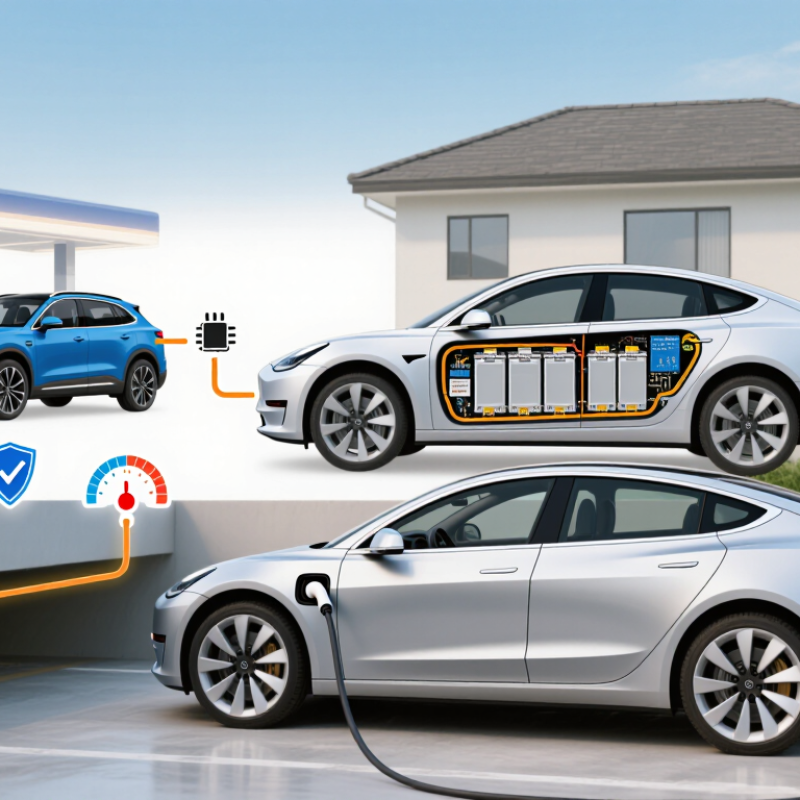
An EV charging system begins at the charging inlet, where the vehicle receives electrical power. The cable and connector carry that power safely between the charger and the car. Inside the unit, contactors open or close the circuit after a connection is detected. This prevents live power from flowing too early.

The control pilot circuit manages communication between the vehicle and charger. It checks whether the cable is connected and signals the available current. A current sensor monitors electrical flow during charging. Thermal sensors watch for unusual heat around the cable, connector, and internal terminals. If temperatures rise too far, the system can reduce power or stop charging.

The power conversion stage depends on the charger type. For AC charging, the vehicle’s onboard charger converts alternating current into battery-ready direct current. For DC charging, conversion hardware sits inside the charging unit instead. A meter records energy use, while a communication board handles screen data, payment functions, and network messages. Safety parts, such as residual-current protection and an emergency shutoff, help limit shock and fire risks.

One detail is easy to overlook. A thick cable does not always mean faster charging. The vehicle, circuit, temperature, and software all affect the real charging rate. Installation quality matters too. A loose terminal may stay unnoticed, yet create heat under load. That is why trained inspection remains important, even when the charger appears to work normally.

What Is an EV Charger and How Does It Work? - Key Parts Inside an EV Charging System

System Part Main Function Where It Is Usually Located Typical Technical Details Why It Matters
Electrical Supply Provides electrical power to the charging equipment. Building electrical panel, circuit, or utility connection. Residential AC charging commonly uses approximately 120 V or 208–240 V AC, depending on the electrical installation and region. The available voltage, current, and circuit capacity limit the maximum charging power.
EVSE Controller Controls access to electricity and communicates with the vehicle before and during charging. Inside the charging station or portable charging unit. Uses control and proximity signaling to confirm connection, indicate readiness, and advertise the permitted current. Charging normally starts only after the vehicle and EVSE confirm that the connection is safe.
Power Cable Carries electrical power between the EVSE and the vehicle. Between the charging unit and the vehicle inlet; it may be fixed or detachable. Contains insulated conductors sized for the rated current, along with protective insulation and strain relief. Cable size, temperature, and connector condition affect safe current delivery and charging reliability.
Charging Connector Creates the physical and electrical connection with the vehicle inlet. At the vehicle end of the charging cable. Connector design varies by region and charging method; AC and DC charging use different contact arrangements in many systems. Locking and signal contacts help prevent unplugging while energized and verify proper connection.
Contactors and Relays Connect or disconnect the power path under controlled conditions. Inside the EVSE and, in some cases, inside the vehicle. Electromechanical switching devices are selected for the system voltage, current, and fault requirements. They help isolate the circuit when charging ends, a fault is detected, or the connector is removed.
Residual-Current Protection Detects unintended current flowing to ground and interrupts the circuit. Charging station, electrical distribution panel, or portable charging unit. Protection may include ground-fault or residual-current detection, depending on local electrical requirements and equipment design. It reduces the risk of electric shock, fire, and equipment damage caused by leakage or insulation faults.
Circuit Breaker and Fuses Protect wiring and equipment against excessive current and short circuits. Electrical panel and charging equipment. Protection ratings are selected according to conductor ampacity, continuous-load rules, and equipment specifications. Proper overcurrent protection prevents overheating and limits damage during electrical faults.
Energy Meter Measures the electrical energy delivered during a charging session. Inside the charging station or the associated electrical system. Energy is commonly recorded in kilowatt-hours, while voltage, current, power, and session duration may also be monitored. Metering supports usage records, energy management, diagnostics, and—where permitted—billing.
Onboard Charger Converts incoming AC electricity into regulated DC electricity for the battery. Inside the vehicle. Its maximum AC input power varies by vehicle; common passenger-vehicle ratings include approximately 3.6–22 kW. For AC charging, the vehicle’s onboard charger—not only the wall unit—determines the effective charging limit.
DC Charging Power Module Converts grid AC into controlled DC before the electricity reaches the vehicle battery. Inside a DC fast-charging station rather than inside the vehicle. Power modules may be combined in parallel; output voltage and current are adjusted according to the vehicle’s request. By performing AC-to-DC conversion outside the vehicle, DC charging can deliver higher power than typical AC charging.
Vehicle Battery and BMS Stores energy and manages cell voltage, temperature, current, and charging limits. Battery pack and vehicle control system. The battery-management system can reduce or stop charging when limits are reached or abnormal conditions are detected. The vehicle ultimately controls how much energy it accepts to protect battery safety, performance, and service life.
Thermal Management Removes heat from cables, power electronics, connectors, and the battery when necessary. Charging station and vehicle battery system. May use passive cooling, fans, liquid cooling, or vehicle-integrated thermal circuits. Temperature control helps maintain efficiency and may prevent automatic power reduction or charging interruption.
Communication and User Interface Displays status and may support authorization, scheduling, diagnostics, and energy-management commands. Charging station, vehicle, and optional network connection. Functions can include indicator lights, a display, buttons, mobile connectivity, local networking, or vehicle-to-station signaling. Communication coordinates charging decisions and helps users identify connection, charging, completion, or fault conditions.

Note: In AC charging, the vehicle’s onboard charger performs the main AC-to-DC conversion. In DC charging, the charging station performs that conversion and supplies regulated DC power directly to the vehicle’s battery system.

How to Charge an Electric Vehicle Safely

What Is an EV Charger and How Does It Work?

How to Charge an Electric Vehicle Safely

An EV charger transfers electricity from a power source to the vehicle’s battery. It also communicates with the car before charging begins. This check controls voltage, current, and charging time. Safe charging starts with the equipment, not the dashboard.

Before plugging in, inspect the cable, connector, and wall outlet. Look for cuts, bent pins, scorch marks, or moisture. Keep the connector away from puddles and loose soil. Use a properly installed circuit with suitable protection. A qualified electrician should assess older wiring, especially in garages.

Small details matter.

Park so the cable remains straight and free from pressure. Do not use damaged extension cords or household adapters. They can overheat inside the plug, where heat is difficult to notice. During the first few charging sessions, touch the plug carefully. It may feel slightly warm, but unusual heat, burning smells, buzzing, or repeated interruptions require immediate disconnection.

Follow the vehicle and charger instructions, plus local electrical requirements. Different charging levels need different circuits and installation standards. Never force a connector into place. I have found that rushing makes simple mistakes more likely, even when the setup seems familiar. Lock the car, confirm the charging indicator, and check the cable after rain. A final review can feel unnecessary. It is often the step that prevents trouble.