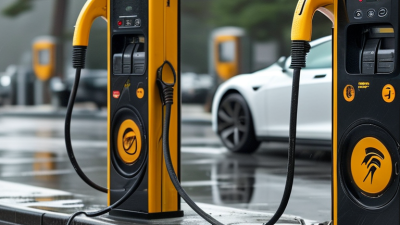

Wall Mounting EV Charge Station
China Top EV Charger Station Manufacturers How to Choose?
Choosing a China-based EV Charger Station manufacturer is not simply a price comparison. A reliable choice begins with the site: a hotel car park, highway rest stop, or factory fleet yard each has different charging patterns. A unit beside a busy highway may need high output and dependable cooling. A workplace charger may serve more vehicles with lower power over longer periods. Look beyond brochure figures. Ask about connector options, charger management software, maintenance response, warranty coverage, and documented product testing. Small details matter. A cable that reaches the parking bay, for example, can prevent daily frustration.
EV infrastructure researcher Dr. Michael Kintner-Meyer’s work suggests a useful principle: “Match charging capacity to real demand, not peak-power claims.” This is a paraphrase, not a verbatim quotation. It captures a practical point for buyers: advertised maximum power does not guarantee the same performance at every site. Request clear specifications and evidence from installations similar to yours. Check how the manufacturer handles firmware updates, spare parts, and remote fault diagnosis. Then compare the full ownership cost, not just the factory price.
This guide will help readers assess China’s leading suppliers through product range, manufacturing capability, support, and project experience. It will also explain which questions to ask before requesting a quotation. Some comparisons remain imperfect; public information can be uneven, and sales claims deserve verification. That is worth acknowledging. A careful shortlist, followed by a technical review, can reduce costly surprises and help buyers choose an EV Charger Station suited to actual operating conditions.
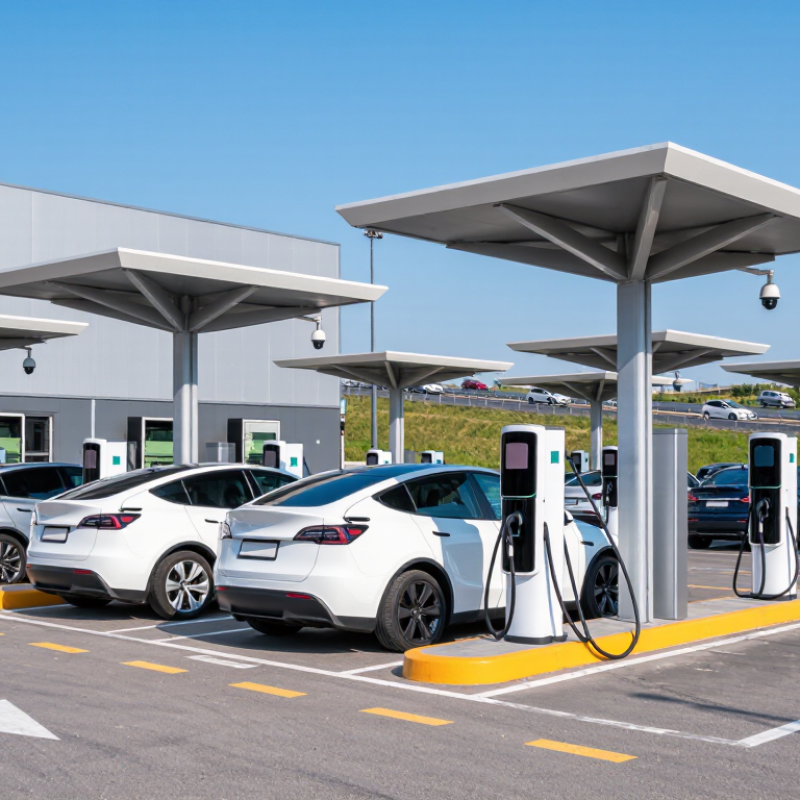
Understanding EV Charger Stations and Their Role in China
An EV charging station connects a vehicle to the power grid and manages safe, measured energy delivery. China uses both AC chargers for longer stays and DC fast chargers for quicker top-ups. Their role is practical: support daily commuting, commercial fleets, and travel between cities. The International Energy Agency’s Global EV Outlook 2024 reported more than 2.7 million public charging points in China by the end of 2023, over 70% of the global total. Queues still happen. A national count does not show whether a charger works, is accessible, or suits a driver’s route.
For operators choosing equipment, station design should match local use. A residential parking area may need several lower-power AC units, while a highway site benefits from high-power DC equipment and clear access for vehicles. Check connector compatibility, power distribution, load management, weather protection, and maintenance response. These details affect real-world availability, not just the specification sheet. This is where simple comparisons fail. The IEA’s figures describe installed public charging points, not their uptime or customer experience. A station beside a busy road can still be poorly placed if drivers cannot enter easily or charging stalls are blocked. Reliable selection depends on site conditions and service records, not headline capacity alone.
China’s Public EV Charging Infrastructure Is Expanding
Public charging facilities in China, year-end (millions)
The growing infrastructure base highlights the importance of evaluating a charger manufacturer’s product reliability, compatibility, and service capability. Figures represent public charging facilities, not a measure of individual manufacturers.
Source: China Electric Vehicle Charging Infrastructure Promotion Alliance (EVCIPA), year-end figures.
Types, Charging Standards, and Key Technical Features
China Top EV Charger Station Manufacturers: How to Choose?
Charger selection starts with vehicle compatibility, not cabinet appearance. AC chargers commonly use Type 1 or Type 2 connectors, while DC systems use CCS, GB/T, or CHAdeMO standards. Confirm voltage, current, communication, and connector requirements before requesting quotations. A plug may fit physically, yet software communication can still fail.
The International Energy Agency reported more than four million public charging points worldwide by the end of 2023. Over 1.3 million were added that year, showing rapid infrastructure expansion.
However, headline power can mislead. A 240 kW cabinet may deliver less when several vehicles share its power modules. Ask for continuous output, efficiency at partial load, operating temperature, and protection against dust and water. IEC 61851 compliance matters for charging control and electrical safety. ISO 15118 support can enable advanced communication, although implementation quality varies.
Look closely at the charging station’s technical architecture. Liquid-cooled cables help manage high current, but they increase maintenance complexity. Load balancing can reduce transformer upgrades at busy sites. OCPP 2.0.1 support improves backend interoperability, yet field integration still needs testing.
The IEA also notes that public charging must expand alongside electric vehicle growth, not simply chase higher power ratings. I would request independent test records, warranty terms, spare-part availability, and local grid certification. A specification sheet can still mislead. Real site performance matters more.
How to Assess Chinese EV Charger Manufacturers
Choosing a Chinese EV charger manufacturer requires more than comparing price lists. A credible assessment begins with evidence from the factory, not polished sales materials. Request a live video inspection or an independent audit. Check production lines, incoming-component controls, calibration records, and final-load testing. A serious supplier should explain who tests each unit and how failed units are isolated.
Ask for certification documents that match your target market and charger model. Verify test reports directly with the issuing laboratory when possible. Review electrical safety, electromagnetic compatibility, ingress protection, and thermal performance. For networked chargers, examine OCPP support, firmware controls, data security, and recovery after communication loss. Request a sample and run it through repeated charging cycles. Measure connector temperature, output stability, screen response, and emergency-stop behavior. Small details matter.
Then examine commercial reliability. Trace serial numbers to production batches, and confirm spare-parts availability for several years. Read the warranty carefully; response time matters more than a generous percentage. Speak with two or three existing customers, preferably at busy public sites. A factory may pass an audit and still struggle with field support. That possibility deserves attention. Do not accept vague claims about efficiency or service life. Put performance limits, inspection rights, software access, and corrective actions into the contract. The best choice may not be the cheapest or most impressive. It is the manufacturer that proves consistency under ordinary, difficult, and slightly inconvenient conditions.
China Top EV Charger Station Manufacturers: How to Choose and Assess Chinese EV Charger Manufacturers
Use this practical framework to compare suppliers. Scores should be based on documents, product samples, factory checks, and reference projects—not on marketing claims alone.
| Assessment Dimension | Suggested Weight | What to Check | Evidence to Request or Verify |
|---|---|---|---|
| Product and standards fit | 20% | Confirm that the charger’s output, connector, voltage range, installation type, and intended market match the project. Check applicable charging and connector standards for the destination country. | Product datasheets, model-specific test reports, connector specifications, and a written standards-compliance list. For China-market projects, check relevant GB/T requirements; for international projects, verify the standards required by the destination market, such as IEC 61851 or IEC 62196 where applicable. |
| Safety and independent testing | 15% | Review protection against electric shock, overcurrent, overheating, ingress of dust or water, and other hazards relevant to the product and installation environment. | Current, model-specific safety and environmental test reports from a competent laboratory; protection ratings and their test basis; clear installation and maintenance instructions. Check the scope and validity of any certification rather than relying on a logo alone. |
| Charging performance | 15% | Compare rated power, power sharing, efficiency claims, operating temperature range, connector configuration, and performance under the project’s expected load and site conditions. | Datasheets and test results for the exact proposed configuration; output limits and derating conditions; sample or witnessed acceptance testing. Confirm that advertised peak power is available under the required supply and operating conditions. |
| Software and interoperability | 12% | Establish how chargers connect to the chosen charging-management system, which communication functions are supported, and how software updates and cybersecurity issues are handled. | Protocol and feature list, integration test results, supported OCPP version and functions where relevant, API documentation, update policy, and a demonstration with the intended backend. OCPP compatibility should be verified for the actual charger and software versions. |
| Quality management and production control | 12% | Assess incoming-component checks, assembly controls, traceability, final testing, nonconformance handling, and change control. A quality-system certificate alone does not prove product performance. | Quality-system certificate and scope, sample inspection and test records, serial-number traceability, production process overview, and procedures for corrective actions and product changes. Consider a factory audit for larger orders. |
| Reliability and field service | 10% | Evaluate how the supplier handles failures, spare parts, troubleshooting, warranty claims, and support in the project’s operating region. | Written warranty terms, service response targets, spare-parts list and availability, escalation contacts, repair process, and verifiable references for comparable installations. Ask how uptime or fault data are defined if performance figures are provided. |
| Customization and project delivery | 7% | Check whether requested electrical, enclosure, language, payment, connectivity, or branding requirements can be supported without compromising compliance or delivery timing. | Approved specification and drawings, change-request process, sample approval plan, production lead-time assumptions, and a delivery schedule that identifies dependencies and acceptance milestones. |
| Commercial and supply-chain risk | 6% | Compare the total cost of ownership, payment terms, shipping responsibilities, component sourcing risks, and the supplier’s ability to support future orders. | Itemized quotation, Incoterms® 2020 delivery term, warranty and payment conditions, spare-parts pricing, stated component lead times, and a clear process for handling discontinued parts or substitutions. |
| Documentation and compliance support | 3% | Confirm that documentation is complete, consistent with the supplied model, and suitable for installation, operation, maintenance, and local approval processes. | Installation and user manuals, wiring diagrams, maintenance instructions, declarations and test documents applicable to the target market, plus document revision and language controls. |
Suggested scoring: Rate each dimension from 1 (insufficient evidence or major gaps) to 5 (strong, independently verifiable evidence), then multiply by its weight. The weights are a customizable procurement framework, not measured market data. Verify all standards, certifications, test reports, and claims for the exact charger model and destination market before purchase.
Comparing Manufacturers by Quality, Support, and Delivery
When comparing Chinese EV charger manufacturers, quality should mean field reliability, not attractive specifications. The IEA’s Global EV Outlook 2024 reports more than four million public charging points worldwide at the end of 2023. This scale exposes weak hardware quickly. Ask for test records covering thermal protection, insulation, connector durability, and repeated full-power cycles. Compliance with IEC 61851 and IEC 62196 is important, but certification alone does not prove stable operation. Request site references and failure-rate data from comparable climates.
Support can decide whether a charging site earns money or sits idle. Require a clear warranty, remote diagnostics, firmware procedures, and guaranteed spare-part availability. The U.S. Department of Energy’s Alternative Fuels Data Center shows how operational status matters in public charging networks. A deployed charger is useless when its screen works but its power module fails. Response times should be written into the contract, with named escalation contacts and local technicians. This detail is often overlooked.
Delivery deserves the same scrutiny. Ask about factory acceptance testing, production capacity, port schedules, and batch traceability. The IEA also notes that public charging demand is expanding rapidly, especially in urban areas. Delayed equipment can disrupt construction, grid approvals, and revenue forecasts. A smaller pilot batch may reveal software or connector issues before a large order. That costs more initially. It may prevent a costly mistake. Manufacturer data is useful, but independent testing and customer interviews remain necessary. Bodily evidence beats polished promises.
Steps to Choose the Right EV Charger Station Manufacturer
Choosing an EV charger station manufacturer starts with your actual site needs. List vehicle types, daily charging hours, available electrical capacity, and installation conditions. A busy depot may need several high-power units, while a small workplace may work better with fewer moderate-speed chargers. Bring these details to the manufacturer and ask for a written recommendation. Vague answers are a warning sign.
Check technical documentation, not just product images. Review charging standards supported, output range, enclosure rating, operating temperature, and connector options. Ask how the equipment handles load sharing when multiple vehicles charge at once. Request test reports and examples of installations in similar climates or locations. Details matter.
Then assess service and long-term support. Confirm spare-part availability, software update procedures, warranty coverage, and expected response times for faults. Ask who handles commissioning and whether technicians can diagnose problems remotely. A low purchase price can become expensive if a charger sits unused for days. Compare total ownership costs, including installation and maintenance. I would also speak with a current customer, though one reference cannot prove everything. No checklist removes every risk; some site conditions only become clear during installation.
Related Posts
-
10 Best EV Charger Stations for Global Buyers
-
China Top 10 EV Charger Station Suppliers?
-
Top 10 EV Chargers in China for Global Buyers?
-
China Top 10 EV Charger Manufacturers for Global Buyers
-
2026 Top Wall Ev Charge Station Trends for Global Buyers?
-
Maximize EV Charging Efficiency: The Ultimate Guide to Choosing the Right EV Charging Cable for Your Needs