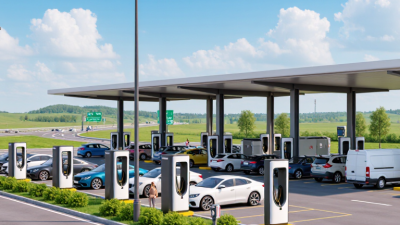

Wall Mounting EV Charge Station
10 Best Electric Car Recharge Stations for Global Buyers
Choosing the right charging network can shape every electric road trip. For global buyers, location is only one part of the decision. Reliable access matters more.
This guide examines 10 of the most useful Electric Car Recharge Stations and networks across major markets. It considers charging speed, connector compatibility, pricing transparency, payment options, and real-world availability. It also looks at motorway coverage, urban convenience, customer support, and accessibility for drivers with different needs. A powerful charger is not always the best choice. A nearby station with clear pricing may save more time and stress.
Details matter. A station beside a supermarket feels different from one beside a dark roadside. Some networks offer 350 kW charging, yet the vehicle may accept far less. Weather, battery temperature, queue times, and local grid limits can also reduce performance. These practical differences deserve attention.
Standards vary by country.
The comparison uses information from official network sources, vehicle charging guidance, and established industry data. However, charging prices and station status can change quickly. No ranking remains perfect for every driver or every journey. That is worth admitting. Buyers should confirm live availability, accepted plugs, roaming access, and local payment requirements before travelling. The strongest option may depend on the car model, route length, driving habits, and tolerance for waiting. With those limitations in mind, this overview aims to provide clear, evidence-based direction for choosing a dependable charging partner worldwide.
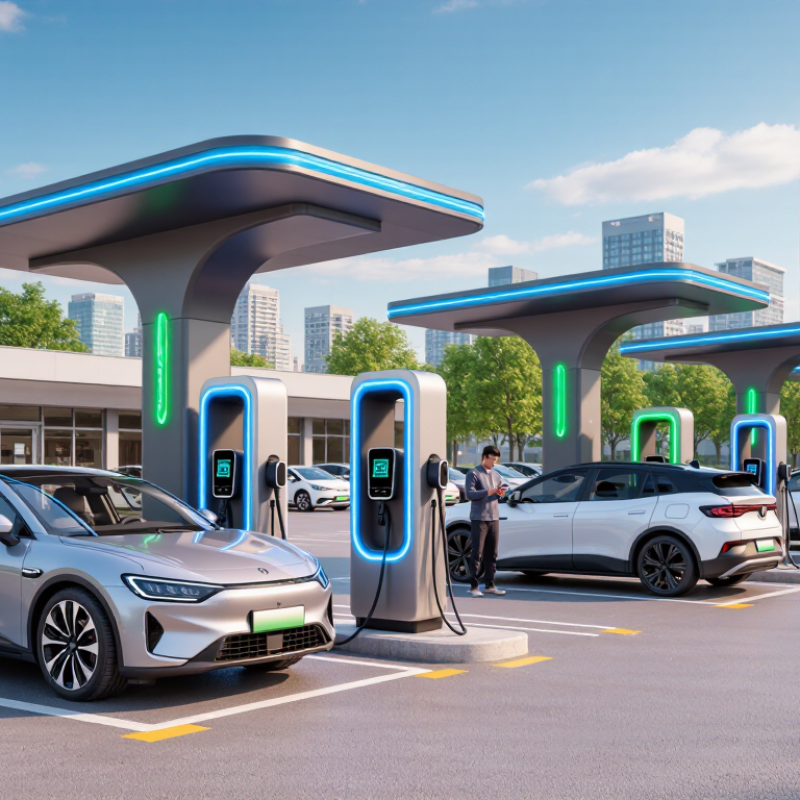
What Defines a Leading Electric Car Recharge Station
A leading electric car recharge station does more than deliver high charging speed. It provides predictable performance, clear pricing, and safe access for different vehicle types. The IEA’s Global EV Outlook 2024 reported more than four million public charging points worldwide in 2023. Public charging capacity must grow nearly sixfold by 2035 under its stated scenario. This pressure makes reliability a defining measure, not a marketing phrase.
A strong station should maintain stable power, visible uptime information, and simple payment options. Drivers also need lighting, weather protection, accessible parking, and accurate navigation data. The International Council on Clean Transportation has noted that charging access strongly affects electric vehicle adoption. Yet speed alone can mislead buyers. A 350-kilowatt connection may perform below expectations when several vehicles share one cabinet. No station is perfect. Even well-designed sites can face grid limits, software errors, or damaged connectors. Transparent fault reporting builds more trust than exaggerated claims.
Tips: Check real user reviews, operating hours, connector compatibility, and recent uptime records. Compare charging curves, not only maximum power. The IEA also emphasizes expanding charging in apartments and underserved areas. A station near a highway may look impressive, but a dependable charger near home can be more useful. Buyers should question unclear pricing and confirm whether support is available after installation. Reliability is measurable, though never completely guaranteed.
How Global Buyers Can Compare Charging Networks
10 Best Electric Car Recharge Stations for Global Buyers
How Global Buyers Can Compare Charging Networks
Comparing charging networks requires more than counting plugs. Check connector compatibility, charging speed, station uptime, payment access, and roadside support. A 150-kilowatt charger may deliver less in cold weather or with a nearly full battery. Public reliability data matters more than attractive coverage maps. Look for recent uptime records, maintenance notices, and verified user reports. These details reveal whether a station works at 7 a.m., not merely whether it appears on an app.
International buyers should compare pricing in local currency and calculate idle fees. Some networks require registration, while others accept contactless payment. Roaming access can simplify travel, but it may add transaction charges. Also inspect station spacing along rural routes. A twenty-minute detour can erase the benefit of faster charging.
My practical concern is often overlooked: clear lighting, weather protection, and accessible cable placement affect usability. Still, user reviews can be inconsistent, so treat them as evidence, not proof.
Tips: Create a comparison sheet with connector type, output, price, uptime, payment method, and support number. Test one charging session before a long journey. Save an offline route. Recheck tariffs before departure, because published rates can change. No network is perfect. A careful buyer leaves room for delays, confusing instructions, or a failed session.
Top Ten Electric Car Recharge Stations Worldwide
The top ten electric car recharge stations worldwide are best judged by access, uptime, charging speed, and payment simplicity. Strong choices appear across Norway, the Netherlands, China, the United States, Germany, the United Kingdom, France, Japan, South Korea, and Australia. These markets combine dense urban coverage with reliable highway charging. The International Energy Agency reported more than four million public charging points worldwide in 2023. China held the largest share, while Europe continued expanding fast-charging corridors.
Norway stands out for convenient highway coverage and cold-weather testing. The Netherlands offers exceptionally short distances between public chargers. China provides vast urban deployment and increasingly powerful direct-current equipment. The United States and Australia are valuable for long-distance routes, although rural gaps remain noticeable. Germany, France, and the United Kingdom generally offer strong motorway networks, but pricing can vary sharply by operator. Japan and South Korea provide orderly sites, clear instructions, and high-density metropolitan access.
Hardware alone does not create a dependable station. The Global EV Outlook 2024 notes that fast-charging demand is rising as battery capacity and vehicle adoption grow. A practical station should provide at least 100 kilowatts, weather protection, visible parking bays, and contactless payment. It should also show live availability accurately. That detail is often weak. My own ranking would place reliability above peak power, because a silent fault at midnight matters more than a promising specification. Drivers should still check connector compatibility, local tariffs, and emergency support before departure.
10 Best Electric Car Recharge Stations for Global Buyers - Top Ten Electric Car Recharge Stations Worldwide
| Rank | Charging Location | Country / Region | Charging Environment | Maximum Reported Power | Common Connector Standards | Typical Charging Time | Availability | Why It Is Recommended |
|---|---|---|---|---|---|---|---|---|
| 1 | Oxford Electric Vehicle Charging Hub | Oxford, United Kingdom | Large urban charging hub with multiple rapid-charge bays | Up to 300 kW DC | CCS2; selected bays may support CHAdeMO | Approximately 20–40 minutes for a typical rapid top-up | 24/7 access | High-power charging, convenient access from major roads, and strong suitability for private cars, taxis, and commercial vehicles. |
| 2 | Amsterdam Public Fast-Charging Area | Amsterdam, Netherlands | Dense city and motorway-linked fast-charging network | Up to 350 kW DC at selected sites | CCS2; Type 2 AC | Approximately 20–35 minutes for an 80% charge on compatible vehicles | 24/7 access | Excellent charging coverage, strong renewable-energy integration, and convenient access for international visitors. |
| 3 | Oslo Public Rapid-Charging Hubs | Oslo, Norway | Urban and intercity rapid-charging locations | Up to 350 kW DC at newer hubs | CCS2; Type 2 AC; CHAdeMO at some older chargers | Approximately 20–45 minutes depending on vehicle and battery temperature | 24/7 access | High electric-vehicle adoption, broad public infrastructure, and reliable coverage for city and long-distance driving. |
| 4 | Paris Metropolitan Fast-Charging Sites | Paris, France | Urban charging facilities near ring roads, retail areas, and transport corridors | Up to 300 kW DC at selected locations | CCS2; Type 2 AC; CHAdeMO availability varies | Approximately 25–45 minutes for a rapid recharge | Mostly 24/7 | Useful for urban drivers and visitors, with multiple payment options and broad access throughout the metropolitan area. |
| 5 | Berlin High-Power Charging Hubs | Berlin, Germany | Public high-power hubs located near main roads and commercial districts | Up to 300 kW DC | CCS2; Type 2 AC | Approximately 20–40 minutes for most compatible vehicles | 24/7 access | Good motorway connectivity, a broad European connector standard, and strong suitability for cross-border travel. |
| 6 | Madrid Regional Fast-Charging Hubs | Madrid, Spain | High-power stations positioned around urban highways and service areas | Up to 350 kW DC at selected sites | CCS2; Type 2 AC | Approximately 20–40 minutes for a normal long-distance stop | 24/7 access | Well suited to long-distance routes across the Iberian Peninsula and generally offers spacious access for larger vehicles. |
| 7 | Zurich Motorway-Service Charging Hubs | Zurich, Switzerland | Rapid chargers at urban and motorway-service locations | Up to 360 kW DC at selected sites | CCS2; Type 2 AC | Approximately 20–40 minutes for a high-speed top-up | 24/7 access | Strong location quality, dependable European charging compatibility, and convenient positioning for Alpine and cross-border journeys. |
| 8 | Singapore Islandwide Fast-Charging Sites | Singapore | Urban fast chargers at car parks, commercial areas, and roadside locations | Up to 200 kW DC at selected sites | CCS2; Type 2 AC | Approximately 25–50 minutes depending on vehicle capacity | 24/7 access | Compact geography, strong digital-payment support, and convenient access for city-based electric-car users. |
| 9 | Seoul Metropolitan High-Power Stations | Seoul, South Korea | Urban and expressway-linked charging facilities | Up to 350 kW DC at selected locations | CCS1; Type 2 AC; local connector availability varies | Approximately 20–45 minutes for a rapid charging session | Mostly 24/7 | Extensive metropolitan coverage, strong charging density, and convenient access near major roads and commercial districts. |
| 10 | Dubai Highway and Urban Charging Hubs | Dubai, United Arab Emirates | Public rapid chargers at malls, service areas, and major highways | Up to 240 kW DC at selected sites | CCS2; Type 2 AC; CHAdeMO at some locations | Approximately 25–50 minutes depending on vehicle model and climate conditions | Mostly 24/7 | Strategic highway placement, shaded urban facilities at many locations, and strong suitability for regional road trips. |
Charging speed, connector availability, payment methods, and opening hours can vary by individual charger and may change as local infrastructure is upgraded.
Charging Speeds, Costs, and Vehicle Compatibility
10 Best Electric Car Recharge Stations for Global Buyers
The ten strongest charging choices are not identical everywhere. They include motorway ultra-fast stations, urban DC chargers, airport units, hotel chargers, and home wall boxes. A 150–350 kW DC station can add 200 miles in about 20 minutes, if the vehicle accepts that rate. Smaller batteries may charge more slowly. The plug matters too. CCS1 is common in North America, while CCS2 dominates much of Europe and Asia. CHAdeMO still serves some older vehicles. Always check the connector before driving across borders.
Charging prices vary sharply by country, provider, and time. Public DC charging may cost $0.30–$0.80 per kWh, while slower AC charging is often cheaper. Idle fees can begin after the battery reaches its limit. A 75 kWh refill could therefore cost $23–$60, excluding parking. Home charging usually offers the lowest running cost, but installation can require electrical upgrades. That cost is easy to overlook.
Reliability deserves equal attention. Look for live availability, contactless payment, clear cable labeling, and nearby lighting. A station with four functioning stalls is safer than one impressive charger that often fails. My ranking is not perfect. Local maintenance records can change quickly. Some vehicles also reduce speed after repeated fast charging or in cold weather. Check the car’s maximum input rate, charging curve, and navigation data before trusting a headline charging speed. A practical choice beats a flashy one.
Safety, Accessibility, and Future Expansion Factors
10 Best Electric Car Recharge Stations for Global Buyers
The best global charging choices combine safety, access, and dependable expansion plans. Ten useful station types include highway service hubs, airport parking stations, city garages, shopping-centre chargers, hotel facilities, workplace sites, residential complexes, rural rest stops, ferry terminals, and solar-supported community hubs. Each location serves a different travel pattern. Highway hubs need bright lighting, emergency communication, weather protection, and several charging points. Urban garages should provide clear signs, wide bays, and payment access for international visitors.
Accessibility is equally important. A reliable station has step-free routes, readable screens, low-reach controls, and space beside selected bays. It should support multiple languages and transparent pricing. Staff training also matters, especially when a connector fails during heavy rain. Future-ready sites reserve electrical capacity for extra chargers, battery storage, and renewable power. However, expansion promises can be vague. Buyers should inspect permits, installation dates, and maintenance records when possible.
Tips: Check the station’s live status before departure. Keep a second route available. Photograph the charging screen after payment. Avoid isolated sites late at night. Test whether your vehicle’s connector matches the station. Some locations advertise high power but reduce speed when several cars charge together. That detail is easy to miss. Personal experience also shows that accessibility labels are not always accurate, so verify bay dimensions and entrance conditions before travelling.
10 Best Electric Car Recharge Markets for Global Buyers
Public charging availability, fast-charging access, and EV adoption indicators support a practical comparison of safety, accessibility, and future expansion potential.
The chart uses rounded 2023–2024 public data estimates from international transport and energy statistics. Public charger figures include charging points rather than individual sites; fast-charger share indicates the approximate proportion of DC fast-charging points. Higher EV adoption and infrastructure growth generally indicate stronger long-term expansion potential, while buyers should still verify local lighting, payment access, uptime, and emergency-support standards.
Related Posts
-
What Are the Top EV Recharge Stations for Global Buyers?
-
Top Tips for Installing an AC Wall EV Charge Station?
-
10 Essential Tips for Choosing an AC Wall EV Charge Station
-
2026 Top Wall Ev Charge Station Trends for Global Buyers?
-
How to Find the Best EV Charging Station Near You?
-
Best Electric Car Recharge Stations for Global Buyers?