


Wall Mounting EV Charge Station
How to Choose the Right EV Charging Cable?
Choosing the right Ev Charging Cable is becoming a practical necessity, not a technical luxury. The International Energy Agency reported nearly 14 million electric cars sold globally in 2023. It also expected sales to exceed 17 million in 2024. More vehicles mean more charging situations, from a garage wallbox to a rainy motorway stop.
A suitable cable must match the vehicle inlet, charger rating, connector standard, and daily driving pattern. Check whether you need Type 1, Type 2, CCS, or another approved connection. Cable length matters too. A five-metre cable may reach a home charger comfortably, while a longer cable can prevent awkward parking. However, extra length adds weight, storage difficulty, and potential trip hazards. Small details matter.
CharIN CEO Claas Bracklo has described the industry’s aim as making charging “as easy as refueling a conventional car.” That goal supports a simple rule: choose dependable compatibility before attractive specifications. The IEC 62196 series and relevant national safety certifications should guide your decision. The IEA’s Global EV Outlook also highlights the rapid expansion of public and private charging infrastructure, making reliable equipment increasingly important.
The cheapest option can become an expensive lesson. I have sometimes valued maximum power too highly, although many drivers rarely need it. A cable’s current rating should suit the vehicle and charger, not an imagined future. Consider weather resistance, flexibility, connector protection, warranty coverage, and storage space. A careful choice feels almost boring. That is usually a good sign.
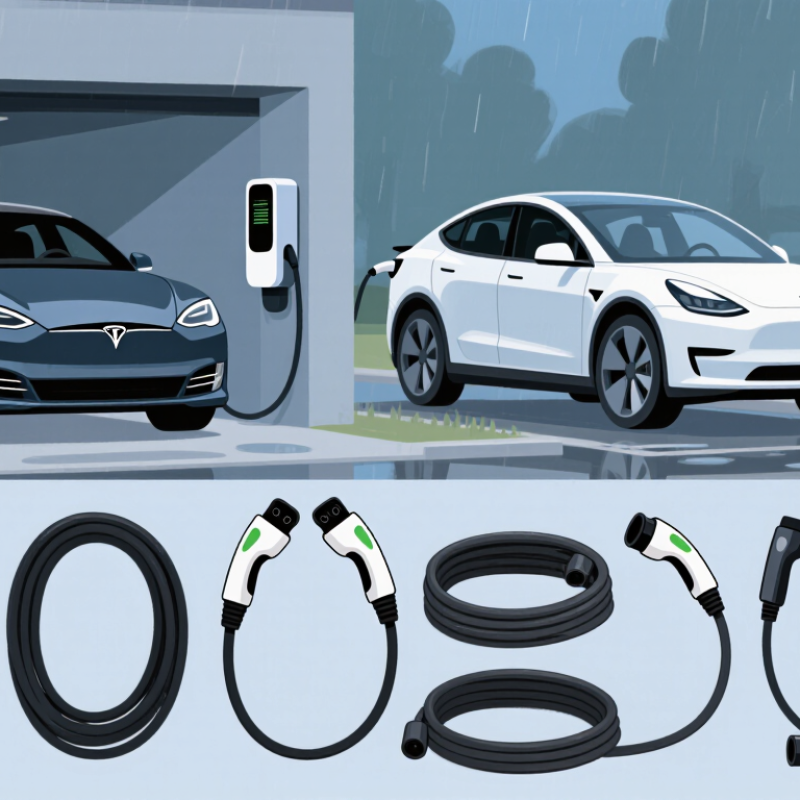
Define Your EV’s Charging Requirements
Defining your EV’s charging requirements starts with the vehicle, not the cable. Check the owner’s manual for the maximum AC charging current, connector type, and supported charging mode. Battery size matters too. A 60 kWh battery needs different overnight planning than a 100 kWh battery. The International Energy Agency reported that global electric car sales exceeded 17 million in 2024, representing more than 20% of new car sales. More drivers now face different home, workplace, and public charging conditions.
Measure your daily driving distance and available parking power. If your home circuit supports 16 amps, buying a cable rated for 32 amps will not create faster charging. It may provide useful capacity later, but the electrical installation still controls the result. Length also matters. A five-metre cable can reach a side-mounted inlet, while a shorter cable may become awkward beside a narrow driveway. Choose suitable weather protection for outdoor use, especially where rain, dust, or winter temperatures are common. The U.S. Department of Energy’s Alternative Fuels Data Center distinguishes charging equipment by power level, showing why voltage and current should be checked together. A common mistake is focusing only on maximum amperage. That rule is incomplete. Cable weight, storage space, connector compatibility, and daily handling affect real convenience. I would also recheck local socket limits before purchase, because household assumptions can be wrong.
How to Choose the Right EV Charging Cable? – Define Your EV’s Charging Requirements
| Charging Requirement | Typical Supply | Common Cable Rating | Approximate Charging Power | Recommended Cable Features | Suitable Use |
|---|---|---|---|---|---|
| Basic household AC charging | 100–120 V, single-phase | 10–16 A | Approximately 1.0–1.9 kW | Outdoor-rated insulation, temperature protection, grounding protection, and a plug compatible with the local socket standard | Overnight charging where charging speed is not the primary concern |
| Standard residential AC charging | 220–240 V, single-phase | 10–32 A | Approximately 2.3–7.4 kW | Correct connector for the vehicle inlet, sufficient current rating, robust strain relief, and weather-resistant construction for outdoor use | Home charging for most daily driving needs |
| Three-phase AC charging | 380–415 V, three-phase | 16–32 A per phase | Approximately 11–22 kW | Three-phase-compatible cable, suitable conductor capacity, secure locking mechanism, and a vehicle that supports three-phase AC charging | Faster home, workplace, and public AC charging |
| High-power DC fast charging | Typically 200–1000 V DC | Often 50–500 A, depending on the charging system | Commonly 50–350 kW; the vehicle and charger determine the actual rate | Use only the permanently attached cable supplied with the compatible DC charging station; high-current systems may require liquid-cooled cables | Road trips and rapid charging during short stops |
| Portable charging with a household plug | Local household voltage | Usually limited to the socket and circuit rating | Usually below 3 kW | Integrated control box, residual-current protection, overheating protection, clear status indicators, and no use with an extension cord unless specifically permitted | Emergency charging or locations without a dedicated EV charging outlet |
| Outdoor charging | AC or DC supply installed outdoors | Match the charging station rating | Depends on the charger and vehicle | UV-resistant and flexible jacket, water and dust protection, sealed connectors, and a temperature range suitable for the local climate | Driveways, parking areas, workplaces, and public charging locations |
| Long-distance cable installation | Any compatible AC supply | Must be sized for the full current and installation length | Depends on voltage, current, phase configuration, and vehicle limit | Select the length carefully; longer cables can increase voltage drop, weight, storage difficulty, and trip hazards | Charging points positioned far from the vehicle inlet |
| Vehicle compatibility check | Vehicle inlet and local charging standard | Connector type and pin configuration must match | The lowest limit among the cable, charger, vehicle, and electrical circuit applies | Verify connector type, AC or DC capability, phase support, maximum current, safety certification, and regional compliance before purchase | Every EV charging installation and cable purchase |
Important: Actual charging speed is limited by the lowest-rated component in the system. Always follow the vehicle manufacturer’s specifications, local electrical regulations, and the charging equipment’s safety instructions.
Related Posts
-
How to Find Top EV Charging Cable Suppliers in China?
-

Top EV Charging Cable Suppliers for Global Buyers?
-
How to Choose the Right AC EV Charging Cable?
-
What is the Best Ac Ev Charging Cable for Electric Vehicles?
-
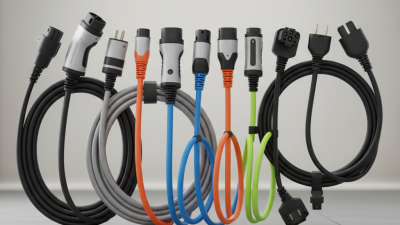
Top 10 Ac Ev Charging Cable Options for Your Electric Vehicle Needs?
-
2026 Top AC EV Charger Buyers Guide and Best Options?