


Wall Mounting EV Charge Station
7 Tips for Choosing the Best Wall EV Charge Station?
Choosing a Wall Ev Charge Station is no longer a simple matter of comparing charging speed. It affects daily convenience, household energy use, installation cost, and long-term vehicle ownership. The International Energy Agency reported that global electric car sales exceeded 17 million in 2024, while public charging points continued expanding rapidly. Home charging remains essential because most vehicles sit unused overnight.
“Charging must become as easy and convenient as refuelling,” says CharIN Executive Board member Claas Bracklo. This principle sounds obvious. In practice, it is often overlooked. Cable length, connector compatibility, load management, weather protection, and mobile-app reliability can matter more than impressive peak output. A 22 kW unit may be unsuitable for a home with limited electrical capacity. A cheaper model may also create expensive installation problems.
This guide examines seven practical considerations for selecting the best Wall Ev Charge Station. It draws on findings from the IEA Global EV Outlook 2024, the U.S. Department of Energy’s Alternative Fuels Data Center, and EV charging reliability research from J.D. Power. These sources show a clear lesson: charging performance depends on the entire system, not the wall box alone. Installation quality matters. Software matters. So does support after purchase.
Some recommendations will vary by country, vehicle, and building. That is unavoidable. Readers should verify local electrical requirements and consult a qualified installer before buying. A perfect choice does not exist, but a carefully matched one can make every morning easier.
Define Charging Needs: Level 2 Delivers 3.7–19.2 kW Under SAE J1772
7 Tips for Choosing the Best Wall EV Charge Station
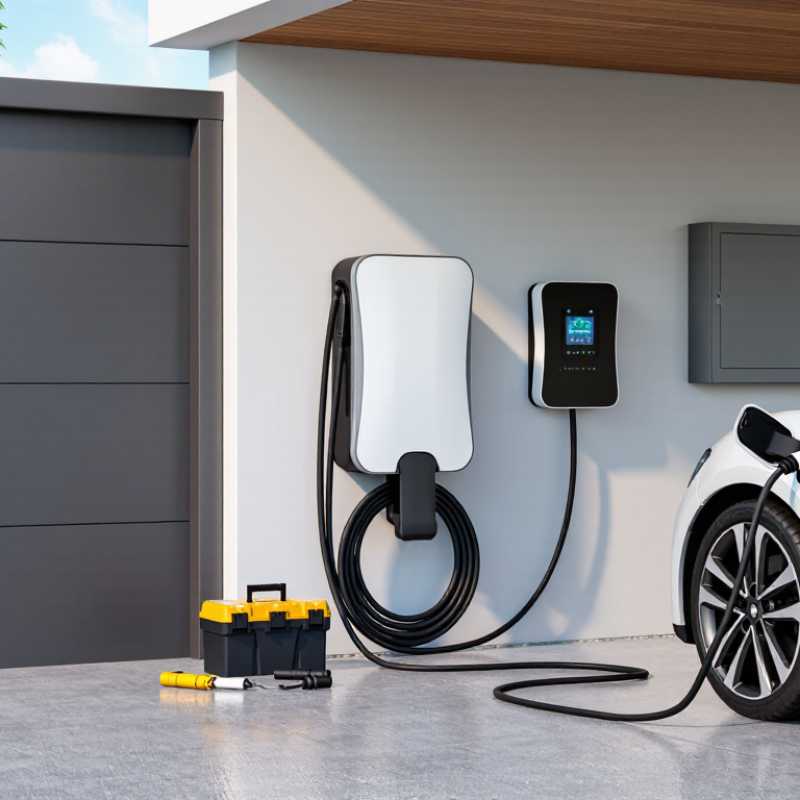
Choosing a wall EV charge station starts with your daily driving pattern. Level 2 charging under SAE J1772 commonly delivers 3.7–19.2 kW. That range is wide. A 3.7 kW unit may suit overnight charging and shorter commutes. A 19.2 kW system can replenish energy faster, but only with compatible vehicle hardware and a properly sized electrical circuit.
Check your vehicle’s maximum AC charging rate before paying for extra power. Higher output cannot force a car to charge faster. Review the circuit capacity, outlet type, cable length, and installation location with a qualified electrician. Protection against overcurrent, moisture, and overheating matters more than a bright display. Outdoor garages also need suitable weather resistance. Small details become expensive later.
Consider load management, scheduling, clear status lights, and a comfortable connector grip. A long cable can reach the port easily, yet it may create a tripping hazard. I have seen drivers focus on charging speed and overlook parking alignment. That mistake is easy to make. A dependable station should match your vehicle, home wiring, climate, and routine. Certification and clear technical documentation add confidence. Still, specifications can be misunderstood, so verify every rating instead of trusting advertising language alone.
7 Tips for Choosing the Best Wall EV Charge Station? - Define Charging Needs: Level 2 Delivers 3.7–19.2 kW Under SAE J1772
| Tip | Charging Need to Evaluate | Typical Level 2 Output | Approximate AC Input | Estimated Driving Range Added per Hour | Recommended Electrical Circuit | Key Selection Consideration |
|---|---|---|---|---|---|---|
| 1. Match Daily Mileage | Choose output according to the vehicle’s average daily driving distance and the time available for overnight charging. | 3.7–7.4 kW | Approximately 16–32 A at 230 V | About 15–30 miles 24–48 km |
A dedicated circuit sized according to local electrical code | Suitable for many drivers who normally park for 8–12 hours overnight. |
| 2. Confirm Vehicle Compatibility | Check the vehicle’s onboard AC charger rating and the connector required by the vehicle. | 7.4–11 kW | Approximately 32–48 A at 230 V | About 30–45 miles 48–72 km |
Often requires a 40–60 A circuit, depending on continuous-load rules | A vehicle with a lower AC acceptance rate will not charge faster simply because the wall station has a higher rating. |
| 3. Select the Correct Voltage | Level 2 charging commonly uses a 208–240 V AC supply in North America; household voltage varies by region. | 3.7–19.2 kW | Up to 80 A at 240 V under SAE J1772 charging equipment limits | About 15–75 miles 24–121 km |
Requires appropriate wiring, overcurrent protection, and an electrician’s assessment | Power is calculated from voltage × current; actual delivered power may be lower because of losses and vehicle limits. |
| 4. Consider Charging Time | Estimate the time needed to replenish the usable battery capacity rather than relying only on the charger’s maximum rating. | 9.6–11.5 kW | Approximately 40–48 A at 240 V | About 40–50 miles 64–80 km |
Commonly a dedicated 50–60 A circuit, subject to local code | As a simplified example, replenishing 60 kWh at 11.5 kW takes about 5–6 hours before charging losses and tapering. |
| 5. Check Installation Capacity | Review the service panel, available breaker capacity, cable length, mounting location, and outdoor installation requirements. | 7.4–19.2 kW | Approximately 32–80 A at 230–240 V | About 30–75 miles 48–121 km |
A load calculation may be required; continuous EV loads are commonly designed at 125% of charging current under applicable codes | The highest-power option is not automatically the best choice if the home electrical service needs costly upgrades. |
| 6. Compare Safety and Controls | Look for ground-fault protection, overcurrent protection, temperature monitoring, weather resistance, and clear status indicators. | 3.7–19.2 kW | Depends on the selected current setting | Depends on power, vehicle efficiency, weather, and driving conditions | Installation must follow the applicable electrical and building regulations | For outdoor use, verify the enclosure rating, operating-temperature range, cable management, and mounting requirements. |
| 7. Evaluate Smart Features and Future Needs | Consider adjustable current, scheduling, energy monitoring, load management, Wi-Fi or network access, and cable length. | 7.4–19.2 kW | Adjustable current may reduce peak electrical demand | About 30–75 miles 48–121 km |
Must remain within the capacity of the circuit and building service | Adjustable power can help align charging with off-peak electricity rates or prevent overload when other appliances operate. |
Related Posts
-
10 Best EV Charging Stations for Businesses in 2026
-
Why Choose an Electric Car Charger for Your Business?
-
China Top 10 EV Charger Station Suppliers?
-
2026 Top AC Wall EV Charge Stations for Global Buyers
-
Top Home Wall EV Charge Stations to Consider in 2025 for Electric Vehicle Owners
-
10 Best EV Charger Stations for Global Buyers