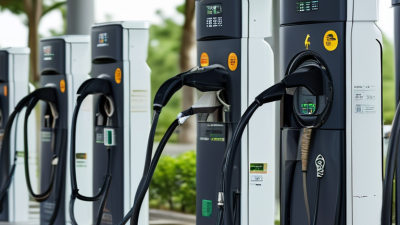

Wall Mounting EV Charge Station
10 Electric Car Charger Buying Tips for Global Buyers
Choosing an Electric Car Charger is no longer a niche decision. It affects daily convenience, installation costs, and how well a vehicle fits a home or workplace. The International Energy Agency’s Global EV Outlook 2024 reports that public charging points grew by 40% worldwide in 2023. That expansion creates more options, but it also makes specifications harder to compare. A charger’s advertised power is not always the power your vehicle or electrical supply can use.
IEA Executive Director Fatih Birol described electric vehicles as “the driving force behind the emergence of a new global energy economy.” That shift makes practical charging choices increasingly important. Yet a global buyer cannot rely on one checklist alone. Connector compatibility, charging speed, cable length, weather protection, smart features, and installation needs all deserve close attention. Regional standards and home electrical systems vary. Details matter.
This guide presents ten buying tips for comparing chargers across markets and use cases. It focuses on questions buyers can verify: Is the connector compatible? Can the supply support the rated output? Are safety certifications appropriate for the destination market? A polished product page may not answer these questions. Even a careful comparison has limits; installers and vehicle manuals can reveal constraints that product listings miss. The aim is not to chase the highest number on a box, but to find a dependable Electric Car Charger that suits the car, site, and charging routine.
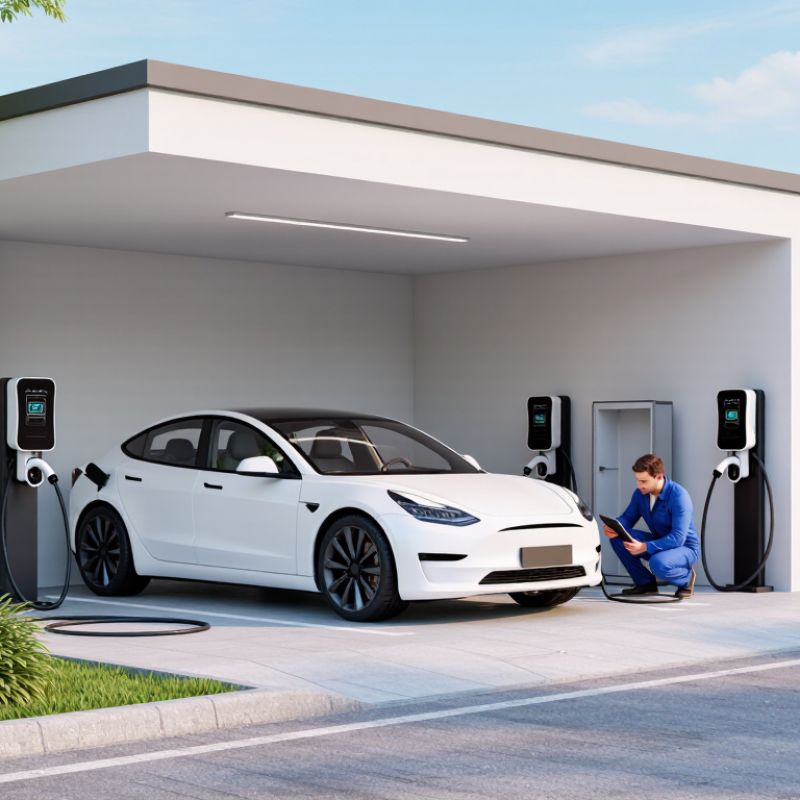
Understand Charger Types and Your Vehicle’s Compatibility
Before comparing charging speed, identify the charger types your vehicle can use. AC chargers send alternating current to the car, where its onboard charger converts it. This means the vehicle’s onboard charging limit can matter more than a charger’s advertised output. A higher-rated home unit may not make your car charge faster. Small details matter.
DC fast chargers convert power outside the vehicle and deliver it directly to the battery. Not every electric car supports DC charging, and supported power levels vary. Check your owner’s manual or vehicle specifications for AC and DC limits, connector type, and any regional requirements. For global buyers, a familiar plug shape is not enough; connector standards and electrical supplies can differ between markets. I would verify both before ordering, even when a seller says a charger is widely compatible. Check twice.
Also consider where you will charge. A portable unit may suit occasional use, while a permanently installed unit can be more practical at home. Confirm that the cable reaches the vehicle’s charging port without crossing a walkway. Have a qualified installer assess the circuit and supply before fitting equipment. I sometimes focus too much on charging speed when comparing options. That is easy to do, but a compatible charger with a sensible power level is often the more useful choice. Verify the details against your exact vehicle version, not just its model name.
Match Charging Speed to Your Driving Needs and Power Supply
Choose a charger around your actual routine, not the highest number on the product sheet. If you drive 40 miles a day and park for ten hours, a modest home charger may replace that energy overnight. A 7 kW unit can add roughly 25–35 miles of range per hour, depending on the car and conditions. Check your vehicle’s charging limit, too. A faster charger cannot make a car accept power beyond its onboard capacity.
Your power supply matters just as much. A home may have limited electrical capacity, an older panel, or a supply that differs from the charger’s requirements. Have a qualified electrician assess the circuit before you buy; local voltage and connector standards vary. For apartment parking, confirm that the outlet or circuit can support sustained charging, not just a brief test.
Small detail. Big difference.
I once assumed a higher-rated charger would always save time, but that misses the hours a car sits unused. Cold weather, battery level, and shared circuits can also reduce real charging speed. Compare the time you need with the power your vehicle and site can reliably provide. A little spare capacity can be useful, though paying for speed you rarely use may not be.
Check Connectors and Charging Standards in Your Region
Before comparing charging speed, confirm which connector your vehicle accepts and which standards are common in your region. Charging hardware can look similar while using different plugs or communication systems. Your car’s inlet and the charger’s cable must be compatible. Common AC connectors include Type 1 and Type 2, while DC fast chargers may use CCS, CHAdeMO, or other regional standards. Availability changes by country and can vary between city streets and rural highways.
Check the vehicle manual, then compare it with local public charging maps. A plug that fits physically may not support the charging method your car needs. Small detail, big difference. Also confirm the charger’s rated power and your vehicle’s maximum charging rate; a high-power unit will not make every car charge faster. Adapters can help in some situations, but compatibility and safe operating limits matter. At home, ask a qualified installer to check your electrical supply before choosing equipment. It is easy to assume one connector works everywhere. It does not, and regional standards can be confusing even after careful research.
10 Electric Car Charger Buying Tips for Global Buyers — Check Connectors and Charging Standards in Your Region
| No. | Buying Tip | What to Check | Why It Matters |
|---|---|---|---|
| 1 | Match the connector to your vehicle | Check the charging inlet specified for your exact vehicle model and market. Common AC connector families include Type 1, Type 2, and GB/T. DC fast-charging connectors include CCS1, CCS2, CHAdeMO, and GB/T. | Connector availability differs by vehicle, model year, and market. A plug that is common in one region may not fit your vehicle. |
| 2 | Confirm regional charging standards | For example, Type 2 is widely used for AC charging in Europe, Type 1 is found on some vehicles in North America and Japan, and GB/T is used in mainland China. DC standards also vary by region. | Regional conventions are useful guides, not a substitute for checking the vehicle inlet and local charging network compatibility. |
| 3 | Check the vehicle’s maximum AC charging rate | Compare the charger’s rated output with the vehicle’s onboard AC charger capacity and the available supply. A higher-rated wall unit does not make a vehicle charge faster than its onboard limit. | This helps avoid paying for capacity your vehicle cannot use and sets realistic expectations for charging time. |
| 4 | Choose a suitable power level | Portable chargers may use a household outlet, while dedicated AC wall units often provide higher power when supported by the vehicle and electrical installation. Confirm the supply voltage, phase, and current rating. | Charging speed depends on the vehicle, charger, wiring, and power supply—the lowest-capacity component can limit the result. |
| 5 | Verify electrical safety and local compliance | Check applicable local installation rules, protective devices, earthing requirements, and whether installation must be performed by a qualified electrician. | Electrical codes and outlet practices differ between countries. A charger suitable for one installation may not be suitable for another. |
| 6 | Confirm voltage, frequency, and plug compatibility | Check the charger’s permitted input voltage and frequency against the site supply, along with the socket or hardwired connection requirements. | Do not assume that a travel plug adapter changes voltage or makes an incompatible charger safe to use. |
| 7 | Assess cable reach and installation location | Measure the distance from the planned charger location to the vehicle’s inlet position. Consider cable routing, parking layout, weather exposure, and protection from physical damage. | A suitable cable length and location make everyday charging easier and help reduce trip or impact hazards. |
| 8 | Check weather and environmental protection | Review the charger’s stated ingress-protection rating, operating-temperature range, and installation instructions for indoor or outdoor use. | Conditions such as rain, dust, heat, and cold vary widely. Use the equipment only within its published environmental limits. |
| 9 | Understand adapters and interoperability limits | Confirm that any adapter is explicitly approved for the vehicle, charger, and intended charging type. Check whether it supports AC or DC charging as required. | Adapters are not universally compatible and may not convert charging protocols. Never force a connector or use an unverified adapter. |
| 10 | Review access, controls, and future needs | Consider whether you need scheduled charging, user access controls, energy monitoring, network connectivity, or a load-management feature. Check whether these functions work in your region. | Features can improve convenience and help manage household electrical demand, but availability and connectivity may depend on local infrastructure. |
Assess Installation Requirements, Safety, and Weather Protection
Before choosing an electric car charger, check whether your home’s electrical panel can support its power demand. A qualified electrician can assess available capacity, wiring condition, and whether a dedicated circuit is needed. Ask how far the cable must run from the panel to the parking space; long routes can add cost and affect placement. Do not guess. A neat location near the car is useful, but the cable should not cross a walkway or become a trip hazard.
Safety details deserve close attention. Look for clear installation instructions, built-in protection features, and evidence that the unit has been tested to relevant safety standards. The wall or post must support its weight, and connections should be installed securely by a professional. Keep the charger away from areas where vehicles might strike it. Small details matter. Leave enough space to plug in comfortably, even with gloves on.
Weather protection depends on where the charger will sit. For an exposed driveway, check the product’s stated resistance to water and dust, plus its operating temperature range. A covered spot can help, but wind-driven rain may still reach the unit. Rain finds gaps. Avoid locations where water pools, snow blocks access, or direct sun heats the enclosure for hours. I would also check how the cable behaves in cold weather; stiff cables can be awkward, and product descriptions do not always show that clearly.
Compare Total Costs, Smart Features, and Warranty Coverage
A charger’s purchase price is only one part of its cost. Compare the unit, shipping, installation, and any wiring upgrades. A long cable may cost more but save awkward parking adjustments every evening. Ask an installer to check the distance from your electrical panel and the charger location. For global buyers, confirm that the unit matches the vehicle connector and the home’s electrical supply. Small details matter.
Smart features can be useful, but only when they solve a real problem. Scheduled charging may help you use lower-cost electricity periods, where available. Energy tracking can show how much power a car uses each week. Check whether these functions need a stable internet connection or a paid app subscription. A clever screen is not automatically useful. I would compare everyday controls with the features listed in sales materials; those lists can make simple differences hard to spot.
Warranty coverage deserves the same close reading as the price. Compare the coverage period for the charger, cable, and labor, not just the headline term. Check how claims are handled if you move or buy from another country. Ask whether weather exposure or installation conditions affect coverage. Keep the invoice and installation records. Even a careful comparison can miss an exclusion, so get unclear terms confirmed in writing before buying.
10 Electric Car Charger Buying Tips for Global Buyers
Compare charging speed alongside total costs, smart features, and warranty coverage.
Estimated AC charging time for a 60 kWh battery, assuming 90% charging efficiency: approximately 18 hours at 3.7 kW, 9 hours at 7.4 kW, 6.1 hours at 11 kW, and 3 hours at 22 kW. These are calculated estimates, not guaranteed charging times. Actual speed depends on the vehicle’s onboard charger, installation, and local electrical supply. Compare installation and energy costs, useful smart features, and warranty terms before buying.
Related Posts
-
China Top 10 EV Charger Station Suppliers?
-
10 Best EV Charging Stations for Businesses in 2026
-
How to Source Electric Car Recharge Stations Globally?
-
2026 Top AC Wall EV Charge Stations for Global Buyers
-
7 Tips for Choosing the Best Wall EV Charge Station?
-
7 Best Wall EV Charge Stations for Global Buyers?